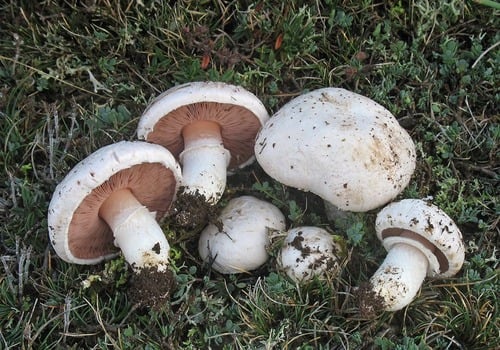
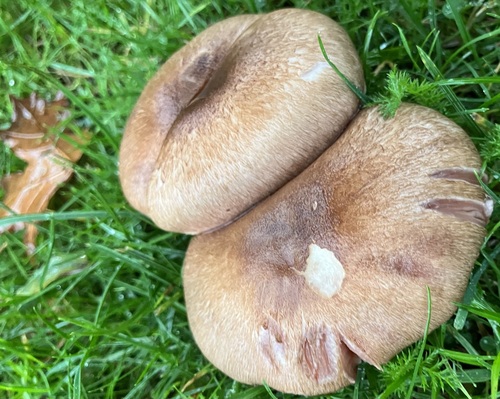
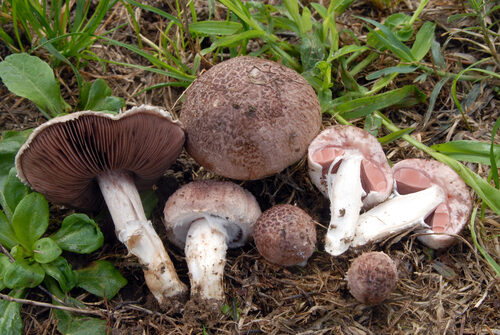
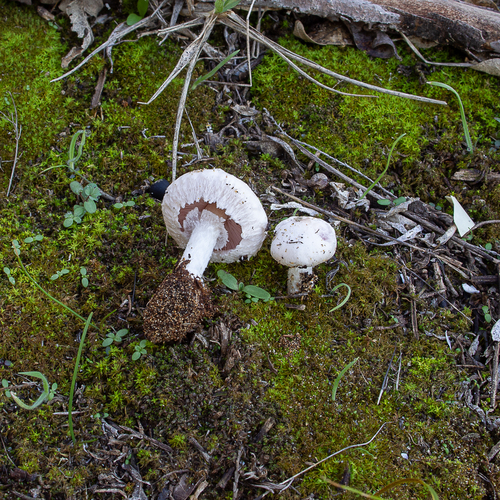
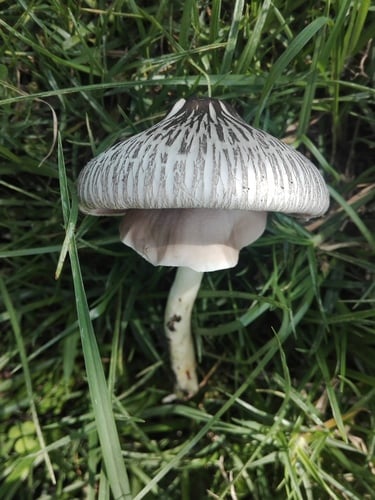
Lepiota lilacea
Bres.
iNaturalist· cc-by-nc
(c) Fabio Mauri, some rights reserved (CC BY-NC), uploaded by Fabio Mauri
iNaturalist· cc-by-sa
(c) Django Grootmyers, some rights reserved (CC BY-SA), uploaded by Django Grootmyers
iNaturalist· cc-by-nc
(c) Natalia Matushkina, some rights reserved (CC BY-NC), uploaded by Natalia Matushkina
Summary
Source: WikipediaLepiota lilacea is a species of fungus belonging to the family Agaricaceae. It was first described in Italy, in 1893, by Giacomo Bresadora, in his book Fungi Tridentini. It is characterised by its small cap (up to 36 mm broad), with a dark purple disc, and its distinct annulus. Its spores do not turn reddish-brown under Melzer's reagent (are non-dextrinoid). It is poisonous to humans. It is native to Europe and America.
Description
A temperate mushroom in the Agaricaceae family.
This description is brief — help expand it
Distribution
It is a temperate plant.
Where It Grows
Asia, India, North America, USA,
Synonyms
References (1)
- Thatoi, H. & Singdevsachan, S. K., 2014, Diversity, nutritional composition and medicinal potential of Indian mushrooms: A review. African Journal of Biotechnology 13(4): 523-545