Commiphora marlothii
Engl.
Paper-bark tree, Paperbark corkwood
iNaturalist· cc-by-nc
(c) Lukas Lindenthal, some rights reserved (CC BY-NC), uploaded by Lukas Lindenthal
iNaturalist· cc-by-nc
(c) Richard Gill, some rights reserved (CC BY-NC)
iNaturalist· cc-by-nc
(c) gillbsydney, some rights reserved (CC BY-NC), uploaded by gillbsydney
Description
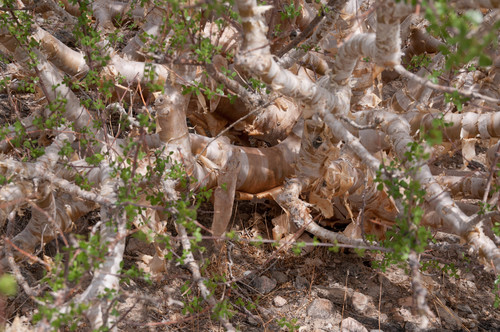
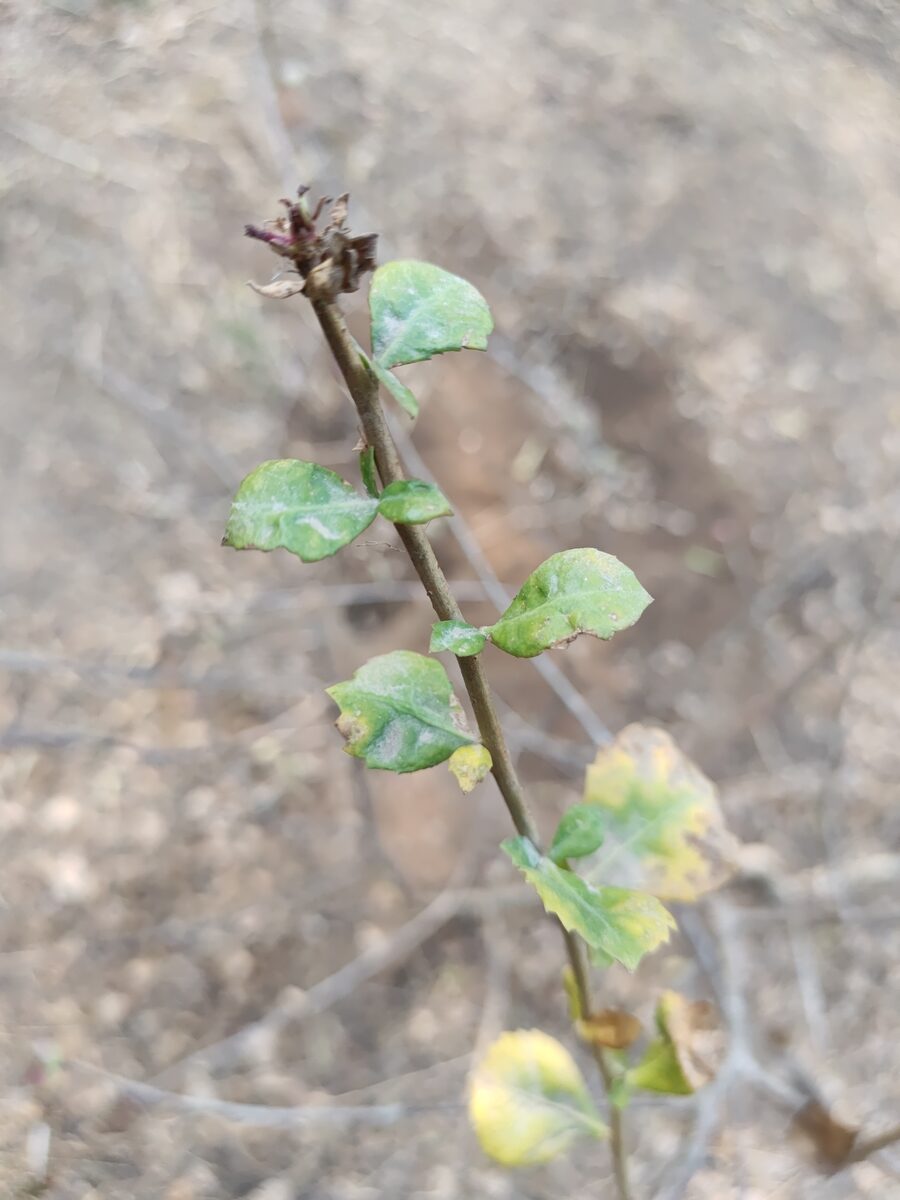
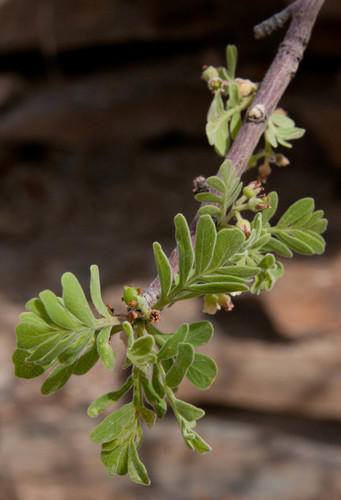
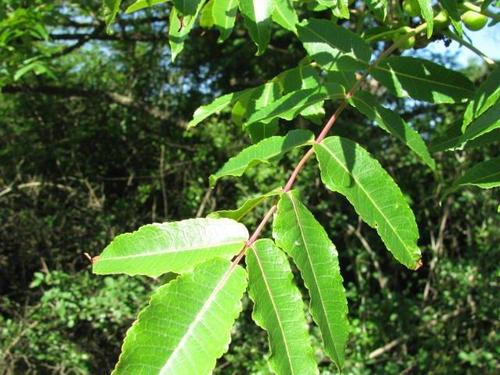
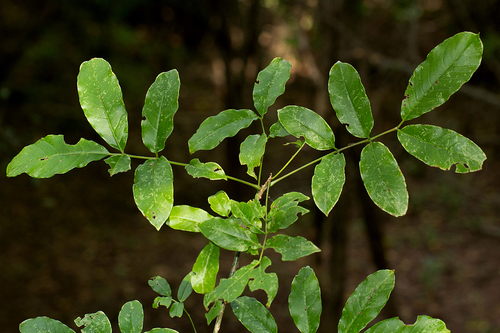
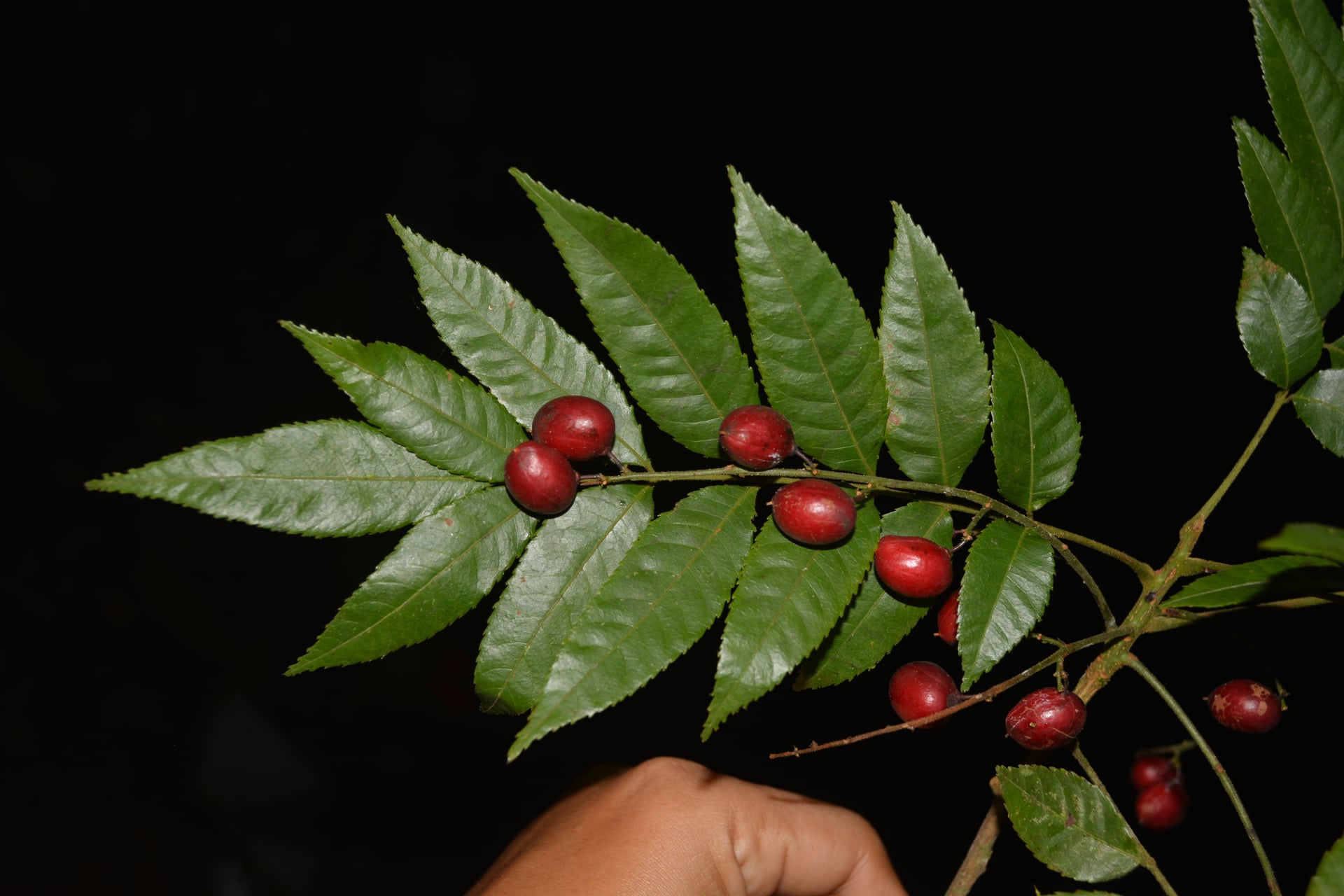
A small to medium sized tree. It grows to 13 m tall. It often has a thick trunk. The bark is green and peeling. It peels in yellow, papery sheets. The leaves have 3-4 pairs of opposite leaflets then an end leaflet. The leaflets are oblong and 3-7.5 cm long by 2-4 cm wide. They are pale green. They are soft. The edges of the leaflets are scalloped. The flowers are small and yellow. They are in the axils of leaves. They are in compact heads 1.8 cm across. The fruit are oval and green or brownish-red. They have a small sharp tip. The stone has a 4 loved aril or seed layer. This is yellow or red.
Edible Uses
The fruit is eaten fresh or processed into jelly or jam. The root is peeled and chewed for its sweet juice.
Traditional Uses
The fruit are eaten. They are sometimes processed into jelly or jam. The root is chewed for its sweet juice. It is first peeled.
This uses section is brief — help expand it
Distribution
A tropical plant. It is normally always associated with rocky or stony hill slopes. In Zimbabwe it grows between 500-1,550 m above sea level.
Where It Grows
Africa, Botswana, East Africa, Mozambique, South Africa, Southern Africa, Zambia, Zimbabwe,
Cultivation
It can be grown from seeds or by large cuttings. It is usually best grown from seeds.
Notes
There are about 165 Commiphora species.
Also Known As
Ikwazakwaza, Mubobo, Mudyaroro, Mufunka, Mufunuka, Mukuhunum, Mupepe, Mupumbua, Mutedza, Mutvedzambira, Muwirowiro, Nyanzoni, Paperbark commiphora, Papierbaskanniedood, Umkwazakwaza, Umqoqodo, Tebotebo
References (13)
- Drummond, R. B., 1981, Common Trees of the Central Watershed Woodlands of Zimbabwe, National Herbarium Salisbury. p 102
- Exell, A.W. et al, (Ed), 1963, Flora Zambesiaca Vol 2 Part 1 Crown Agents, London. p 275
- Heywood, V.H., Brummitt, R.K., Culham, A., and Seberg, O. 2007, Flowering Plant Families of the World. Royal Botanical Gardens, Kew. p 74
- Magwede, K., van Wyk, B.-E., & van Wyk, A. E., 2019, An inventory of Vhavenḓa useful plants. South African Journal of Botany 122 (2019) 57–89
- Palgrave, K.C., 1996, Trees of Southern Africa. Struik Publishers. p 364
Show all 13 references Hide references
- Peters, C. R., O'Brien, E. M., and Drummond, R.B., 1992, Edible Wild plants of Sub-saharan Africa. Kew. p 73
- Ruiters-Welcome, A. K., 2019, Food plants of southern Africa. Ph.D. thesis. Univ. of Johannesburg p 40
- Schmidt, E., Lotter, M., & McCleland, W., 2007, Trees and shrubs of Mpumalanga and Kruger National Park. Jacana Media p 246
- Tredgold, M.H., 1986, Food Plants of Zimbabwe. Mambo Press. p 97
- van Wyk, B, van Wyk, P, and van Wyk B., 2000, Photographic guide to Trees of Southern Africa. Briza. p 97
- Welcome, A. K. & Van Wyk, B.-E., 2019, An inventory and analysis of the food plants of southern Africa. South African Journal of Botany 122 (2019) 136–179
- Wild, 1975,
- www.zimbabweflora.co.zw 2011