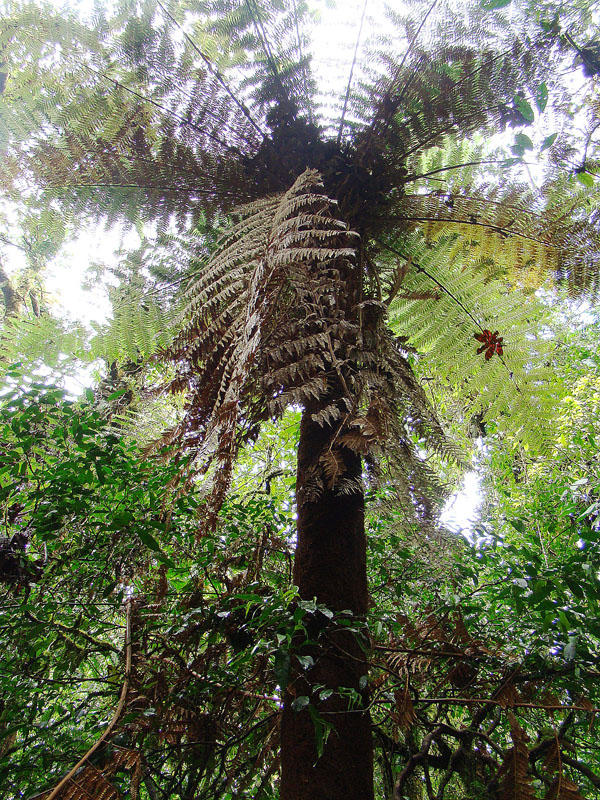
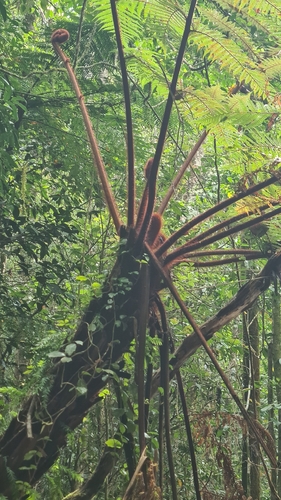
Lophosoria quadripinnata
(J. F. Gmel.) C. Chr.
iNaturalist· cc-by-nc
(c) Jean-François Burri, some rights reserved (CC BY-NC), uploaded by Jean-François Burri
iNaturalist· cc-by-nc
(c) Roberto Chavarro Chávarro, some rights reserved (CC BY-NC), uploaded by Roberto Chavarro Chávarro
iNaturalist· cc-by
(c) Andrés Ramírez-Barrera, some rights reserved (CC BY), uploaded by Andrés Ramírez-Barrera
Summary
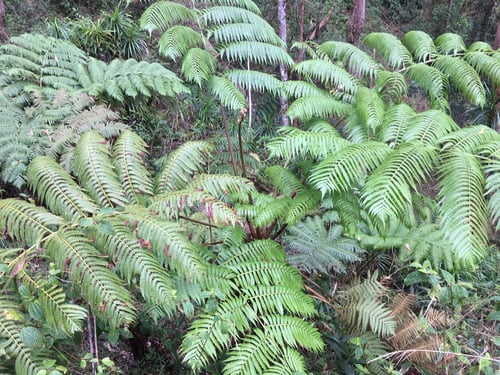
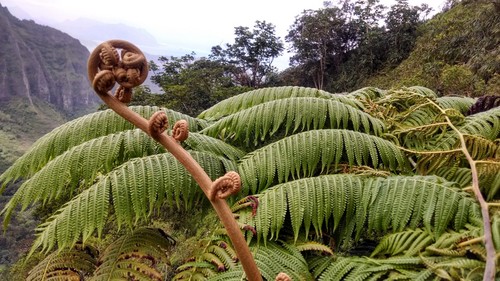
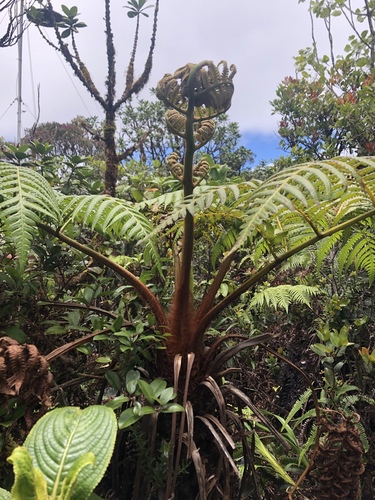
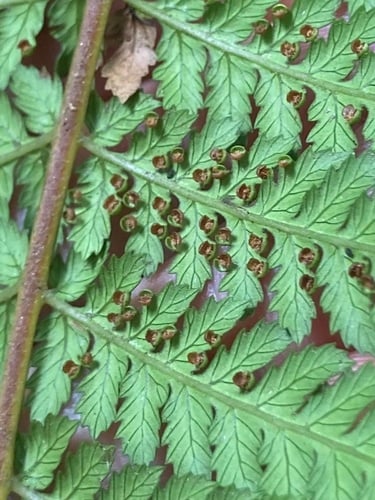
Source: WikipediaLophosoria quadripinnata (J.F.Gmel.) C.Chr. is a species of fern that, according to DNA molecular analysis, belongs to the family Dicksoniaceae, where it is placed in the genus Lophosoria. It is found in the Americas spanning from Cuba and Mexico to Chile. In Chile it is present in the area between Talca and Aysén including Juan Fernández Islands. In Argentina it grows only in the humid valleys of western Neuquén and Río Negro Province. Diamondleaf fern is a common name. In Spanish it is known as 'ampe' (from the Mapudungun añpe) or palmilla, but one has to remember that there are several species of ferns called "palmillas" that have larger or smaller fronds, and which grow in colder climates. It is a medium-sized plant, growing to about 4–5 feet (though 10–12 feet in a sheltered place at Arduaine Garden in Argyll, Scotland) and even though the rhizome does not grow a trunk, it is clearly related to the other tree ferns due to features that were apparently already present in their common ancestor, like 'pneumathodes', and the rhizome which changed from the dorsiventral symmetry typical of the other ferns, to a radial symmetry typical of tree ferns. Their large and multiple pinnate fronds, with the petiole raised adaxially, and the hairs on the rhizome and lower part of the petioles, also resemble those of tree ferns. To identify the species, use the position and characteristics of the spores found on the fertile fronds. The genus already existed in the Cretaceous Period in southern Gondwana according to fossil remains found in Antarctica. The species is well known as an ornamental plant.
Description
A tree fern in the Dicksoniaceae family found in temperate regions along stream edges and in humid cloud forest valleys.
This description is brief — help expand it
Edible Uses
The shoots are cooked and eaten. The rhizome or roots have been mixed with maize dough for making tortillas.
Traditional Uses
The shoots are cooked and eaten. The rhizome or roots have been mixed with maize dough for tortillas.
This uses section is brief — help expand it
Distribution
It is a temperate plant. It grows along the edges of streams and in humid valleys in the cloud forest.
Where It Grows
Chile*, Mexico, South America,
Other Information
It is now only used in times of food shortage.
Synonyms
Also Known As
Ampe, Pesma, Queillle
References (5)
- Barreau, A., et al, 2016, How Can We Teach Our Children if We Cannot Access the Forest? Generational Change in Mapuche Knowledge of Wild Edible Plants in Andean Temperate Ecosystems of Chile. Journal of Ethnobiology 36(2): 412–432
- Daly, A. B., 20014, Narrating changing foodways: wild edible plant knowledge and traditional food systems in Mapuche lands of the Andean Temperate Forests, Chile. Masters Thesis Vancouver. p 45
- Leon-Lobos, P., et al, 2022, Patterns of Traditional and Modern Uses of Wild Edible Native Plants of Chile: Challenges and Future Perspectives. Plants (Basel) v 11 (6) Table S1
- Mapes, C. & Basurto, F., 2016, Biodiversity and Edible Plants of Mexico. Chapter 5 in R. Lira, et al. (eds.), Ethnobotany of Mexico, Ethnobiology, Springer. p 110
- Rapoport, E. H. & Ladio, A. H., 1999, Plantas comestibles. Bosque Volume 20 No. 2. ISSN 0314-8799