Cibotium glaucum
(J. E. Smith) W. J. Hooker & Arnott
Hapu'u, Hawaiian tree fern
iNaturalist· cc0
no rights reserved, uploaded by Zoltán Stekkelpak
iNaturalist· cc-by-nc
(c) Cat Chang, some rights reserved (CC BY-NC), uploaded by Cat Chang
iNaturalist· cc-by-nc
(c) user865578, some rights reserved (CC BY-NC), uploaded by user865578
Summary
Source: WikipediaCibotium glaucum, the hāpu‘u pulu, is a species of fern in the family Cyatheaceae, native to Hawaii. A slow-growing tree fern typically 6 to 10 ft (2 to 3 m) tall but reaching 25 ft (8 m), it is hardy in USDA zones 10 through 12. Its fiddleheads are the source of the material pulu, which means "mulch" or "padding" in the Hawaiian language. Women used pulu as an absorbent during their menstrual cycles.
Description
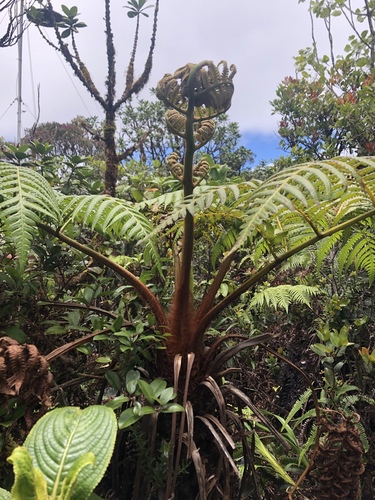
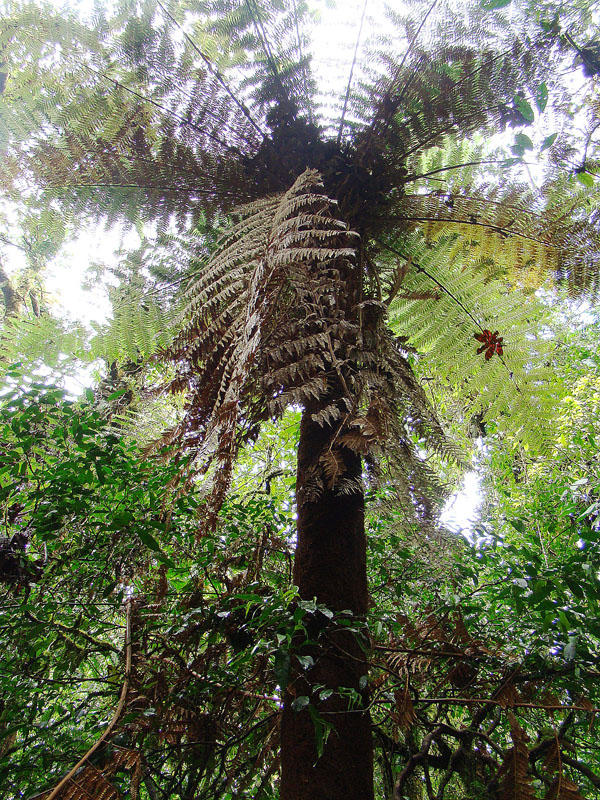
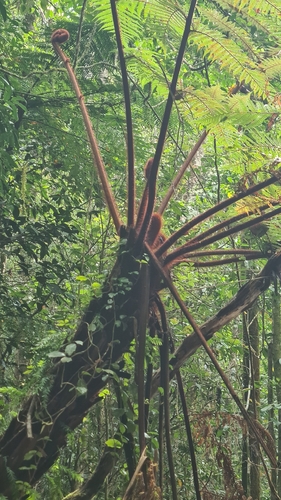
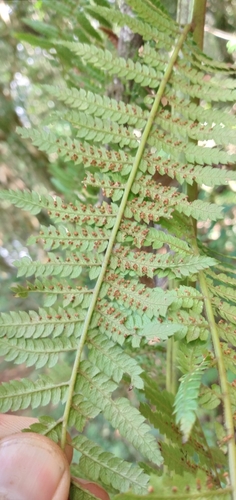
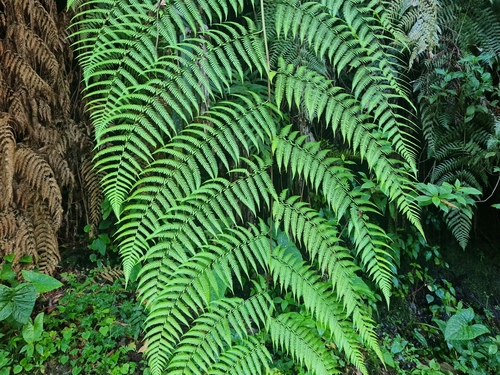
A tree fern. It can be erect or sometime lie over. The trunk is 3 m long and 16 cm across. There are often shoots along the trunk, especially when the trunk lies over. The fronds can be divided 2 or 3 times. They are white on the underside. They are 1-3 m long. There are reddish brown hairs at the base of the stalk.
Edible Uses
The uncoiled fronds, known as fiddles, can be cooked and eaten. Considered to be delicious by native people when boiled. The starchy core of the plant has been eaten as a famine food. A single trunk can contain 23 - 32 kilos of almost pure starch and it was considered to be the most important food in lean times.
Traditional Uses
Starch is extracted from the stump.
This uses section is brief — help expand it
Medicinal Uses
A soft, woolly material found around the base of the fronds contains tannins and is astringent. It was used traditionally for dressing wounds and embalming bodies. The plant is used as an appetizer and blood purifier. The pith of the trunk is used in combination with the roots of Curcuma longa, Rumex giganteus and Cordyline fruticosa. For weak persons, and some chest pains, the pith is combined with the pith of Sadleria cyatheoides, the bark of Aleurites moluccana), the bark of Syzygium malaccense, the bark of Bobea spp, the root bark of Waltheria indica, Solanum americanum, Senna occidentalis, noni fruits (Morinda citrifolia), and white sugarcane (Saccharum officinarum).
Known Hazards
Although we have found no reports of toxicity for this species, a number of ferns contain carcinogens so some caution is advisable. Many ferns also contain thiaminase, an enzyme that robs the body of its vitamin B complex. In small quantities this enzyme will do no harm to people eating an adequate diet that is rich in vitamin B, though large quantities can cause severe health problems. The enzyme is destroyed by heat or thorough drying, so cooking the plant will remove the thiaminase.
Distribution
It is a tropical plant. It is probably damaged by frost. It suits hardiness zones 9-11.
Where It Grows
Australia, Hawaii, Pacific, USA,
Cultivation
It can be grown from spores or basal shoots. Trunk cuttings root easily.
Propagation
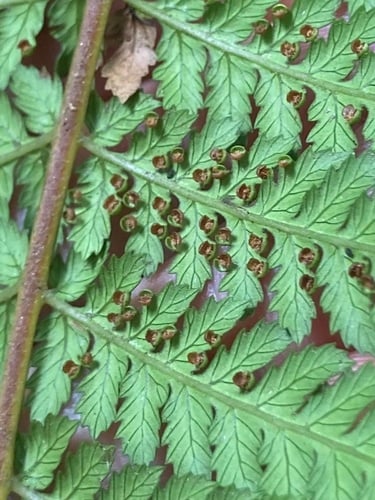
Spores - these should be collected from mature fronds of healthy plants. The most mature fronds are generally those lower down on the plant. The spore containers (sori) on these fronds should appear full and plump. The frond branches (pinnae) should be removed from the main frond stem and dried in paper bags, envelopes, or folded newspaper packets. Place each frond piece in its own paper container with the spore side down. To ensure that the spores dry quickly and do not go mouldy, place the containers in a single layer in a warm, dry location for 2 or 3 days. The ripe spores will fall off of the fronds. The spores can be separated from the remaining debris using a very fine screen or sieve. Sanitation is an important part of sowing fern spores to prevent both fungal infections and cross contamination by other fern spores. Any sowing medium needs to be fully sterilized before sowing the spores. The cleaned spores are spread on the surface of the sterilized mix and moistened with a fine spray of distilled water. Mixing the spores with water and spraying them onto the planting mix can provide more even distribution. Place a lid over the mix in order to prevent contamination and to maintain high humidity. Clean, dry spores can be stored in paper envelopes or packets. Place the envelopes in an air tight container and place it in the refrigerator. Side shoots that form on the main trunks can be used to form new plants. This species develops side shoots more frequently than other species in the genus. Success generally depends on the size of the side shoot, but plants from side shoots tend to grow slower than plants grown from spores.
Other Uses
A soft, woolly material is found around the base of the fronds. Known as pulu, it was used traditionally for dressing wounds, embalming bodies, and for pillow and mattress stuffing. Young stems were formerly used to make hats. The starch obtained from the trunk has been used as a stiffener for laundry. The outer fibrous part of the trunk has been used to line or form baskets for plants. The fibrous material of the trunk has been used as an orchid and anthurium growing media. An excellent understorey plant for the landscape to help control erosion.
Production
It is slow growing.
Notes
There are 10-15 Cibotium species. They occur in the Pacific.
Synonyms
References (4)
- Cundall, P., (ed.), 2004, Gardening Australia: flora: the gardener's bible. ABC Books. p 377
- Lamoureux, C.H., 1976, Trailside Plants of Hawaii's National Parks. Hawaii Natural History Association. p 9
- Large, M.F., & Braggins, J.E., 2004, Tree Ferns. CSIRO Publishing, Melbourne, Australia. p 67
- Staples, G.W. and Herbst, D.R., 2005, A tropical Garden Flora. Bishop Museum Press, Honolulu, Hawaii. p 36