Commelina africana
L.
Yellow commelina
iNaturalist· cc-by-nc-sa
(c) David Hoare, some rights reserved (CC BY-NC-SA)
iNaturalist· cc-by-nc-sa
(c) David Hoare, some rights reserved (CC BY-NC-SA)
iNaturalist· cc-by-nc-sa
(c) David Hoare, some rights reserved (CC BY-NC-SA)
Summary
Source: WikipediaCommelina africana, the common yellow commelina, is a widespread species of flowering plant in the family Commelinaceae. It is native to Sub‑Saharan Africa, Madagascar, Réunion, and the Arabian Peninsula, and has been introduced to India. It is occasionally consumed as a leaf vegetable, and occasionally fed to rabbits and pigs.
Description
A herb. The stems are fleshy and lie along the ground. The stems are 1 m long. They form roots at the nodes. The leaf stalks form a sheath around the stem. The leaves are small. The flower emerges from a pocket like spathe. The flowers are yellow to white.
Edible Uses
The leaves are cooked as a potherb, typically chopped and boiled in water or milk. Because they are soft, they are often mixed with other leafy vegetables. The underground bulbs are eaten by children.
Traditional Uses
The leaves are cooked as a potherb. They are soft so are mixed with other types of leafy vegetables. The leaves are chopped and boiled in water or milk. The underground bulbs are eaten by children.
Medicinal Uses
A root decoction is used as a treatment for VD; for menstrual problems; pelvic pain and bladder complaints. An infusion of the plant is used as a wash to reduce fever. A decoction of the plant, combined with Tephrosia capensis, is used in the treatment of a 'weak heart' and nervousness. The plant, cooked with Haplocarpha scaposa, Helichrysum pilosellum, or the root of Cotyledon decussata, is given as a medicine to young women to cure infertility. The pounded stalks are used to treat colds and coughs in children. Fluid from the spathes is applied locally to cure eye diseases.
Distribution
A tropical plant. It grows in well-drained rocky and sandy soils. It grows in hot arid zones. It grows in places with a marked dry season. It can grow between 2 and 2,160 m above sea level. It can grow in arid places. In Tanzania it grows in areas with a rainfall between 900-1,900 mm. It grows in wet grassland savannah.
Where It Grows
Africa, Australia, Botswana, Burkina Faso, Cameroon, Central Africa, Congo, East Africa, Eswatini, Ethiopia, Ghana, Guinea, Guinée, Guinea-Bissau, Kenya, Lesotho, Liberia, Madagascar, Middle East, Mozambique, Namibia, Nigeria, Saudi Arabia, Senegal, Sierra Leone, South Africa, Southern Africa, South Sudan, Sudan, Swaziland, Tanzania, Uganda, West Africa, Yemen, Zambia, Zimbabwe,
Cultivation
It is grown from sections of the rhizomes.
Production
Leaves are collected in the rainy season.
Other Information
It is a very minor vegetable. The underground bulbs are eaten by children.
Notes
There are about 170 Commelina species. There are 25 Commelina in tropical America.
Synonyms
Also Known As
Dzadza, Echaya, Ekoropot, Gezi, Goche, Goshe, Holagabis, Kallechuwa, Katagh, Khovani, Kikowe, Korogwa, Lidzangamane, Linyolonyolo, Mwana-wanfefo, Ndarama, Newaso, Nikorrowane, Nkongo, Mtara-ran, Odielo, Othoto, Ototo, Portotion, Zheki
References (32)
- Abukutsa-Onyango, Mary, 2007, The diversity of cultivated African leafy vegetables in three communities in western Kenya. AJFAND, Volume 7, No. 3
- Berihun, T. & Molla, E., 2017, Study on the Diversity and Use of Wild Edible Plants in Bullen District Northwest Ethiopia. Hindawi Journal of Botany. Article ID 8383468
- Burkill, H. M., 1985, The useful plants of west tropical Africa, Vol. 1. Kew.
- FAO, 1988, Traditional Food Plants, FAO Food and Nutrition Paper 42. FAO Rome p 214
- Fowler, D. G., 2007, Zambian Plants: Their Vernacular Names and Uses. Kew. p 65
Show all 32 references Hide references
- Grubben, G. J. H. and Denton, O. A. (eds), 2004, Plant Resources of Tropical Africa 2. Vegetables. PROTA, Wageningen, Netherlands. p 211
- Jardin, C., 1970, List of Foods Used In Africa, FAO Nutrition Information Document Series No 2.p 69 (As Commelina edulis)
- Johns, T., and Kokwaro, J.O., 1991, Food Plants of the Luo of Siayo District, Kenya. Economic Botany 45(1), pp 103-113
- Long, C., 2005, Swaziland's Flora - siSwati names and Uses http://www.sntc.org.sz/flora/
- Mason, 1975,
- Masters, T., 2021, Traditional food plants of the upper Aswa River catchment of northern Uganda—a cultural crossroads. Journal of Ethnobiology and Ethnomedicine (2021) 17:24
- Maundu, P. et al, 1999, Traditional Food Plants of Kenya. National Museum of Kenya. 288p
- Msuya, T. S., et al, 2010, Availability, Preference and Consumption of Indigenous Foods in the Eastern Arc Mountains, Tanzania, Ecology of Food and Nutrition, 49:3, 208-227
- Mutie, F. G., 2020, Conservation of Wild Food Plants and Their Potential for Combatting Food Insecurity in Kenya as Exemplified by the Drylands of Kitui County. Plants 2020, 9, 1017
- Mutie, F. M., et al, 2023, Important Medicinal and Food Taxa (Orders and Families) in Kenya, Based on Three Quantitative Approaches. Plants 2023, 12, 1145
- Ngugi, G., 2000, Case Study from Kenya on Indigenous Wild Vegetables. Paper 4 Workshop in Kenya 1999. p 34
- Ogle, B. M. & Grivetti, L. E., 1984, Legacy of the Chameleon: Edible Wild Plants in the Kingdom of Swaziland, Southern Africa. A Cultural, Nutritional Study. Part 4 - Nutritional Analysis and Conclusions. Ecology of Food and Nutrition. Vol 17, pp 431-64
- Ojelel, S. & Kakudidi, E. K., 2015, Wild edible plant species utilized by a subsistence farming community in the Obalanga sub-county, Amuria district, Uganda. Journal of Ethnobiology and Ethnomedicine. 11:7
- Peters, C. R., O'Brien, E. M., and Drummond, R.B., 1992, Edible Wild plants of Sub-saharan Africa. Kew. p 14
- Regassa, T., et al, 2014, Ethnobotany of Wild and Semi-Wild Edible Plants of Chelia District, West-Central Ethiopia. Science, Technology and Arts Research Journal. 3(4): 122-134
- Royal Botanic Gardens, Kew (1999). Survey of Economic Plants for Arid and Semi-Arid Lands (SEPASAL) database. Published on the Internet; http://www.rbgkew.org.uk/ceb/sepasal/internet [Accessed 10th April 2011]
- Ruffo, C. K., Birnie, A. & Tengnas, B., 2002, Edible Wild Plants of Tanzania. RELMA p 218
- Ruiters-Welcome, A. K., 2019, Food plants of southern Africa. Ph.D. thesis. Univ. of Johannesburg p 45
- Sp. pl. 1:41. 1753
- Swaziland's Flora Database http://www.sntc.org.sz/flora
- Termote, C., et al, 2014, Assessing the potential of wild foods to reduce the cost of a nutritionally adequate diet: An example from eastern Baringo District, Kenya. Food and Nutrition Bulletin, vol. 35, no. 4
- Tredgold, M.H., 1986, Food Plants of Zimbabwe. Mambo Press. p 42
- van Wyk, B., 2000, A Photographic Guide to Wild Flowers of South Africa. Struik Nature. p 38
- Vernon, R., 1983, Field Guide to Important Arable Weeds of Zambia. Dept of Agriculture, Chilanga, Zambia. p 102
- Welcome, A. K. & Van Wyk, B.-E., 2019, An inventory and analysis of the food plants of southern Africa. South African Journal of Botany 122 (2019) 136–179
- World Checklist of Useful Plant Species 2020. Royal Botanic Gardens, Kew
- www.zimbabweflora.co.zw 2011
More from Commelinaceae
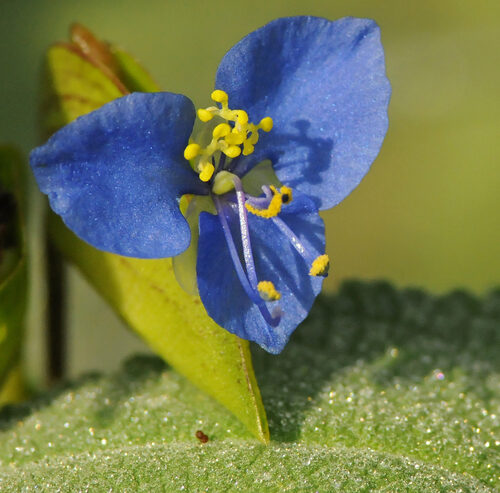
Commelina dianthifolia
Birdbill Dayflower
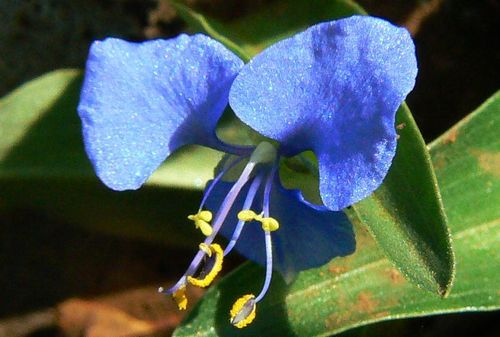
Commelina diffusa
Wandering Jew, Spreading Dayflower
Commelina elliptica
Peruvian spiderwort
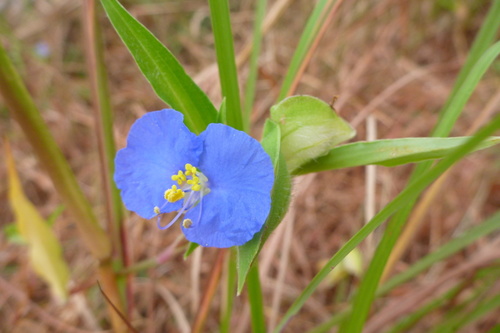
Commelina ensifolia
Scurvy grass, Wandering jew
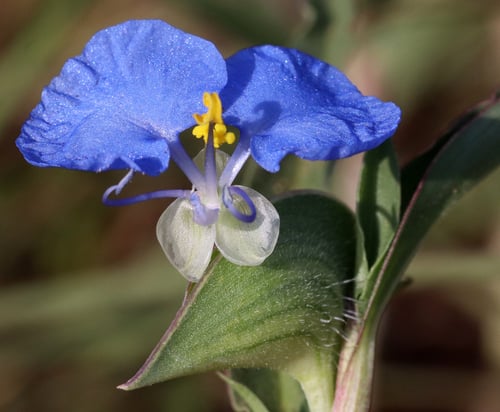
Commelina erecta
Erect dayflower, Blue commelina
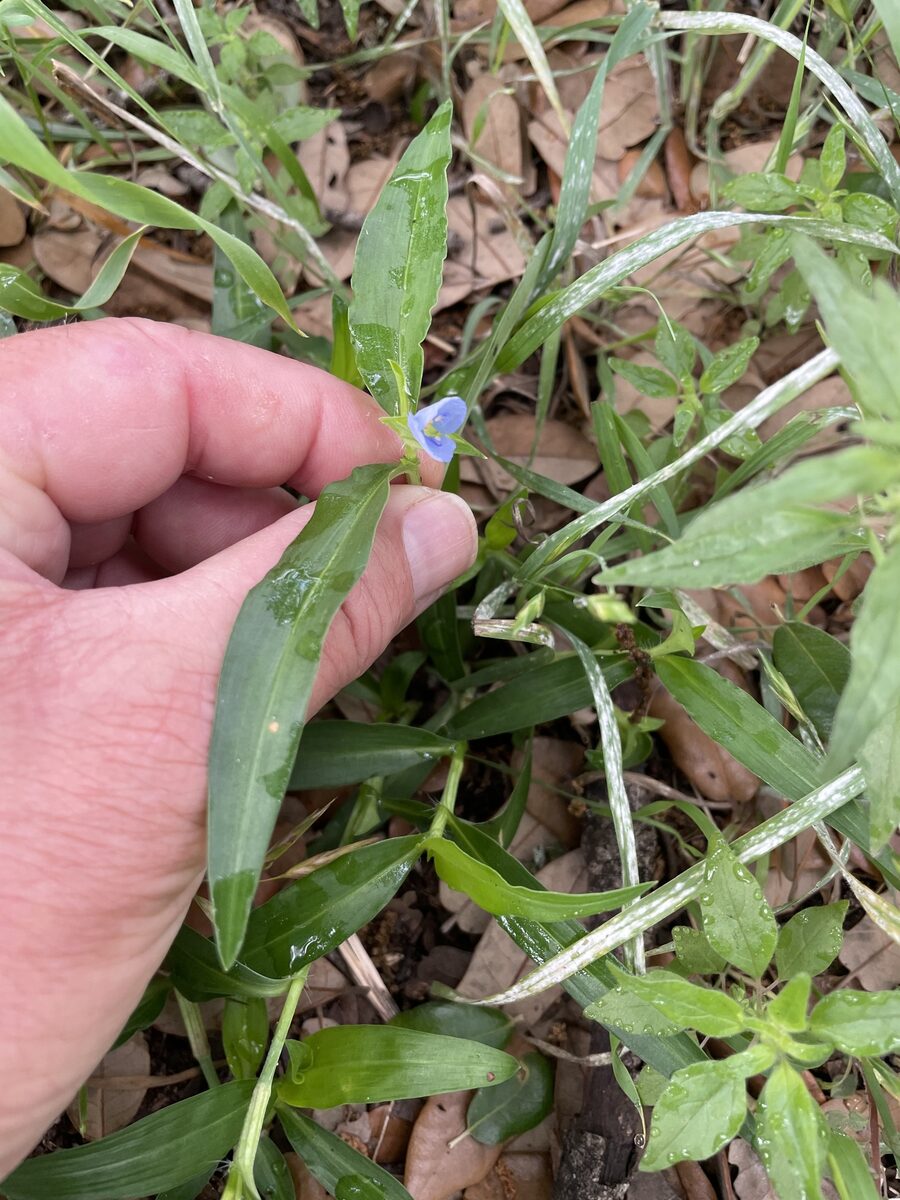
Commelina erecta angustifolia - (Michx.)Fernald.
Whitemouth Dayflower