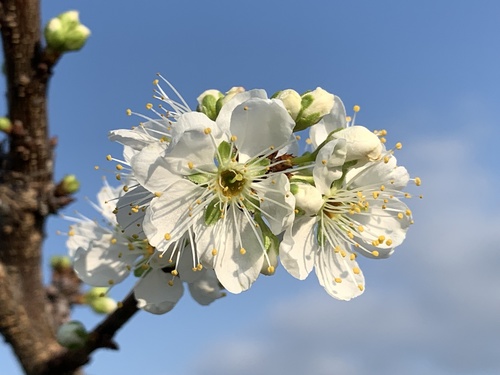
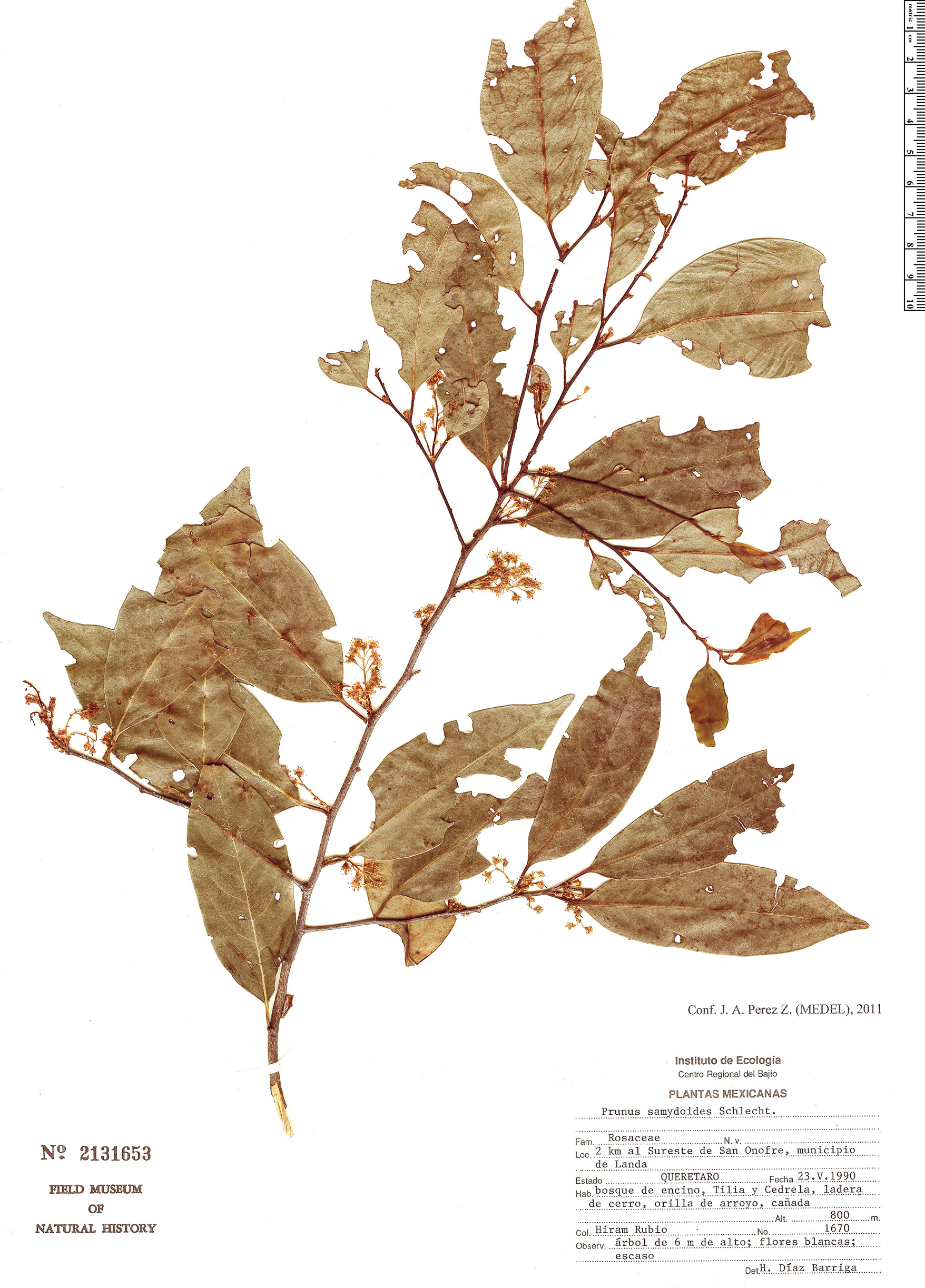
Cotoneaster franchetii
Bois
iNaturalist· cc0
no rights reserved, uploaded by Peter de Lange
iNaturalist· cc-by-nc
(c) Cat Chang, some rights reserved (CC BY-NC), uploaded by Cat Chang
iNaturalist· cc-by-sa
(c) Tony Rebelo, some rights reserved (CC BY-SA), uploaded by Tony Rebelo
Summary
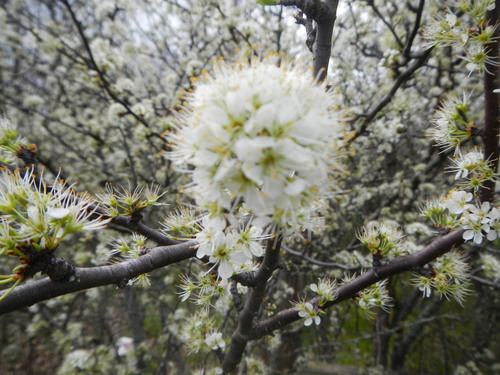
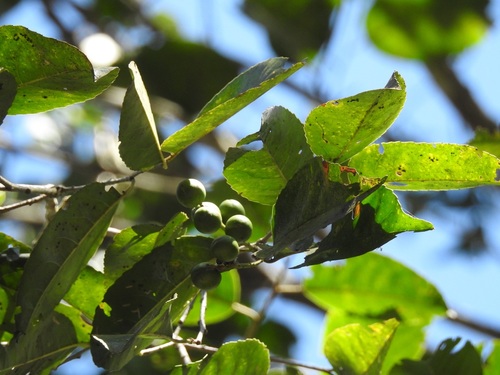
Source: WikipediaCotoneaster franchetii (Franchet's cotoneaster or orange cotoneaster) is a species of Cotoneaster native to southwestern China, in the provinces of Guizhou, Sichuan, Tibet, and Yunnan, and also in adjacent northern Myanmar and northern Thailand. It is an evergreen or semi-evergreen shrub growing to 3 metres (9.8 ft) tall. The leaves are oval-acute, 2–3.5 centimetres (0.79–1.38 in) long and 1–1.5 centimetres (0.39–0.59 in) broad, shiny green above, pubescent below with dense whitish to yellowish hairs. The flowers are produced in corymbs of 5–15 together, each flower 6–7 millimetres (0.24–0.28 in) diameter, with the five petals pink on the outer side, white on the inner side. The fruit is a red pome 6–9 millimetres (0.24–0.35 in) diameter; they are eaten by fruit-eating birds who disperse the seeds in their droppings. Two varieties are accepted by some authors, but not treated as distinct by the Flora of China: Cotoneaster franchetii var. franchetii, described above Cotoneaster franchetii var. cinerascens Rehd, larger, to 4 metres (13 ft) tall, with leaves up to 4 centimetres (1.6 in) long, and up to 30 flowers per corymb Some authors include a third variety, var. sternianus, although more often, this is treated as a distinct species, Cotoneaster sternianus. As Cotoneaster sternianus it has gained the Royal Horticultural Society's Award of Garden Merit.
Description
Evergreen shrub reaching 3m tall and wide. Hardy to UK zone 6. Year-round foliage; flowers May; seeds ripen October. Hermaphrodite species pollinated by flies and midges; attracts wildlife. Tolerates light sandy, medium loamy, and heavy clay soils with drainage preference; grows in poor and heavy clay soils. Mildly acid to very alkaline pH suitable. Grows in full shade, semi-shade, or full sun; prefers dry to moist soil. Tolerates maritime exposure and atmospheric pollution.
Edible Uses
The fruit has a mild flavour but is very mealy and full of seeds.
Medicinal Uses
None known
Distribution
It is a temperate plant. In Yunnan.
Where It Grows
Asia, Australia, China, Tasmania,
Cultivation
An easily grown plant, it prefers a good soil but also does well in poor soils. It thrives in lime and is also happy in peaty soils. It succeeds in any soil that is not marshy or waterlogged. Succeeds in dry soils. Grows well in heavy clay soils. Succeeds in full sun or semi-shade but does not fruit so freely in a shady position. Plants also succeed in deep shade. Tolerates atmospheric pollution. Fairly tolerant of maritime exposure. Plants are hardy to about -15°c. Hybridizes freely with other members of this genus. The flowers, when inhaled near to, have an unpleasant smell like decaying fish. They are very attractive to bees whilst the fruit is a good winter food source for many species of birds. Trees are notably susceptible to honey fungus.
Propagation
Seed. Members of this genus hybridize freely, so seed should be obtained from a known wild source or controlled fertilization if true breeding is required. Sow seed as soon as it is ripe in autumn in a cold frame; it will usually germinate in spring. Stored seed germinates faster with 3 months warm stratification at 15°C followed by 3 months cold stratification at 4°C. Germination usually occurs within 1–18 months at 15°C but can take 2 years. Pot seedlings as soon as they are large enough to handle, and plant out into nursery beds or permanent positions when more than 10cm tall. Cuttings of half-ripe wood with a heel can be taken in July or August in a frame.
Other Uses
A rose-tan dye is obtained from the fruit. The plant can be grown as an informal windbreak hedge in all but the most exposed situations and tolerates trimming.
Synonyms
References (1)
- Zhang, L., et al, 2016, Ethnobotanical study of traditional edible plants used by the Naxi people during droughts. Journal of Ethnobiology and Ethnomedicine. 12:39