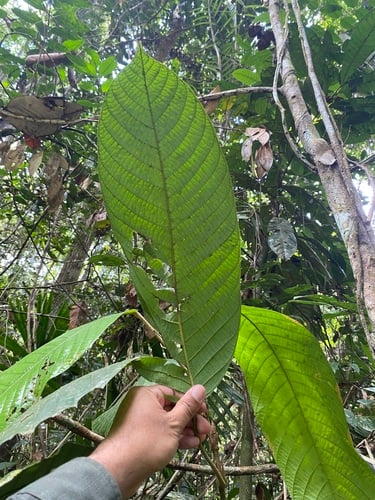
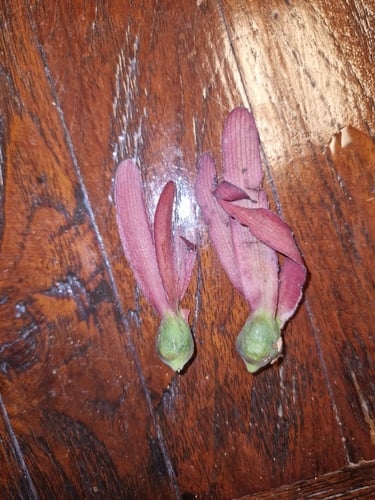
Hopea odorata
Roxb.
iNaturalist· cc-by-nc
(c) paakor, some rights reserved (CC BY-NC), uploaded by paakor
iNaturalist· cc-by-nc
(c) HP Lim, some rights reserved (CC BY-NC), uploaded by HP Lim
iNaturalist· cc-by
(c) Utain Pummarin, some rights reserved (CC BY)
Summary
Source: WikipediaHopea odorata is a species of tree in the plant family Dipterocarpaceae. It is found in Bangladesh, Cambodia, India, Laos, Malaysia, Singapore, Myanmar, Thailand, and Vietnam.
Description
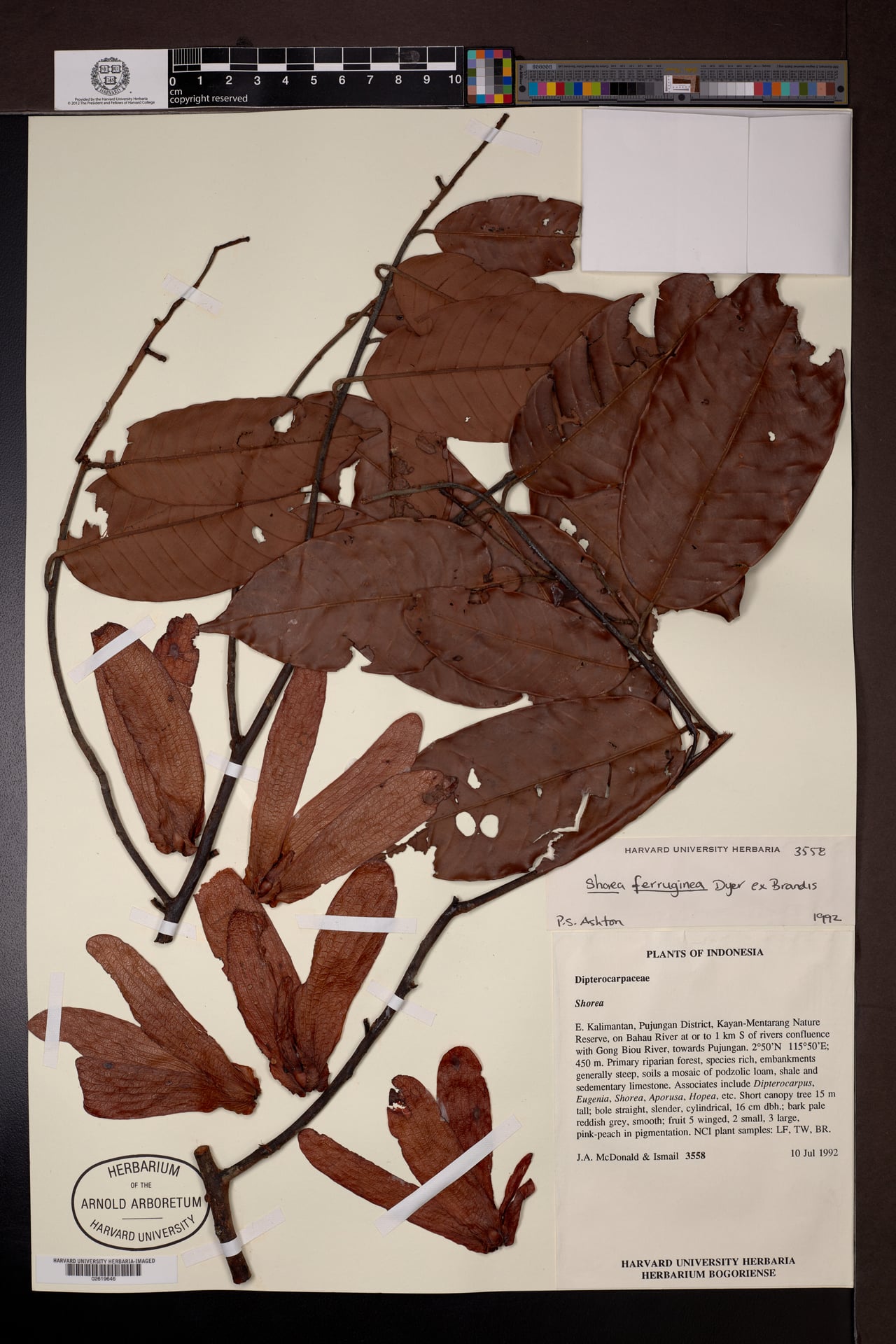
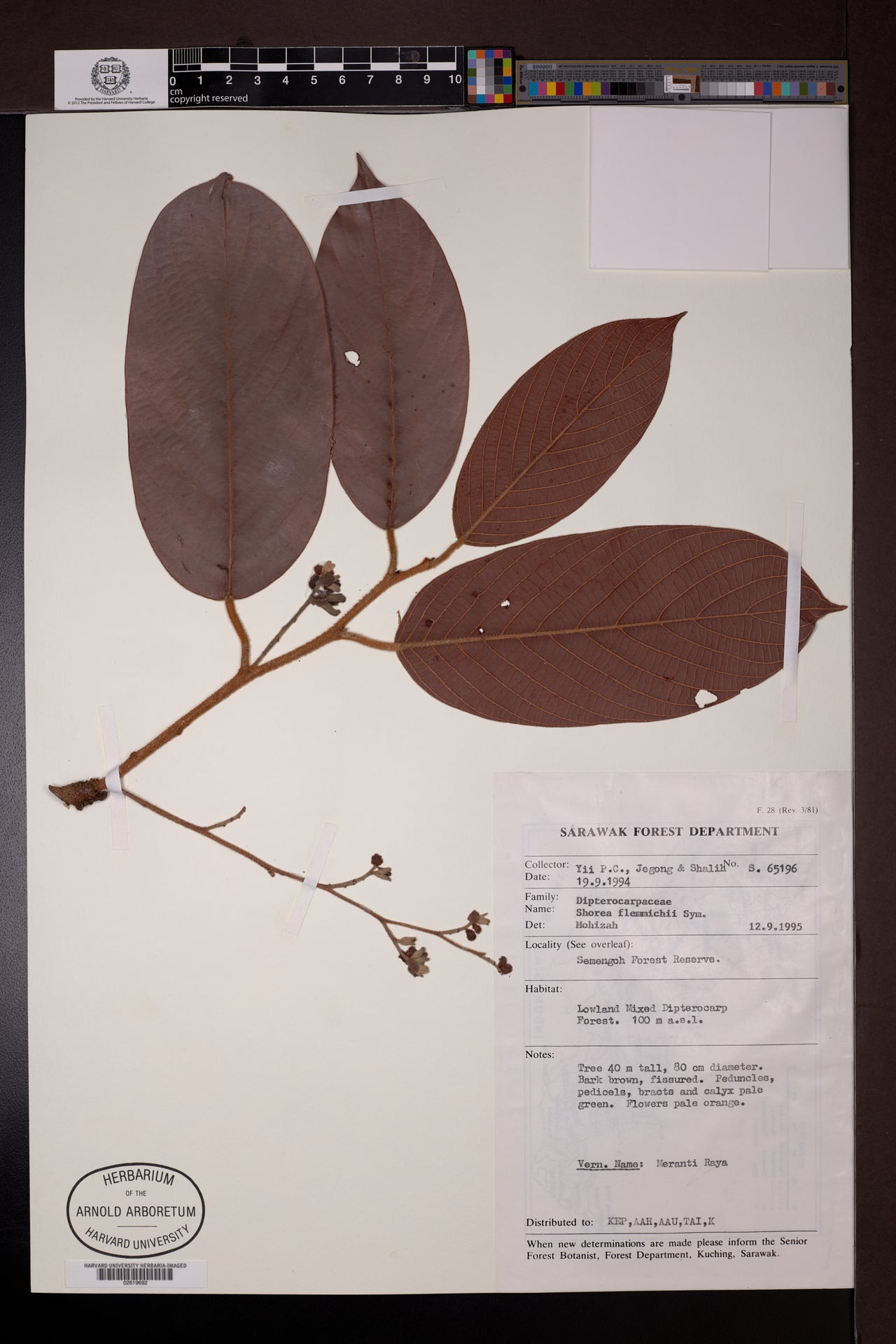
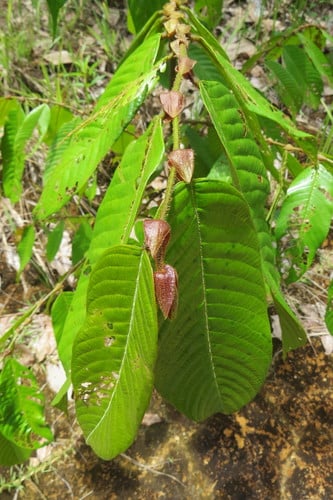
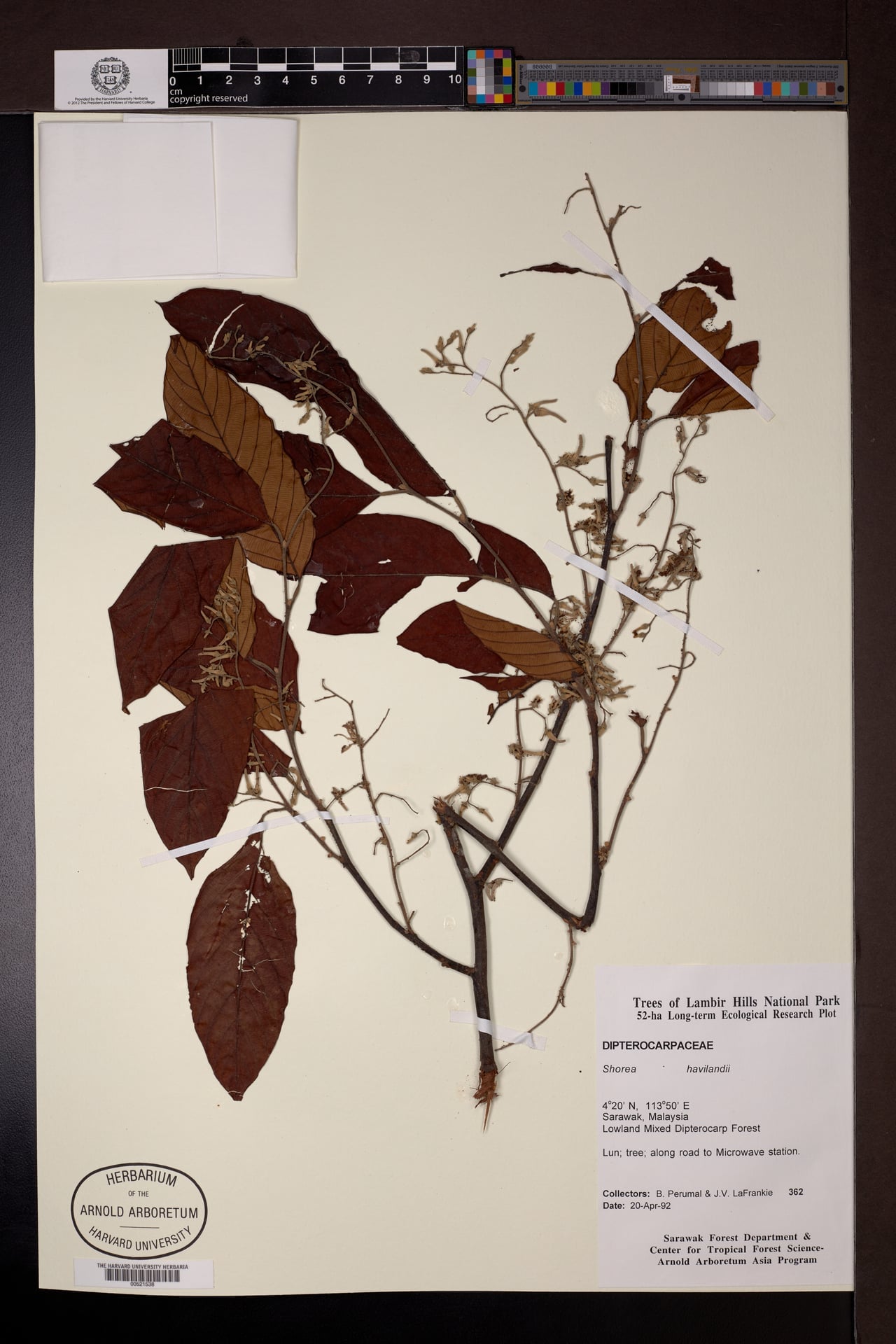
A large tree. It grows 40 m tall. The trunk is 80 cm across. It keeps its leaves throughout the year. The trunk is straight and cylinder shaped for 25 m and usually has stilt roots. The bark is scaly and brown to black. The leaves are narrowly oval and 8-14 cm long by 3-6 cm wide. They are broadly wedge shaped at the base and taper to the tip. The flowers are in groups in the axils of leaves or at the ends of branches. The flower branches are 17 cm long and there are 3-9 flowers. They are pale yellow to cream coloured. The fruit is oval and 6-8 mm across. There are 2 large wings 4-7 cm long by 1-2 cm wide.
Edible Uses
The fruit are chewed as a masticatory.
Traditional Uses
The fruit are chewed.
This uses section is brief — help expand it
Medicinal Uses
The resin from the trunk is applied to sores and wounds. The bark is astringent. It is used in the treatment of diarrhoea. It is an ingredient of a remedy for the treatment of inflammation of the gums and incontinence.
Distribution
It is a tropical plant. It grows up to 600 m above sea level. It is often along streams on deep rich soil.
Where It Grows
Andamans, Asia, Cambodia, India, Indochina, Laos, Malaysia, Myanmar, SE Asia, Thailand, Vietnam,
Cultivation
In most of the area of natural distribution it is found in lowland wet tropical forest on deep soils at elevations up to 300 metres and rarely far away from a stream. It grows best in areas where annual daytime annual temperatures are within the range 26 - 36°c, but can tolerate 10 - 41°c. Plants are killed by temperatures of -3°c. It prefers a mean annual rainfall of 3,000 - 4,000mm, but tolerates 2,200 - 5,100mm. Young plants require some shade, but become increasingly light-demanding as they grow larger. Found in the wild on deep rich soil, usually along the banks of streams and in damp situations. Prefers a pH in the range 4.8 - 5.2, tolerating 4.4 - 6. This tree has the highest increment among the dipterocarp species, with a diameter increment of 0.97cm per year and a height increment of 51cm per year. Rotation cycles have not been calculated or developed for the species but based on growth rates of a limited number of trees, a cycle of 30 to 40 years is feasible on suitable sites. The tree flowers and fruits almost regularly every two years.
Propagation
Seed - very light seeds should be rejected. Germination takes place in 1 - 4 weeks. Germination rate has been found to be 73% in unshaded beds, 83% in shaded beds and 40% in direct field sowings. Bare root transplanting results in almost 100 % survival if seedlings are root pruned first. Direct sowing is also usually successful. Generally, a shade crop is grown to protect the young seedlings from the first hot weather and to keep weeds down. The young plants need full overhead light and the shade crop should be cut back periodically to ensure it does not overtop the tree. The tree usually regenerates freely, with seedlings springing up profusely round the mother tree. To encourage natural reproduction, the overhead canopy should be thinned or removed. The seeds can be collected from the ground under the seed bearers and they can also be collected by lopping small branches. Seeds are recalcitrant and die within five days due to dehydration. If dried at 35°c to 33 % moisture content, seeds could stay viable for 1 - 2 months at 15°c, maintaining a germination rate of over 60 %. If stored at 4°c, the seeds can stay viable for about three months.
Other Uses
The tree yields a resin known as rock dammar in commerce. Rated a second quality dammar, it is used traditionally to caulk boats, and is also used in painting pictures and in the preparation of varnishes. A composition prepared by mixing the resin with bees-wax and red ochre is used for fastening spear and arrowheads. Dammar is a hard resin, obtained from various trees of Southeast Asia. Traditionally, it is used for purposes such as caulking boats and baskets, as an adhesive, a medicine, as a fuel for torches and sometimes in foods. Dammar has many commercial applications, though many of these uses are less important nowadays due to the advent of synthetic materials. Commercially, it is an ingredient of inks, lacquers, oil paints, varnishes etc, and is used as a glazing agent in foods. Harvesting of the resin commences when the bole is around 25cm in diameter (approx 20 years old). Triangular cuts (becoming circular with age) are arranged in vertical rows around the trunk. The cuts are several centimetres wide at first, but become enlarged at every tapping and eventually become holes of 15 - 20cm in depth and width. The average number of holes for a tree about 30 metres tall and 60 - 80cm in diameter is 9 - 11 in each of 4 - 5 vertical rows. For the higher holes, the tapper climbs the tree supported by a rattan belt and using the lower holes as footholds. The exuded resin is allowed to dry on the tree before it is collected. The frequency with which the tree is visited to refreshen the cut varies from once a week to once a month, depending on how far the tree is from the village. Tapping can continue for 30 years. Tannin is found in various parts of the tree, with 11% in the leaves, 13 - 15% in the bark and 10% in the wood.. The heartwood is yellowish-brown to brownish-red sometimes with dark streaks, turning purplish on exposure, with lustrous white resin canals at irregular intervals, becoming dull with age; it is clearly demarcated from the pale yellow or greyish yellow sapwood that turns pale brown on exposure. The wood is close and even-grained; very hard and heavy; strong; very durable; resistant to termites and other wood-eating organisms. It is difficult to saw but finishes well; planing is fairly easy and the surface produced is smooth; nailing properties are rated very poor. It is chiefly used for boat-building, dug-out canoes and for construction purposes, where durability and strength are of primary importance. It is also used for carts, presses flooring, roofing, piles, fence-posts, ploughs, furniture, etc. It is a first class sleeper wood. The tree is sometimes used to provide shade and also in reforestation projects. It is suitable for planting on degraded land. Experiments have shown that it is suitable for planting in degraded sites such as log yards, skid trails from logging activities, and ex-mining land. In general this tree might be suitable for agroforestry systems, however, mixed cropping with coffee (Coffea canephora) in Vietnam turned out to be unsuccessful. The trees had to be pruned very intensively to provide enough light for the coffee shrubs.
Synonyms
Also Known As
Khen, Khen hua, Koki msao, Sao, Sao cat, Sao den, Sao nghe, Sao xanh
References (2)
- Cengel, D. J. & Dany. C., (Eds), 2016, Integrating Forest Biodiversity Resource Management and Sustainable Community Livelihood Development in the Preah Vihear Protected Forest. International Tropical Timber Organization p 104
- Van Sam, H. et al, 2004, Trees of Laos and Vietnam: A Field Guide to 100 Economically or Ecologically Important Species. Blumea 29 (2004) 201-349