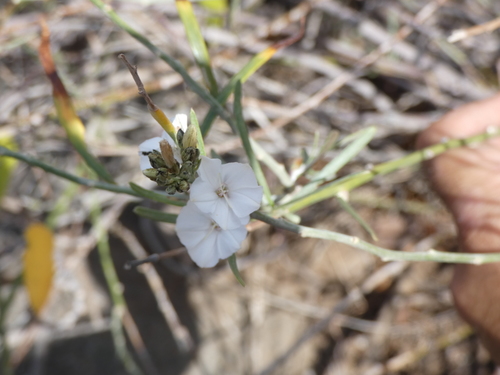
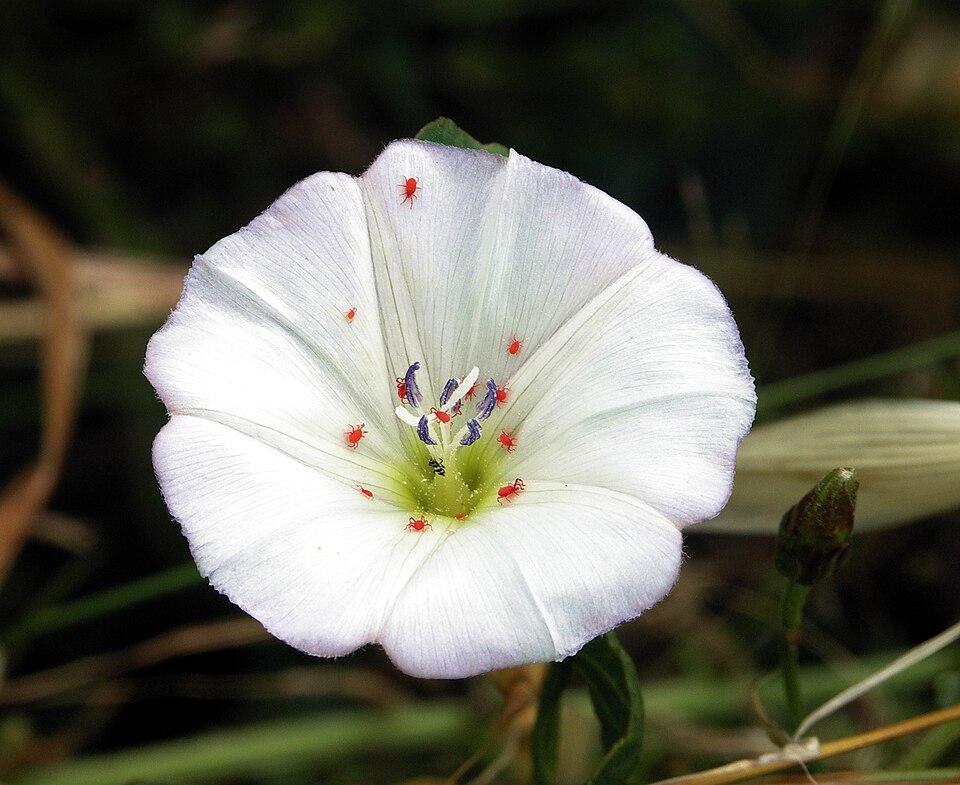
Convolvulus farinosus
L.
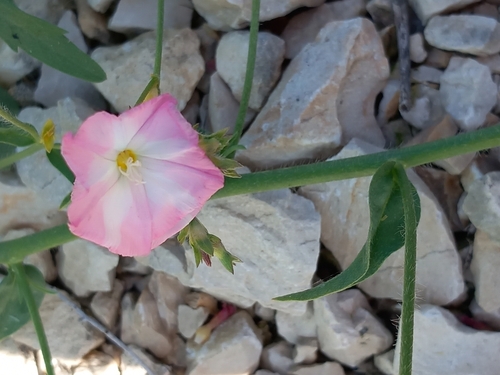
iNaturalist· cc-by-nc
(c) Sandra Falanga, some rights reserved (CC BY-NC), uploaded by Sandra Falanga
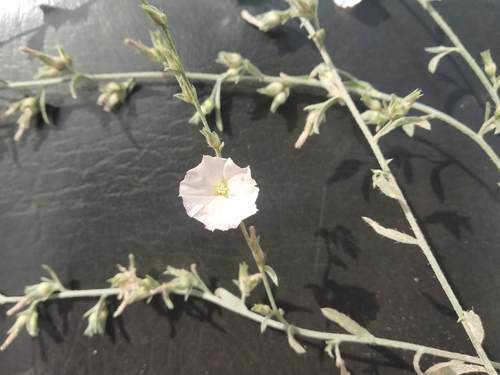
iNaturalist· cc-by-nc
(c) Klarissa, some rights reserved (CC BY-NC), uploaded by Klarissa
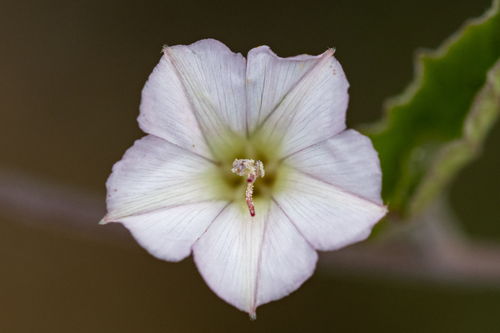
iNaturalist· cc-by-nc
(c) Klarissa, some rights reserved (CC BY-NC), uploaded by Klarissa
Summary
Source: WikipediaConvolvulus farinosus is a species of plant in the family Convolvulaceae. It is native to sub-Saharan Africa.
Description
A herb. It keeps growing from year to year. The stems are long and twining. The leaf blades are oval or triangle shaped. They are alternate. The leaf stalk is 7 cm long. The leaf blade is 3-11 cm long by 4-6 cm wide. The flowering stems are in the axils of leaves and stalks are 6 cm long. They are tube shaped and narrow. The fruit are round capsules 5-8 mm across. There are usually 4 seeds. They are round or 3 sided and black.
Edible Uses
Young leaves are cooked and eaten, often mixed with other vegetables. The roots are also eaten as a vegetable.
Traditional Uses
The young leaves are cooked and eaten. They are often mixed with other vegetables.
This uses section is brief — help expand it
Distribution
It is a tropical plant. It grows in grassland between 1,000-2,600 m above sea level.
Where It Grows
Africa, Botswana, East Africa, Eritrea, Ethiopia, Kenya, Malawi, Madagascar, Mediterranean, Mozambique, Reunion, South Africa, Southern Africa, Uganda, Tanzania, Zimbabwe,
Cultivation
Plants can be grown by seed.
Production
Leaves are collected during the rainy season.
Other Information
A minor leaf vegetable used when other leaves are scarce.
Also Known As
Enambonhoa, Mrasimwa, Rasimwa
References (6)
- Grubben, G. J. H. and Denton, O. A. (eds), 2004, Plant Resources of Tropical Africa 2. Vegetables. PROTA, Wageningen, Netherlands. p 215
- Johns, T., Mhoro, E. B. and Sanaya, P., 1996, Food Plants and Masticants of the Batemi of Ngorongoro District, Tanzania. Economic Botany, Vol. 50, No. 1, pp. 115-121
- Ruffo, C. K., Birnie, A. & Tengnas, B., 2002, Edible Wild Plants of Tanzania. RELMA p 226
- Ruiters-Welcome, A. K., 2019, Food plants of southern Africa. Ph.D. thesis. Univ. of Johannesburg p 45
- Welcome, A. K. & Van Wyk, B.-E., 2019, An inventory and analysis of the food plants of southern Africa. South African Journal of Botany 122 (2019) 136–179
Show all 6 references Hide references
- World Checklist of Useful Plant Species 2020. Royal Botanic Gardens, Kew