Terminalia erythrocarpa
F. Muell.
Girn girnirr
iNaturalist· cc-by
(c) Ben Lewis, some rights reserved (CC BY), uploaded by Ben Lewis
iNaturalist· cc-by-nc
(c) callumjpaul, some rights reserved (CC BY-NC)
iNaturalist· cc-by-nc
(c) callumjpaul, some rights reserved (CC BY-NC)
Description
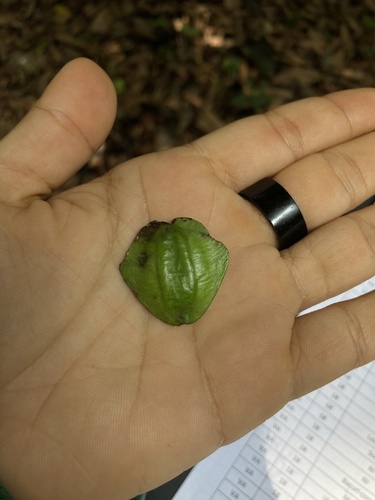
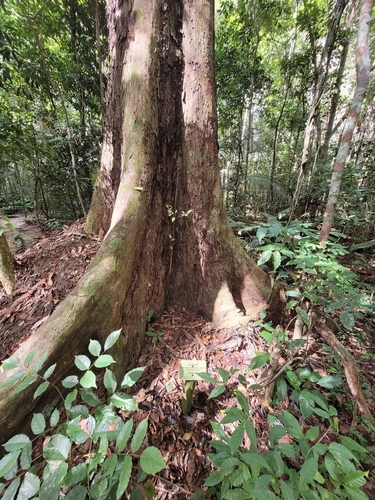
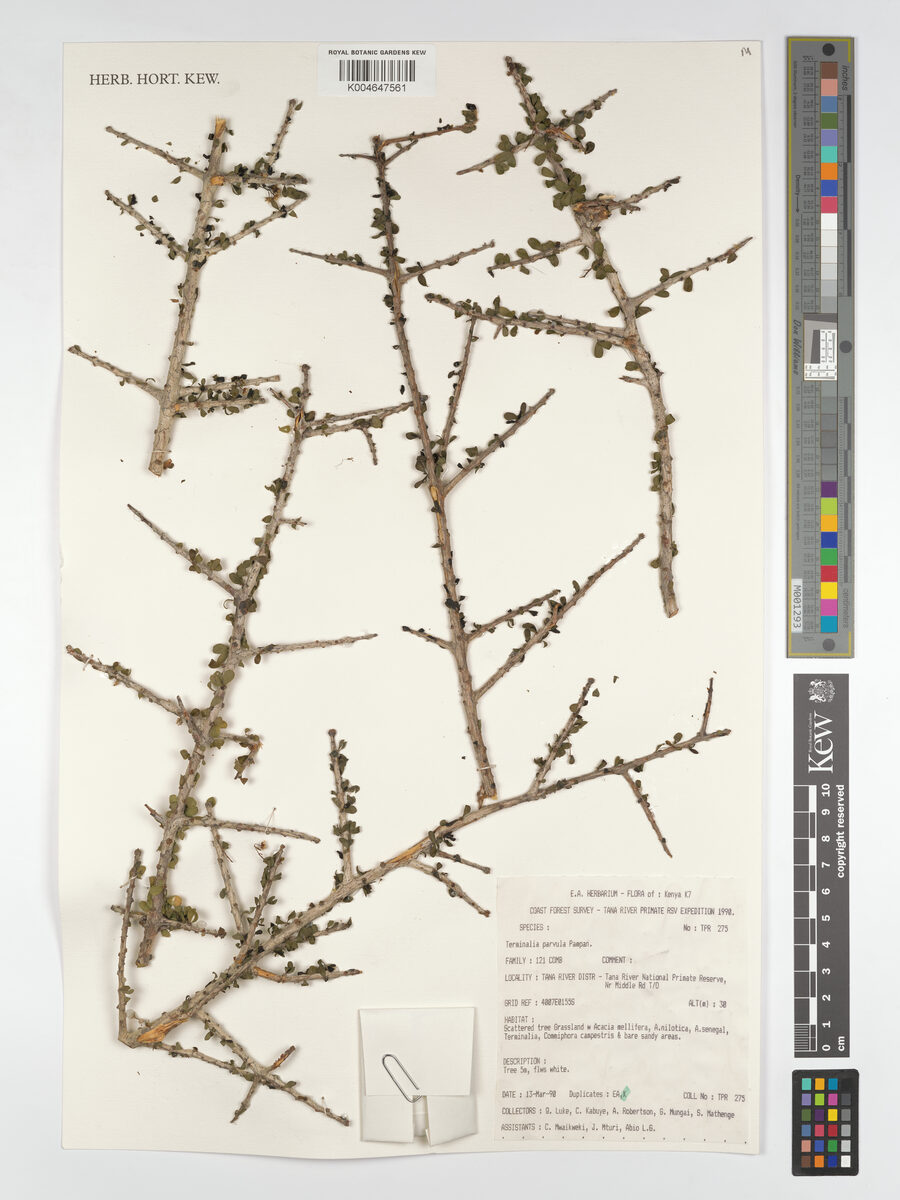
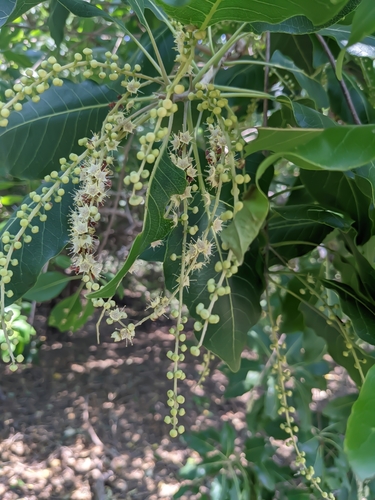
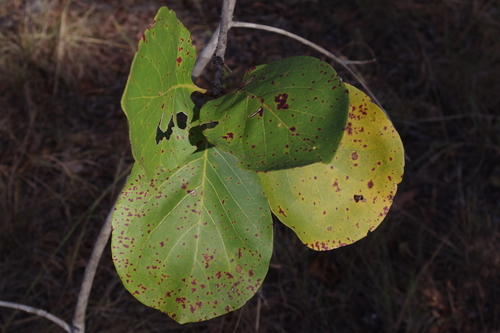
A small tree. It loses its leaves during the year. It grows up to 10 m tall. The bark is light grey, rough and cracked along its length. The leaves are arranged in spirals. They are smooth and narrow and taper towards the base. The leaf blade is 9-20 cm long and 206 cm wide. It is light green on the upper surface and paler underneath. The tip is pointed. The leaf stalk is 2.5-7 cm long. The flowers are small and cream. They occur on spikes 5-10 cm long. These are produced in the leaf axils near the ends of small branches. The fruit are smooth, oval and fleshy. They are about 1.5 cm long by 1 cm wide and with a distinct beak. The fruit are purple or red when ripe. They have a thin flesh around a single seeded woody shell.
Edible Uses
The fruit is eaten, particularly by children.
Traditional Uses
The fruit are eaten especially by children.
This uses section is brief — help expand it
Distribution
A tropical plant. It occurs in the Northern Territory in Australia. It normally grows near streams. It grows in moist sandy soil. It grows from sea level to 200 m above sea level.
Where It Grows
Australia*,
Cultivation
Plants are grown from seed. The seed should be planted fresh.
Production
In Australia flowering occurs October to December and fruiting from February to June.
Other Information
The fruit are eaten especially by children.
Notes
There are about 200-250 Terminalia species. They are tropical.
Synonyms
Also Known As
Anbikkurrudj
References (4)
- Brock, J., 1993, Native Plants of Northern Australia, Reed. p 314
- Dunlop, C.R., Leach, G.J. & Cowie, I.D., 1995, Flora of the Darwin Region. Vol 2. Northern Territory Botanical Bulletin No 20. p 147
- Garde, M., et al, 2003, A Preliminary List of Kundedjnjenghmi Plant Names. Northern Land Council. (Arnhem Land, Australia)
- Wightman, Glenn et al. 1992, Mangarrayi Ethnobotany: Aboriginal Plant Use from the Elsey Area Northern Australia. Northern Territory Botanical Bulletin No 15. Parks and Wildlife Commission of the Northern Territory. p 46.