Colchicum autumnale
L.
Autumn crocus
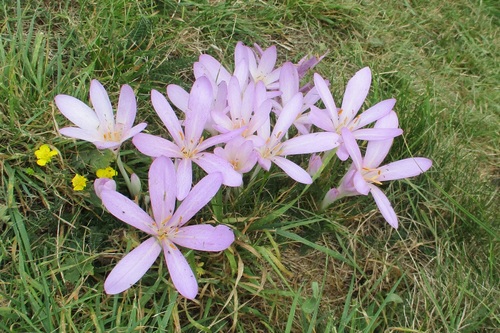
iNaturalist· cc-by-nc
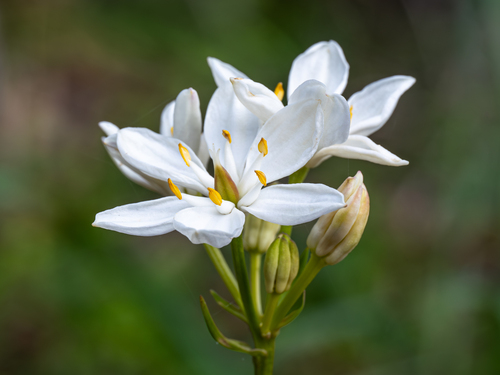
(c) Thomas Wrbka, some rights reserved (CC BY-NC), uploaded by Thomas Wrbka
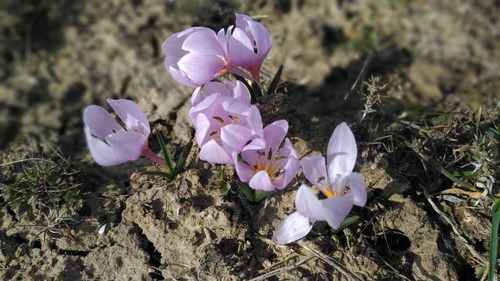
iNaturalist· cc-by-nc
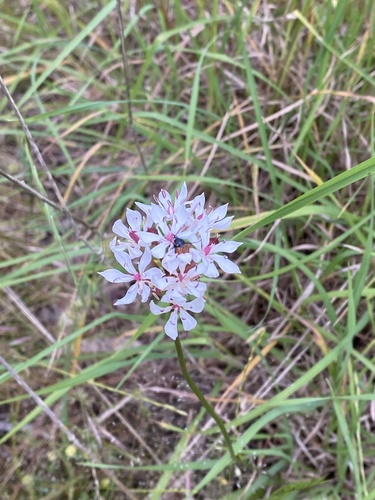
(c) dittant, some rights reserved (CC BY-NC)
Summary
Source: WikipediaColchicum autumnale, commonly known as autumn crocus, meadow saffron, naked boys or naked ladies, is a toxic autumn-blooming flowering plant that resembles the true crocuses, but is a member of the plant family Colchicaceae, unlike the true crocuses, which belong to the family Iridaceae. It is called "naked boys/ladies" because the flowers emerge from the ground long before the leaves appear. Despite the vernacular name of "meadow saffron", this plant is not the source of saffron, which is obtained from the saffron crocus, Crocus sativus – and that plant, too, is sometimes called "autumn crocus". The species is cultivated as an ornamental in temperate areas, in spite of its toxicity. The cultivar 'Nancy Lindsay' has gained the Royal Horticultural Society's Award of Garden Merit.
Description
Bulbous perennial reaching 0.2m, growing at medium rate. Hardy to UK zone 5, not frost-tender. Foliage present February to July; flowers August to October; seeds ripen April to June. Hermaphroditic flowers pollinated by bees and flies; self-fertile and noted for attracting wildlife. Accommodates light sandy, medium loamy, and heavy clay soils with preference for good drainage. Grows in semi-shade or full sun; prefers moist conditions across mildly acidic to mildly alkaline pH range.
Edible Uses
None known.
Traditional Uses
The starch of the root is a famine food for extending bread flour, after removing the bitter element. Caution: It is probably poisonous until properly processed.
Medicinal Uses
Though known since at least ancient Greek times, autumn crocus was long considered too poisonous to use medicinally. It was not until eighteenth-century research that it was found to be of value in treating gout. In modern herbalism it is used to relieve pain and inflammation of acute gout and rheumatism, though frequent use has been known to encourage more frequent attacks of these conditions. Both the corm and seeds are analgesic, antirheumatic, cathartic and emetic, and are used mainly for gouty and rheumatic complaints, usually in combination with an alkaline diuretic. Leukaemia has been successfully treated with autumn crocus, and the plant has also been used with some success for Bechet's syndrome, a chronic disease marked by recurring ulcers and leukaemia. It is a very toxic plant and should not be prescribed for pregnant women or patients with kidney disease; it should only be used under the supervision of a qualified practitioner. Seeds are harvested in early summer and corms in mid to late summer when the plant has fully died down; both are dried for later use. The fresh bulb is used to prepare a homeopathic remedy for nausea, diarrhoea and rheumatism.
Known Hazards
Colchicum is lethally toxic due to its colchicine content. Its leaves have been mistaken by foragers for those of Allium ursinum (ramsons or wild garlic), which they vaguely resemble. This plant (and colchicine itself) poses a particular threat to felines. The corms of meadow saffron contain the highest level of toxins, but all parts of the plant are regarded as poisonous.
Distribution
It is a temperate plant.
Where It Grows
Europe, France, Luxembourg,
Cultivation
Prefers a rich well-drained loam in a sunny position. Tolerates partial shade but dislikes dry soils. Tolerates a pH in the range 4.5 to 7.5. Plants are hardy to about -20°c. The dormant bulbs are fairly hardy and will withstand soil temperatures down to at least -5°c. The autumn crocus is easily grown in grass and can be naturalized there. It also grows well amongst shrubs and by woodland edges. Plant the corms about 7 - 10cm deep in July. Plants seem to be immune to the predations of rabbits, though slugs may attack the corms. The flowers are very attractive to bees and butterflies.
Propagation
Seed is best sown as soon as it is ripe in early summer in a seedbed or cold frame. Germination can be very slow, taking up to 18 months at 15°C. Sowing thinly is advisable so seedlings do not need transplanting in their first year; apply a liquid fertilizer during their first summer to ensure adequate nourishment. Prick out seedlings once dormant, potting about 2 per pot, and grow on in a greenhouse or frame for at least a couple of years before planting out in their permanent positions while dormant. Seedlings take 4–5 years to reach flowering size. Bulbs can also be divided in June or July once the leaves have died down. Larger bulbs can go directly into permanent positions; smaller bulbs are best potted and grown on in a cold frame for a year first. The plant can be divided every other year for a rapid increase.
Other Uses
The poisonous alkaloid colchicine is extracted from this plant and used in plant breeding to alter the genetic make-up of plants in the search for new, improved varieties. It works by doubling the chromosome number.
Other Information
It is a famine food.
Notes
There are 90 Colchicum species.
Synonyms
References (3)
- Heywood, V.H., Brummitt, R.K., Culham, A., and Seberg, O., 2007, Flowering Plant Families of the World. Royal Botanical Gardens, Kew. p 358 (As Colchicum commune)
- Lim, T. K., 2015, Edible Medicinal and Non Medicinal Plants. Volume 9, Modified Stems, Roots, Bulbs. Springer p 26
- PARMENTIER, (As Colchicum commune)