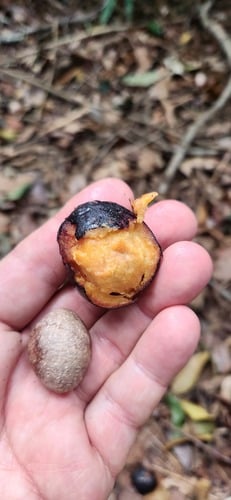
Calyptranthes clusiifolia
O. Berg.
Guamirim-pepper
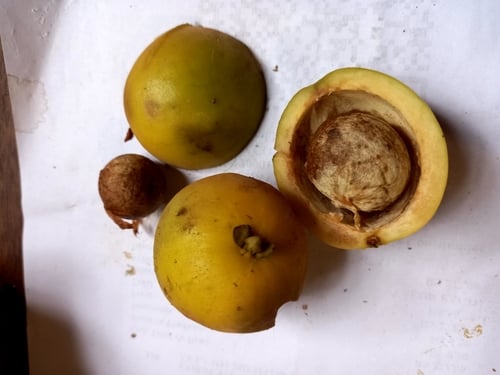
iNaturalist· cc-by-nc
(c) Otávio Verly, some rights reserved (CC BY-NC)
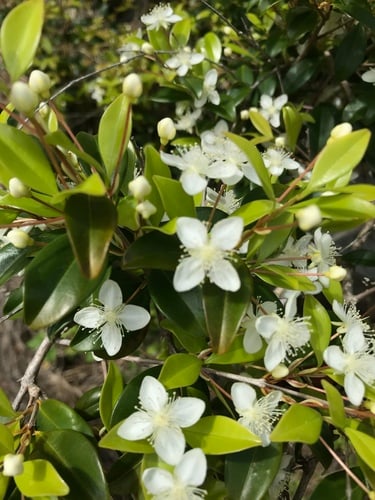
iNaturalist· cc-by-nc
(c) Pedro Cavalcante, some rights reserved (CC BY-NC)
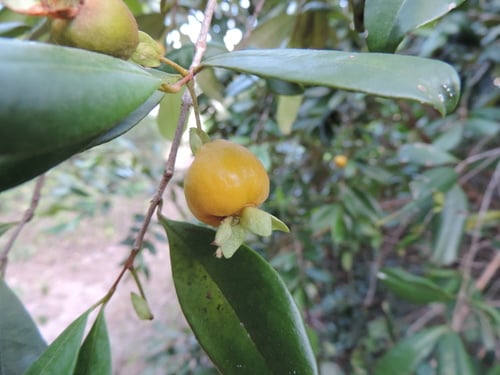
wikimedia· cc-by
Wikimedia Commons - Alex Popovkin, Bahia, Brazil from Brazil
Description
A tropical tree in the Myrtaceae family, native to tropical regions.
This description is brief — help expand it
Edible Uses
The fruit is edible.
Distribution
It is a tropical plant.
Where It Grows
Brazil, South America, Venezuela,
Cultivation
Grows best in a sunny position. Succeeds in dry to moist soils. Prefers a sandy soil of moderate fertility. A slow-growing plant, scarcely reaching a height of 1.5 metres within 2 years from seed. The plant can flower several times a year. The flowers are strongly scented.
Propagation
Seed - best sown as soon as it is ripe in a sunny position in a nursery seedbed. A germination rate of less than 50% can usually be expected, with the seed sprouting within 10 - 15 days.
Other Uses
The wood is medium-textured, straight-grained, moderately heavy, with moderate mechanical properties and not very durable. It is used locally in general construction for purposes such as window and door jambs, laths etc; for making tool handles, boxes and crates. The wood is used for fuel and to make charcoal.
Synonyms
Also Known As
Aracarana
References (2)
- Grandtner, M. M. & Chevrette, J., 2013, Dictionary of Trees, Volume 2: South America: Nomenclature, Taxonomy and Ecology. Academic Press p 93
- www.colecionandofrutas.org