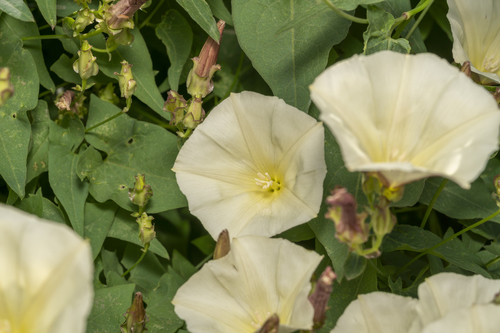
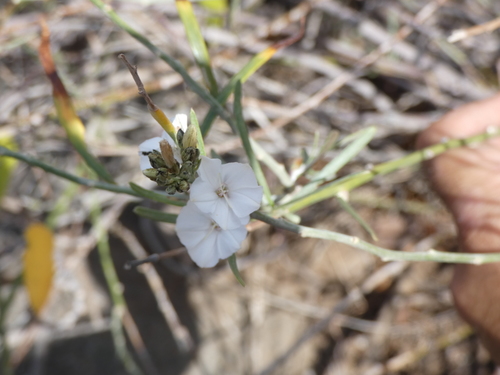
Ipomoea carnea
Jacq.
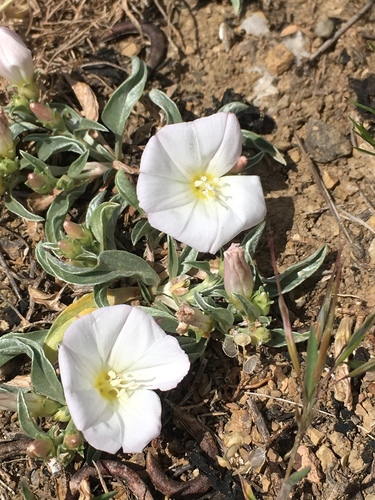
iNaturalist· cc-by
(c) i_c_riddell, some rights reserved (CC BY), uploaded by i_c_riddell
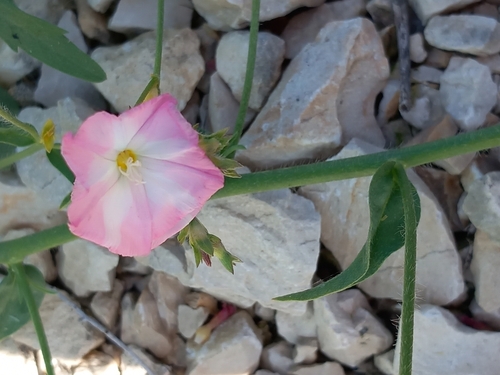
iNaturalist· cc-by-nc
(c) rolandwirth, some rights reserved (CC BY-NC), uploaded by rolandwirth
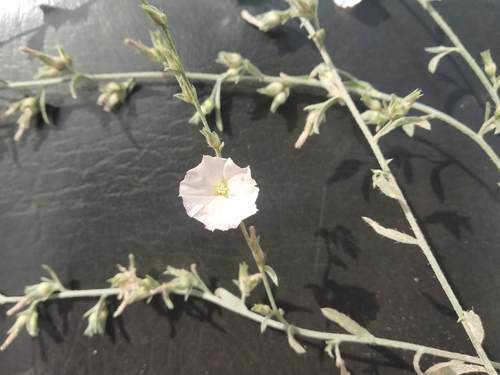
iNaturalist· cc-by-nc
(c) Miguel Diaz Anaya, some rights reserved (CC BY-NC), uploaded by Miguel Diaz Anaya
Summary
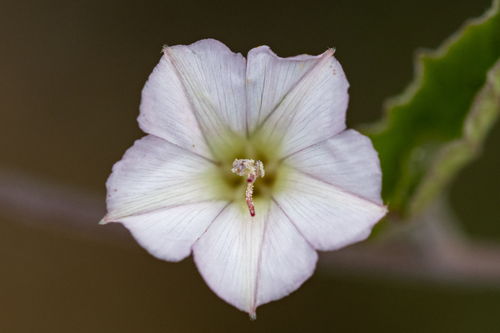
Source: WikipediaIpomoea carnea, the pink morning glory, is a species of morning glory that grows as a bush. This flowering plant has heart-shaped leaves that are a rich green and 6–9 inches (15–23 cm) long. It can be easily grown from seeds. These seeds are toxic and it can be hazardous to cattle; the toxicity is related to the swainsonine produced by its endophytes, and to bioaccumulation of selenium in the leaves but mostly in the seeds. Ingestion of seeds or leaves causes abnormal endocrine functions and gastrointestinal functions, immune system alternation, abnormality in embryogenesis. The stem of I. carnea can be used for making paper. The plant is also of medicinal value. It contains a component identical to marsilin, a sedative and anticonvulsant. A glycosidic saponin has also been purified from I. carnea with anticarcinogenic and oxytocic properties. One selection of I. carnea, 'Inducer', has been used as a rootstock for inducing flowering of sweetpotato cultivars which otherwise prove reticent to produce flowers. Another common name is "bush morning glory", but particularly in temperate North America, that usually refers to I. leptophylla. In Brazil, I. carnea (in addition to other common names) is known as canudo-de-pito, literally "pipe-cane", as its hollow stems were used to make tubes for tobacco pipes. It thus became the namesake of Canudos, a religious community in the sertão of Bahia, over which the War of Canudos was fought 1893–1897.
Description
A creeping tropical herb of the Convolvulaceae family.
This description is brief — help expand it
Edible Uses
The leaves are eaten.
Medicinal Uses
The leaves are slightly purgative. A latex in the plant is used to treat skin problems.
Known Hazards
The leaves are slightly purgative and considered to be toxic to livestock.
Distribution
It is a tropical plant.
Where It Grows
Asia, India,
Cultivation
The plant is grown as an ornamental. It has escaped from cultivation and become naturalized in many areas, often being classified as invasive. The plant flowers throughout the year, except during cool periods.
Other Uses
The plant is grown as a hedge and green manure. The plant is traditionally grown in living fences in the northwestern Himalayas, where it helps to exclude livestock and other animals; mark out land boundaries; whilst also providing a range of medicinal and other uses.
Also Known As
Thethar
References (2)
- Dobriyal, M. J. R. & Dobriyal, R., 2014, Non Wood Forest Produce an Option for Ethnic Food and Nutritional Security in India. Int. J. of Usuf. Mngt. 15(1):17-37
- Kumar, R. & Saikia, P., 2020, Wild edible plants of Jharkhand and their utilitarian perspectives. Indian Journal of Traditional Knowledge Vol 19 (2), April 2020, pp 237-250