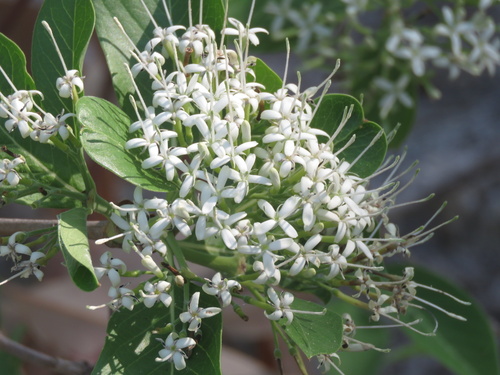
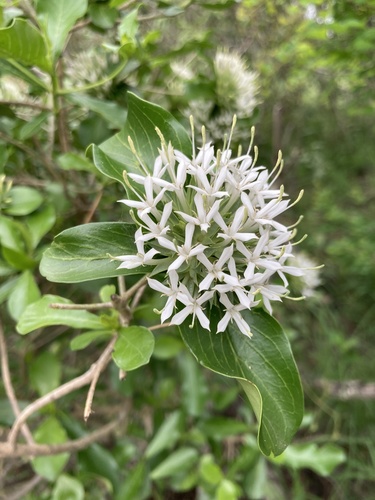
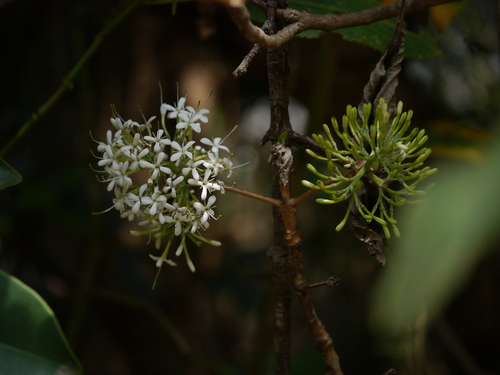
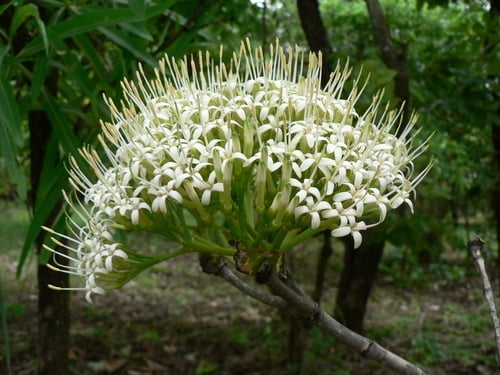
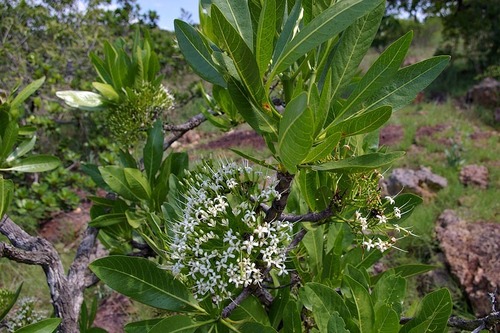
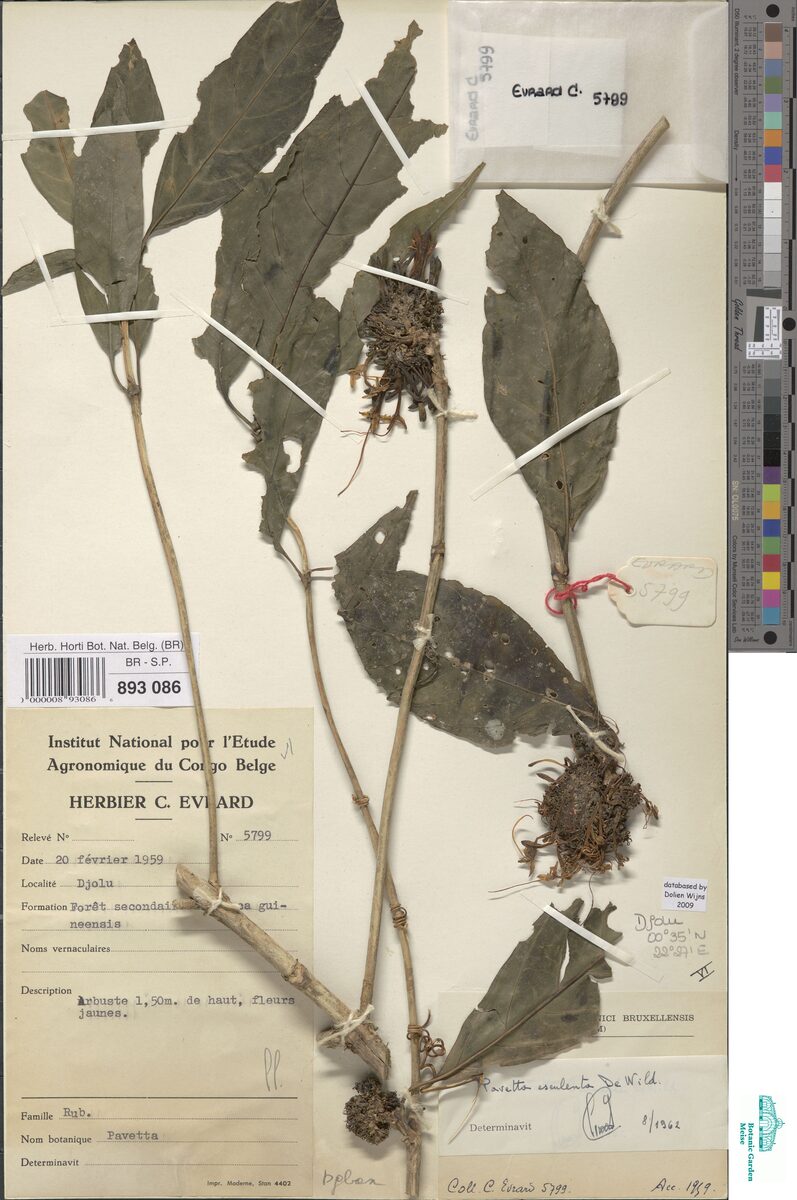
Coffea liberica var. dewevrei
(De Wild. & T. Durand) Lebrun
Excelsa coffee
iNaturalist· cc0
no rights reserved, uploaded by Romer N. Rabarijaona
iNaturalist· cc-by-nc
(c) Liselle Santos, some rights reserved (CC BY-NC), uploaded by Liselle Santos
iNaturalist· cc0
no rights reserved, uploaded by Romer N. Rabarijaona
Summary
Source: WikipediaCoffea liberica, commonly known as Liberian coffee, is a species of flowering plant in the family Rubiaceae from which coffee is produced. It is native to western and central Africa (from Liberia to Uganda and Angola), and has become naturalised in areas including Colombia, Venezuela, the Philippines, Borneo and Java.
Description
A tree. It grows 10 m tall. The leaves are wider and thicker with smooth edges. The fruit are larger than Arabica coffee.
This description is brief — help expand it
Edible Uses
The seeds are used to make coffee.
Distribution
A tropical plant. It grows in tropical Africa. It grows near the southern borders of the Sahara. It grows by rivers in dry locations.
Where It Grows
Africa, Angola, Cameroon, Central Africa, Central African Republic, CAR, Congo, East Africa, Liberia, Nigeria, Sudan, Uganda, West Africa,
Notes
There are about 40 Coffea species.
Synonyms
References (5)
- Burkill, I.H., 1966, A Dictionary of the Economic Products of the Malay Peninsula. Ministry of Agriculture and Cooperatives, Kuala Lumpur, Malaysia. Vol 1 (A-H) p 635 (As Coffea excelsa)
- Ferwerda, F.P., 1979, Coffees, in Simmonds, N.W., (ed), Crop Plant Evolution. Longmans. London. p 259
- Grivetti, L. E., 1980, Agricultural development: present and potential role of edible wild plants. Part 2: Sub-Saharan Africa, Report to the Department of State Agency for International Development. p 27 (As Coffea excelsa)
- Lyle, S., 2006, Discovering fruit and nuts. Land Links. p 149, 151 (As Coffea dewevrei var. excelsa)
- Wiersema, J. H. & Leon, B., 2013, World Economic Plants. A Standard Reference CRC Press. 2nd Ed. p 190