Clinopodium vulgare
L.
Field basil, Bush basil
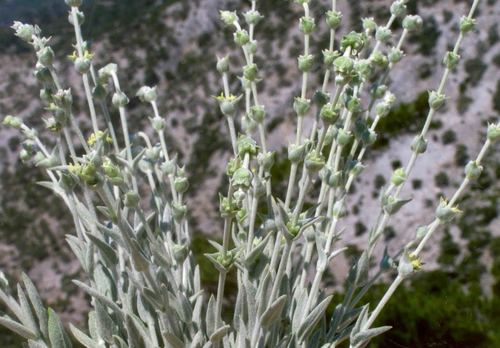
iNaturalist· cc-by-nc
(c) cometseeker, some rights reserved (CC BY-NC)
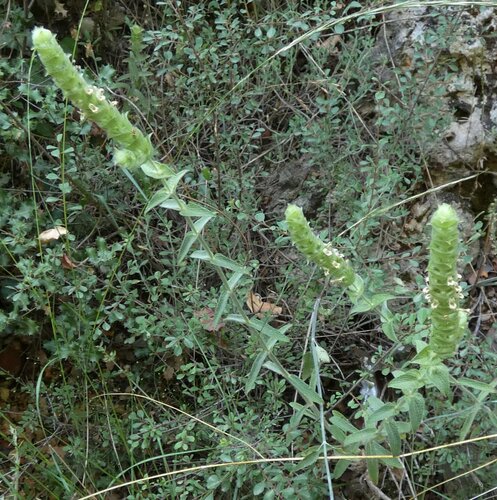
iNaturalist· cc-by-nc
(c) Adam Green, some rights reserved (CC BY-NC)
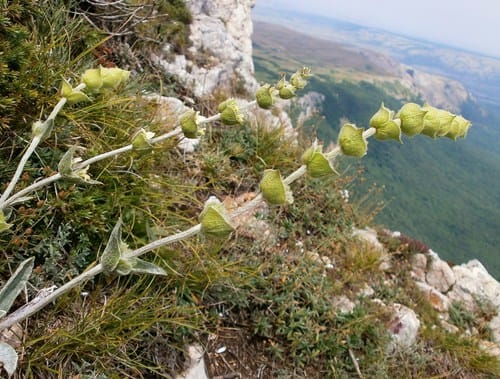
iNaturalist· cc-by-nc
(c) Adam Green, some rights reserved (CC BY-NC)
Summary
Source: WikipediaClinopodium vulgare, or the wild basil (not to be confused with the basils of the genus Ocimum), is a species of flowering plant in the family Lamiaceae.
Description
A small herb. It is softly hairy. It grows 75 cm high. The stems are erect. They only have a few branches. The leaves are oval or sword shaped. They have a few teeth and short stalks. The flowers are red-purple. They are 12-22 mm long and in dense rings. The calyx is purple and curved.
Edible Uses
The leaves can be used fresh or dried as a flavouring in cooked dishes, or fresh in salads as a condiment. A sweet, aromatic herbal tea can also be brewed from the fresh leaves.
Traditional Uses
The fresh or dried leaves are used as flavouring. They are used for tomato sauce, omelettes, egg sandwiches, rice dishes and other foods. The fresh leaves can be used for tea. The cracked seed are used in various recipes.
Medicinal Uses
The plant is aromatic, astringent, cardiotonic, carminative, diaphoretic, and expectorant. An infusion of the plant can help relieve weak digestion.
Distribution
It is a temperate plant. It grows in dry grasslands and stony habitats. It grows along roadsides and the edges of forests. In north India it grows between 2,500-3,500 m above sea level. It suits plant hardiness zone 7.
Where It Grows
Asia, Britain, Caucasus, Europe, France, Greece, Himalayas, India, Italy, Luxembourg, Mediterranean, North America, Pakistan, Portugal, Siberia, Slovenia, Spain, Turkey, Türkiye, USA,
Cultivation
Succeeds in almost any well-drained soil.
Propagation
Seed — sow in spring in a cold frame, barely covering the seed. Germination typically occurs within 2 weeks at 21°c. Once large enough to handle, prick seedlings out into individual pots and grow on in the greenhouse. Plant out in summer if growth is sufficient, otherwise wait until late spring or early summer of the following year. Divide clumps in spring — larger clumps can go directly into permanent positions, while smaller ones are best potted up in a cold frame until rooting well, then planted out in summer or the following spring. Softwood cuttings can be taken in May or June.
Other Uses
The leaves yield both a yellow and a brown dye.
Notes
There are about 20 Clinopodium species.
Synonyms
Also Known As
Cushion calamint, Dog mint, Navadna mačja zel, Shyul, Wild Basil
References (12)
- Blamey, M and Grey-Wilson, C., 2005, Wild flowers of the Mediterranean. A & C Black London. p 397
- Facciola, S., 1998, Cornucopia 2: a Source Book of Edible Plants. Kampong Publications, p 125
- Kermath, B. M., et al, 2014, Food Plants in the Americas: A survey of the domesticated, cultivated and wild plants used for Human food in North, Central and South America and the Caribbean. On line draft. p 245
- Kiple, K.F. & Ornelas, K.C., (eds), 2000, The Cambridge World History of Food. CUP p 1727 (As Satureja vulgaris)
- Lawton, B.P., 2002, Mints. A Family of Herbs and Ornamentals. Timber Press, Portland, Oregon. p 123
Show all 12 references Hide references
- Mabey, R., 1973, Food for Free. A Guide to the edible wild plants of Britain, Collins. p 140
- Masoodi, H. U. R. & Sundriyal, R. C., 2020, Richness of non-timber forest products in Himalayan communities—diversity, distribution, use pattern and conservation status. Journal of Ethnobiology and Ethnomedicine 16:56
- Plants for a Future database, The Field, Penpol, Lostwithiel, Cornwall, PL22 0NG, UK. http://www.scs.leeds.ac.uk/pfaf/
- Rana, D., et al, 2019, Ethnobotanical knowledge among the semi-pastoral Gujjar tribe in the high altitude (Adhwari’s) of Churah subdivision, district Chamba, Western Himalaya. Journal of Ethnobiology and Ethnomedicine (2019) 15:10
- Seidemann J., 2005, World Spice Plants. Economic Usage, Botany, Taxonomy. Springer. p 112
- Sp. pl. 2:587. 1753
- Wild edible plants of Himachal Pradesh