Clematis vitalba
L.
Traveller's joy, Old man's beard
iNaturalist· cc-by
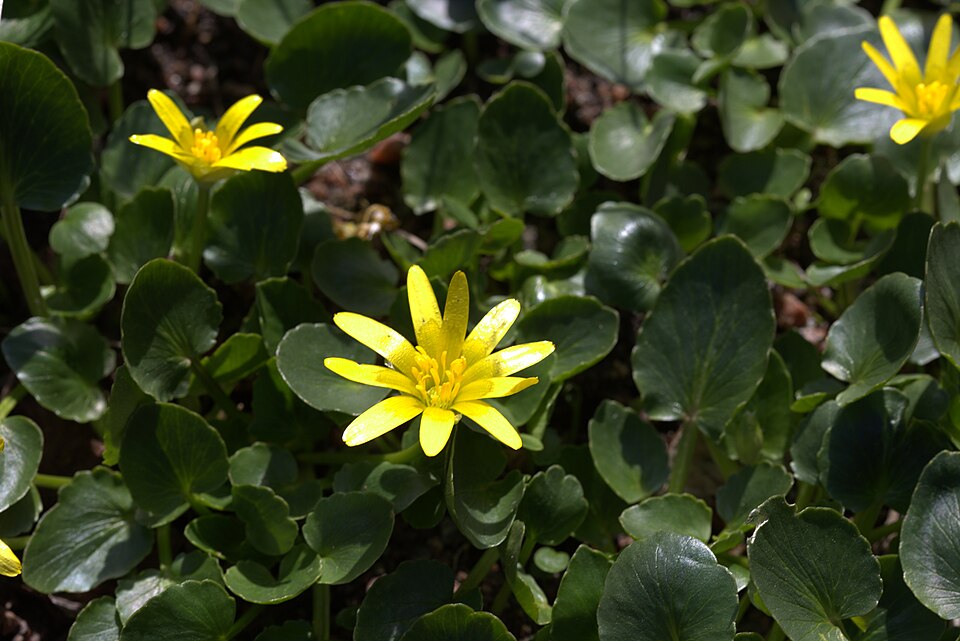
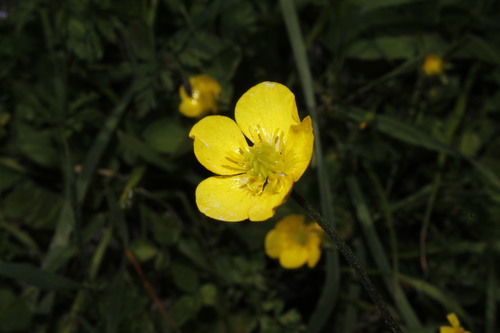
(c) Alexis Tinker-Tsavalas, some rights reserved (CC BY), uploaded by Alexis Tinker-Tsavalas
iNaturalist· cc-by
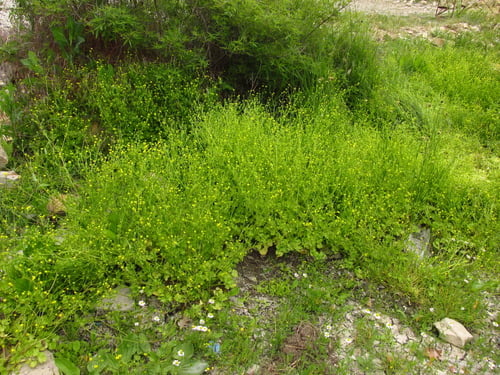
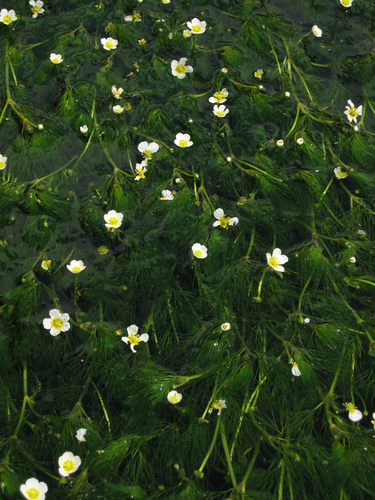
(c) Gianni Del Bufalo bygdb, some rights reserved (CC BY)
iNaturalist· cc-by
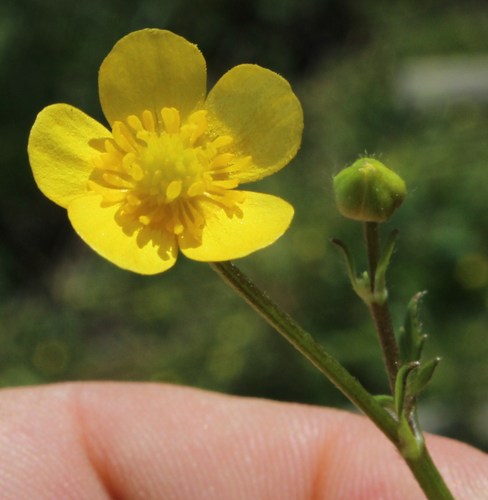
(c) Gianni Del Bufalo bygdb, some rights reserved (CC BY)
Summary
Source: WikipediaClematis vitalba (also known as old man's beard and traveller's joy) is a shrub of the family Ranunculaceae.
Description
A woody climber. It is like fragrant clematis (Clematis flammula) but more robust. It grows to 30 m long. The leaves are once divided. The leaflets often have teeth. The flowers are greenish-white. The petals are hairy on both surfaces. The fruit are dry and one seeded. They are covered by poufs of white hairs.
Edible Uses
Young shoots can be cooked and used like hop shoots (Humulus lupulus). Caution is advised due to reports of toxicity.
Traditional Uses
The leaves are boiled then used in stews. They are used as a spice. The young sprouts are eaten. The young shoots are pickled and used in omelettes. CAUTION: Most Clematis contain an irritant poison.
Medicinal Uses
The leaves are analgesic, diuretic and rubefacient. Boiled roots and stems have been used as a cure for the itch. Plant juice applied to the nostrils has been used to relieve migraine attacks, but it can destroy the mucous membranes. The plant should not be taken internally as it is poisonous. A homeopathic remedy made from the plant is used to treat rheumatism and skin eruptions. The plant also features in Bach flower remedies — the keywords for prescribing it are 'Indifference', 'Dreaminess', 'Inattention' and 'Unconsciousness' — and it is one of the five ingredients in the 'Rescue remedy'.
Known Hazards
All parts of the plant are poisonous, the toxic principle is dissipated by heat or by drying.
Distribution
It grows in mild temperate climates. It grows in woodland and old hedges. It does best on alkaline or chalky soils in an open sunny position. It is resistant to drought but sensitive to frost. Tasmania Herbarium.
Where It Grows
Afghanistan, Africa, Andorra, Australia, Balkans, Bosnia, Britain, Caucasus, Croatia, Europe*, Georgia, Indochina, Iran, Ireland, Italy, Laos, Luxembourg, Macedonia, Mediterranean, Middle East, New Zealand, North Africa*, SE Asia, Sicily, Spain, Tasmania, USA, Vietnam,
Cultivation
Prefers a deep moist soil with its roots in the shade. Dislikes poorly-drained heavy clay soils, but grows well in clay if grit is added for drainage. Dislikes light sandy soils. Does well on chalk. Dislikes acid soils below a pH of 6.0. Succeeds in acid as well as alkaline soils. Plants are hardy to about -18°c. A twining plant. The leafstalks wrap themselves around twigs and branches for support. When a side of the stalk touches an object, the growth on that side slows down whilst the other side grows at its normal rate - this causes the leaf stalk to entwine the object it is touching. It is capable of growing 2 metres in a year and can easily smother small trees and shrubs. Another report says that it can grow 5 metres in a year. When planting out, in order to avoid the disease 'clematis wilt', it is best to plant the rootball about 8cm deeper in the soil. This will also serve to build up a good root crown of growth buds. The flowers are almond-scented. They are produced on the current season's growth. The plant is very amenable to pruning and can be cut back severely if required. This is best done in early spring. A greedy plant, inhibiting growth of nearby plants, especially legumes. Plants seem to be immune to the predations of rabbits. This species is notably resistant to honey fungus.
Propagation
Seed is best sown as soon as it is ripe in a cold frame. Stored seed should be sown as soon as it is obtained. Pre-soak seed for 12 hours in warm water and remove as much of the tail and outer coat as possible. A period of cold stratification is beneficial. Germination takes 1–9 months or more at 20°c. Prick seedlings into individual pots when large enough to handle and grow on in a cold frame through their first winter. Plant out in late spring or early summer after the last expected frosts. Cuttings of half-ripe wood can be taken between nodes in July/August in a frame. Internodal cuttings of soft to semi-ripe wood can be taken in late spring in sandy soil in a frame. Layering of old stems can be done in late winter or early spring, and layering of the current season's growth in early summer.
Other Uses
The stems are used in basketry.
Notes
There are about 250 Clematis species. It can be invasive.
Also Known As
Clematide vitalba, Focomorto, Grambulin', Ingrikhe, Liara, Mutarva, Tsitsibardi, Vezzadro, Vitacchia, Vurgazas buenas, Vitalba, Vitecchje, Vutacchje
References (30)
- Biscotti, N. & Pieroni, A., 2015, The hidden Mediterranean diet: wild vegetables traditionally gathered and consumed in the Gargano area, Apulia, SE Italy. Acta Societatis Botanicorum Poloniae 84 (3): 327-338
- Biscotti, N. et al, 2018, The traditional food use of wild vegetables in Apulia (Italy) in the light of Italian ethnobotanical literature. Italian Botanist 5:1-24
- Blamey, M and Grey-Wilson, C., 2005, Wild flowers of the Mediterranean. A & C Black London. p 51
- Bremness, L., 1994, Herbs. Collins Eyewitness Handbooks. Harper Collins. p 277
- Bussman, R. W., et al, 2016, A comparative ethnobotany of Khevsureti, Samtskhe-Javakheti, Tusheti, Svaneti, and Racha-Lechkhumi, Republic of Georgia (Sakartvelo), Caucasus. Journal of Ethnobiology and Ethnomedicine.
Show all 30 references Hide references
- Bussman, R. W., et al, 2021, Unity in diversity—food plants and fungi of Sakartvelo (Republic of Georgia), Caucasus. Journal of Ethnobiology and Ethnomedicine (2021) 17:72 p 13
- Facciola, S., 1998, Cornucopia 2: a Source Book of Edible Plants. Kampong Publications, p 190
- Geraci, A., et al, 2018, The wild taxa utilized as vegetables in Sicily (Italy): a traditional component of the Mediterranean diet. Journal of Ethnobiology and Ethnomedicine (2018) 14:14
- Hibbert, M., 2002, The Aussie Plant Finder 2002, Florilegium. p 70
- Irving, M., 2009, The Forager Handbook, A Guide to the Edible Plants of Britain. Ebury Press p 71
- Kremer, B.P., 1995, Shrubs in the Wild and in Gardens. Barrons. p 169
- Lentini, F. and Venza, F., 2007, Wild food plants of popular use in Sicily. J Ethnobiol Ethnomedicine. 3: 15
- Marinelli, J. (Ed), 2004, Plant. DK. p 449
- Licata, M., et al, 2016, A survey of wild plant species for food use in Sicily (Italy) – results of a 3-year study in four Regional Parks. Journal of Ethnobiology and Ethnomedicine 12:12
- Luczaj et al, 2013, Wild vegetable mixes sold in the markets of Dalmatia (southern Croatia). Journal of Ethnobiology and Ethnomedicine. 8:2
- Luczaj, L. et al, 2014, Wild Food Plants of Dalmatia (Croatia). in A. Pieroni, C. L. Quave (eds.), Ethnobotany and Biocultural Diversities in the Balkans, p 142
- Luczaj, L. et al, 2017, Comfrey and Buttercup Eaters: Wild Vegetables of the Imereti Region in Western Georgia, Caucasus. Economic Botany, 71(2), 2017, pp. 188–193
- Mattalia, G., et al, 2012, Traditional uses of wild food and medicinal plants among Brigasc, Kye ́, and Provenc ̧al communities on the Western Italian Alps. Genet Resour Crop Evol. Springer
- Paoletti, M.G., Dreon, A.L., and Lorenzoni, G.G., 1995, Pistic, Traditional Food from Western Friuli, NE Italy. Economic Botany 49(1) pp 26-30
- Pasta, S., et al, 2020, An Updated Checklist of the Sicilian Native Edible Plants: Preserving the Traditional Ecological Knowledge of Century-Old Agro-Pastoral Landscapes. Frontiers in Plant Science. Volume 11|Article 388
- Pieroni, A., 1999, Gathered wild food plants in the Upper Valley of the Serchio River (Garfagnana), Central Italy. Economic Botany 53(3) pp 327-341
- Pieroni, A., et al, 2005, Food for two seasons: Culinary uses of non-cultivated local vegetables and mushrooms in a south Italian village. International Journal of Food Sciences and Nutrition, 56(4): 245-272
- Redzic, S. J., 2006, Wild Edible Plants and their Traditional Use in the Human Nutrition in Bosnia-Herzegovina. Ecology of Food and Nutrition, 45:189-232
- Sansanelli, S., et al, 2014, Wild food plants traditionall consumed in the area of Bologna (Emilia Romagna region, Italy). Journal of Ethnobiology and Ethnomedicine 10:69
- Sansanelli, S., et al, 2017, Ethnobotanical survey of wild food plants traditionally collected and consumed in the Middle Agri Valley (Basilicata region, southern Italy). Journal of Ethnobiology and Ethnomedicine (2017) 13:50
- Sp. pl. 1:544. 1753
- Tardio, J., et al, 2006, Ethnobotanical review of wild edible plants in Spain. Botanical J. Linnean Soc. 152, 27-71
- Tasmanian Herbarium Vascular Plants list p 46
- Uphof,
- World Checklist of Useful Plant Species 2020. Royal Botanic Gardens, Kew