Clematis flammula
L.
Fragrant virgin's bower, Fragrant Clematis
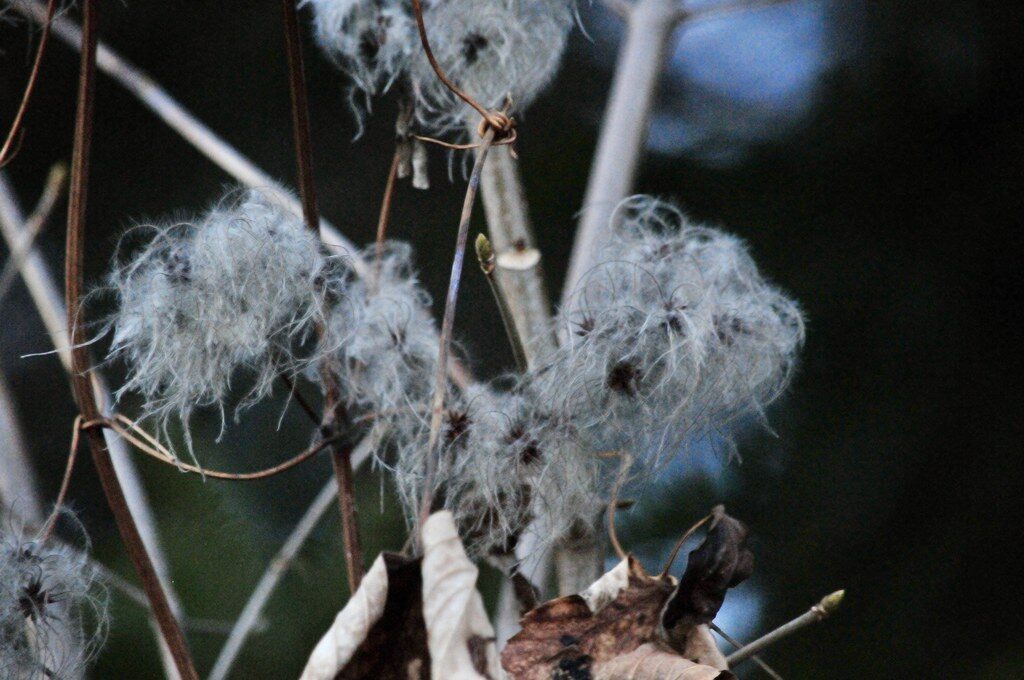
iNaturalist· cc-by-nc
(c) Jakob Fahr, some rights reserved (CC BY-NC), uploaded by Jakob Fahr
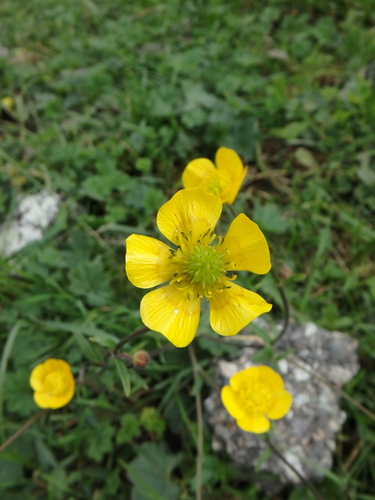
iNaturalist· cc-by-nc
(c) Klaus Riede, some rights reserved (CC BY-NC)
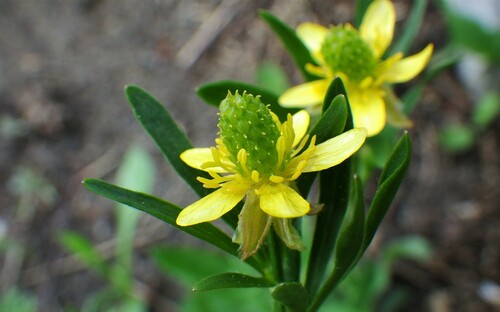
iNaturalist· cc-by-nc
(c) Klaus Riede, some rights reserved (CC BY-NC)
Summary
Source: WikipediaClematis flammula, the fragrant virgin's bower, is a species of flowering plant in the family Ranunculaceae. This deciduous climbing plant is native to southern Europe and northern Africa, but it is cultivated worldwide as an ornamental plant in gardens. It bears fragrant white flowers and small green achenes. When the flowers are newly opened they have a strong sweet almond fragrance. Clematis × aromatica, the scented clematis, is the result of a cross with Clematis integrifolia. Clematis flammula grows in a tangled mass that is heavily sprinkled with flowers throughout the warmer months. It is popular with gardeners as a decoration along fences and trellises, or as ground cover. If it has no other plants or structures to climb on, it will climb on itself, forming a large, densely tangled bush. The plant sends out many shoots and can reach over five metres in height. In some areas, this species has become a nuisance after its introduction. It is a weed outside of gardens and landscaped areas. Clematis flammula var. maritima is a hardier variety that is adapted to sand dunes. It is currently being studied as an agent of soil stabilization on eroded sandy beaches.
Description
A climber. It loses its leaves during the year. It grows 5 m long. The leaves are twice divided. The leaflets are oblong. Sometimes they have 3 lobes. The leaves do not have teeth. The flowers are white and 15-30 mm across.
Edible Uses
Young shoots can be eaten but must be cooked. Some caution is advised due to toxicity reports associated with this genus.
Traditional Uses
CAUTION: Most Clematis contain an irritant poison. The young shoots are boiled and eaten. They are used in omelettes and stir fried.
This uses section is brief — help expand it
Medicinal Uses
None known.
Known Hazards
All parts of the plant are poisonous, the toxic principle is dissipated by heat or by drying.
Distribution
It is a temperate and Mediterranean climate plant. It grows in scrub, hedges and along walls and waste places. It does best in cool, moist, rich soils. It needs a protected sunny position. It is resistant to frost but sensitive to drought.
Where It Grows
Australia, Britain, Europe*, Italy, Mediterranean, Spain, Tasmania,
Cultivation
Prefers a deep moist well-drained soil with its roots in the shade. Dislikes poorly-drained heavy clay soils, but grows well in clay if grit is added for drainage. Dislikes light sandy soils. Does well on chalk. Succeeds in acid as well as alkaline soils. Thrives in exposed positions. Plants are hardy to about -15°c. A twining plant, it is fast growing. The leafstalks wrap themselves around twigs and branches for support. When a side of the stalk touches an object, the growth on that side slows down whilst the other side grows at its normal rate - this causes the leaf stalk to entwine the object it is touching. When planting out, in order to avoid the disease 'clematis wilt', it is best to plant the rootball about 8cm deeper in the soil. This will also serve to build up a good root crown of growth buds. A very ornamental plant, the flowers are very fragrant. They have a pronounced smell of meadowsweet, almost too powerful when inhaled close-up. They are produced on the current season's growth and so any pruning of the plant is best carried out in the spring before new growth begins. Plants rarely produce fertile seed in Britain. A greedy plant, inhibiting the growth of nearby plants, especially legumes. Plants seem to be immune to the predations of rabbits. This species is notably resistant to honey fungus.
Propagation
Sow seed fresh in a cold frame as soon as it is ripe; stored seed should also be sown in a cold frame as soon as it is obtained. Pre-soak seed for 12 hours in warm water and remove as much of the tail and outer coat as possible. Cold stratification is beneficial. Germination occurs in 1–9 months or more at 20°c. Prick seedlings out into individual pots when large enough to handle and grow on in a cold frame through their first winter. Plant out in late spring or early summer after the last expected frosts. Take internodal cuttings of soft to semi-ripe wood in late spring, rooted in sandy soil in a frame. Half-ripe internodal cuttings can also be taken in June or July in a frame. Propagate also by layering old stems in late winter or early spring, or by layering the current season's growth in early summer.
Other Uses
Plants can be used as ground cover, spaced approximately 1.2 metres apart and left to scramble freely across the ground.
Notes
There are about 250 Clematis species.
Also Known As
Barba te crapa
References (8)
- Biscotti, N. et al, 2018, The traditional food use of wild vegetables in Apulia (Italy) in the light of Italian ethnobotanical literature. Italian Botanist 5:1-24
- Blamey, M and Grey-Wilson, C., 2005, Wild flowers of the Mediterranean. A & C Black London. p 51
- Bodkin, F., 1991, Encyclopedia Botanica. Cornstalk publishing, p 263
- Hedrick, U.P., 1919, (Ed.), Sturtevant's edible plants of the world. p 203
- Hibbert, M., 2002, The Aussie Plant Finder 2002, Florilegium. p 69
Show all 8 references Hide references
- Lord, E.E., & Willis, J.H., 1999, Shrubs and Trees for Australian gardens. Lothian. p 329
- Plants for a Future database, The Field, Penpol, Lostwithiel, Cornwall, PL22 0NG, UK. http://www.scs.leeds.ac.uk/pfaf/
- Sp. pl. 1:544. 1753