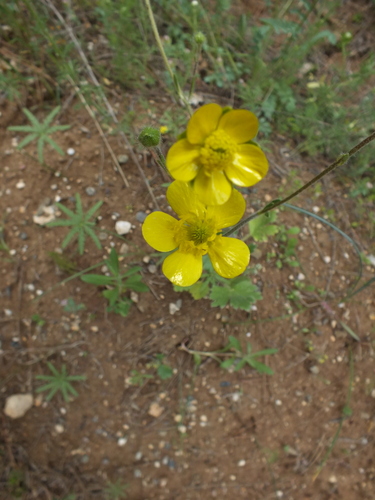
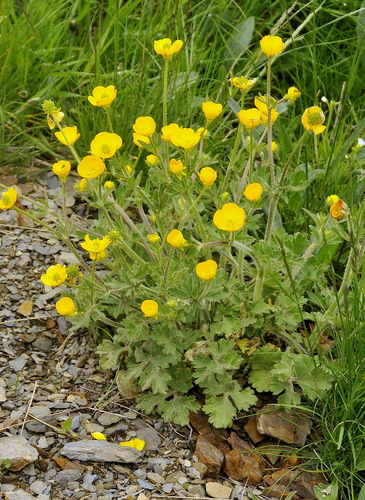
Clematis chinensis
Osbeck
Wei ling xian
iNaturalist· cc-by-nc
(c) 羅元甫, some rights reserved (CC BY-NC)
iNaturalist· cc-by-nc
(c) 羅元甫, some rights reserved (CC BY-NC)
iNaturalist· cc-by-nc
(c) 羅元甫, some rights reserved (CC BY-NC)
Summary
A deciduous climbing vine reaching 5 m tall and spreading to 5 m, hardy to UK zone 6. Flowers appear from September to October, with seeds ripening October to November. The plant is hermaphroditic and pollinated by bees and flies. It adapts to light, medium, or heavy well-drained soils across mildly acidic to very alkaline pH ranges. Grows in semi-shade or full sun with preference for consistently moist soil.
Description
A climber. The branches are smooth. There are 3-7 leaflets. They are oval or heart shaped.
This description is brief — help expand it
Edible Uses
Young shoots can be eaten cooked. One report suggests they are non-toxic, though caution is still advised given toxicity reports elsewhere in this genus. Cooking likely destroys the acrimonious principle responsible for irritation.
Traditional Uses
CAUTION: Most Clematis contain an irritant poison.
This uses section is brief — help expand it
Medicinal Uses
The root is anodyne, antidote, antiperiodic, antispasmodic, carminative, diuretic, and sedative. A decoction taken internally is used to treat rheumatism, arthritis, tetanus, and cold-type stomach-ache. The whole plant is considered antirheumatic. The plant also has a folk history of use in cancer treatment. The root contains anemonin, which has antibacterial, analgesic, sedative, and antispasmodic actions; it also inhibits the heart and central nervous system and is rubefacient. Roots are harvested in autumn and dried for later use.
Known Hazards
This species is harmful if eaten. The toxic principle is dissipated by heat or by drying. The plant is also a mild skin irritant.
Distribution
A tropical plant. It grows along streams between 100-1,500 m above sea level in China. In Sichuan and Yunnan.
Where It Grows
Asia, China, Indochina, Japan, Ryuku, SE Asia, Taiwan, Vietnam,
Cultivation
Prefers a deep moist soil with its roots in the shade and its shoots growing up to the light. Dislikes poorly-drained heavy clay soils, but grows well in clay if grit is added for drainage. Dislikes light sandy soils. Does well on chalk. Succeeds in acid as well as alkaline soils. When planting out, in order to avoid the disease 'clematis wilt', it is best to plant the rootball about 8cm deeper in the soil. This will also serve to build up a good root crown of growth buds. A twining plant. The leafstalks wrap themselves around twigs and branches for support. When a side of the stalk touches an object, the growth on that side slows down whilst the other side grows at its normal rate - this causes the leaf stalk to entwine the object it is touching. Plants flower in the autumn on the current season's growth, any pruning is best carried out in the spring before new growth begins. The flowers are produced quite late in the season and can be damaged by late frosts, so plants generally do better in the milder western parts of the country. Plants in this genus are notably resistant to honey fungus. Plants seem to be immune to the predations of rabbits. A greedy plant, inhibiting the growth of nearby plants, especially legumes. The flowers are often damaged by winter cold.
Propagation
Sow seed fresh in a cold frame as soon as it is ripe; stored seed should also be sown in a cold frame as soon as it is obtained. Pre-soak seed for 12 hours in warm water and remove as much of the tail and outer coat as possible. Cold stratification is beneficial. Germination occurs in 1–9 months or more at 20°c. Prick seedlings out into individual pots when large enough to handle and grow on in a cold frame through the first winter. Plant out in late spring or early summer after the last expected frosts. Take internodal cuttings of soft to semi-ripe wood in late spring, rooted in sandy soil in a frame. Propagate also by layering old stems in late winter or early spring, or by layering the current season's growth in early summer.
Other Uses
None known.
Notes
There are about 250 Clematis species. The roots are used in medicine.
Synonyms
Also Known As
Mocthong, Ruot-ga
References (6)
- Bremness, L., 1994, Herbs. Collins Eyewitness Handbooks. Harper Collins. p 277
- Brown, D., 2002, The Royal Horticultural Society encyclopedia of Herbs and their uses. DK Books. p 173
- Dagb. Ostind. resa 205, 242. 1757
- Pham-Hoang Ho, 1999, An Illustrated Flora of Vietnam. Nha Xuat Ban Tre. p 316
- Plants for a Future database, The Field, Penpol, Lostwithiel, Cornwall, PL22 0NG, UK. http://www.scs.leeds.ac.uk/pfaf/
Show all 6 references Hide references
- READ,