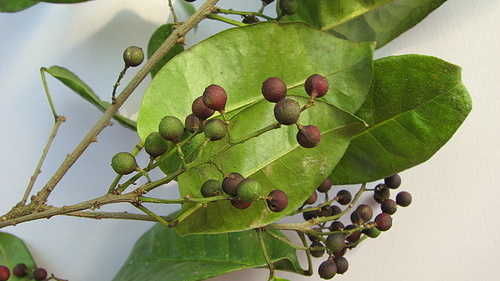
Acronychia suberosa
C. T. White
Corky Acronychia
iNaturalist· cc-by
(c) Donald Hobern, some rights reserved (CC BY), uploaded by Donald Hobern
iNaturalist· cc-by-sa
(c) Greg Tasney, some rights reserved (CC BY-SA)
Summary
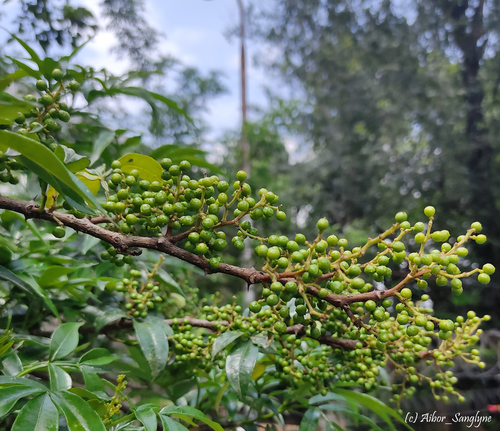
Source: WikipediaAcronychia suberosa, commonly known as corky acronychia, is a species of small to medium-sized rainforest tree that is endemic to eastern Australia. It has mostly trifoliate leaves with elliptic to egg-shaped leaflets with the narrower end towards the base, small groups of cream-coloured flowers and elliptical to spherical, creamy yellow to whitish fruit.
Description
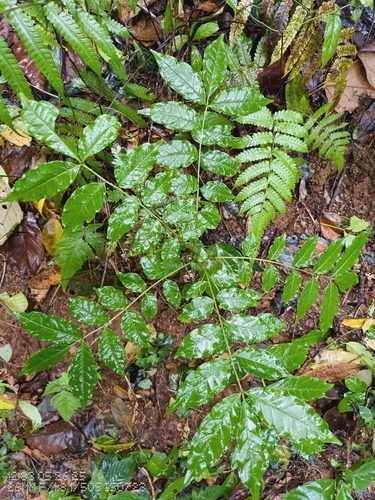
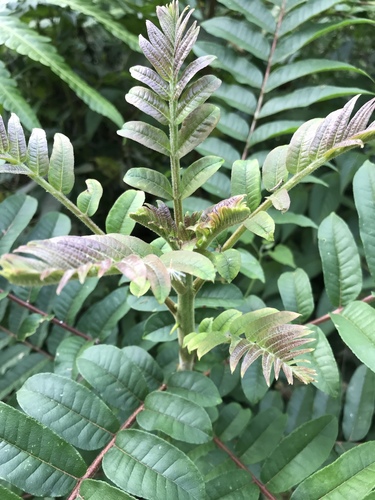
A shrub or small tree. It grows 5 m tall. There are prickles along the stem. The leaves are twice divided and there are 8-18 pairs of pinnae. There are up to 50 pairs of pinnules on each pinnae. The flowers are yellow. They are in large clusters at the ends of branches. The pods are flattened.
Edible Uses
The fruit are eaten fresh.
Traditional Uses
The fruit are eaten.
This uses section is brief — help expand it
Known Hazards
Plants are frost tender when small and cannot tolerate waterlogging.
Distribution
It occurs in highland rainforest areas of the New South Wales and Queensland borders in Australia. It suits subtropical or warm temperate areas. It needs some shade and protection when young. It must have well drained soil. It cannot stand waterlogging. It is frost tender when small.
Where It Grows
Australia*,
Cultivation
It is grown from seed. The seed is difficult to germinate.
Production
Young plants are fairly slow growing. The fruit mature March to June.
Notes
There are 42-50 Acronychia species.
References (4)
- Elliot, W.R., & Jones, D.L., 1982, Encyclopedia of Australian Plants suitable for cultivation. Vol 2. Lothian. p 143
- Jones D, L, 1986, Ornamental Rainforest Plants in Australia, Reed Books, p 104
- Low, T., 1991, Wild Food Plants of Australia. Australian Nature FieldGuide, Angus & Robertson. p 72
- Williams, J.B., Harden, G.J., and McDonald, W.J.F., 1984, Trees and shrubs in rainforests of New South Wales and Southern Queensland. Univ. of New England, Armidale. p 24