Acronychia pedunculata
(L.) Miquel
Kisarira
iNaturalist· cc0
no rights reserved, uploaded by 葉子
iNaturalist· cc0
no rights reserved, uploaded by 葉子
iNaturalist· cc0
no rights reserved, uploaded by 葉子
Summary
Source: WikipediaAcronychia pedunculata is a large shrub or small tree of the understory, gaps and fringes of low country and lower hill tropical forests of tropical Asia.
Description
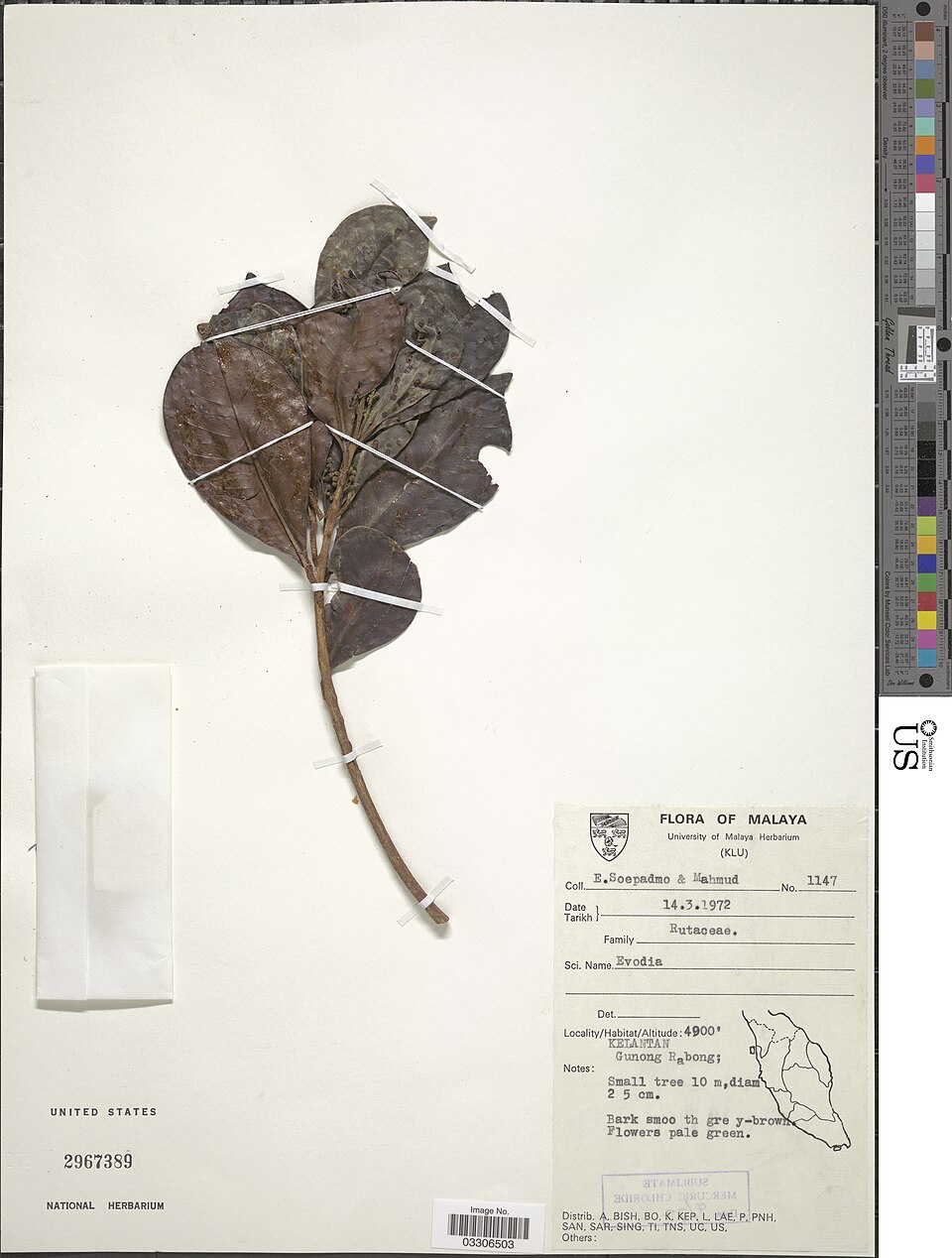
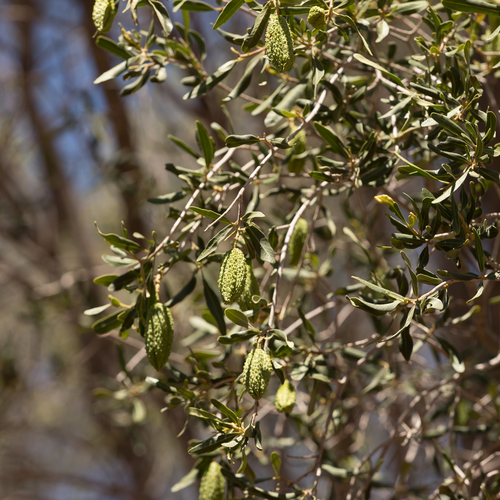
A shrub or small tree growing to 5 m tall with twice-divided leaves bearing 8-18 pairs of pinnae and up to 50 pairs of pinnules per pinnae. It has yellow flowers in large terminal clusters and flattened pods, with prickles along the stems. The plant belongs to the Rutaceae family.
Edible Uses
The tender leaves are used for flavouring and have a cumin-like taste. The ripe fruit is edible and sweet with a slight bitterness, though it has little pronounced flavour.
Traditional Uses
The tender leaves are used for flavouring. They have the flavour of cumin. The ripe fruit is edible but has little flavour. It is sweet but a little bitter.
Medicinal Uses
A decoction of the roots, bark and leaves is used to treat scabies, sores, ulcers, and a variety of stomach diseases. The roots are used in the treatment of rheumatism, lumbago, pain in the limbs, post-partum blood stasis, furunculosis, impetigo and snake-bite. The dosage is 8 to 20g per day, in the form ofa decoction or elixir. The torrefied roots or leaves are effective as a stomachic for the treatment of dyspepsia in parturients in a daily dose of 6 to 12g as a decoction. A poultice made of heated leaves and a wash with a decoction of the trunk bark are useful for treating furunculosis and impetigo. The roots, twigs, stem bark and leaves are collected throughout the year. The plants are pulled up, stripped of rootlets, carefully washed and sliced. Selected leaves, not worm-eaten or withered, are sun-dried or heat-dried. The stem bark is used only externally.
Known Hazards
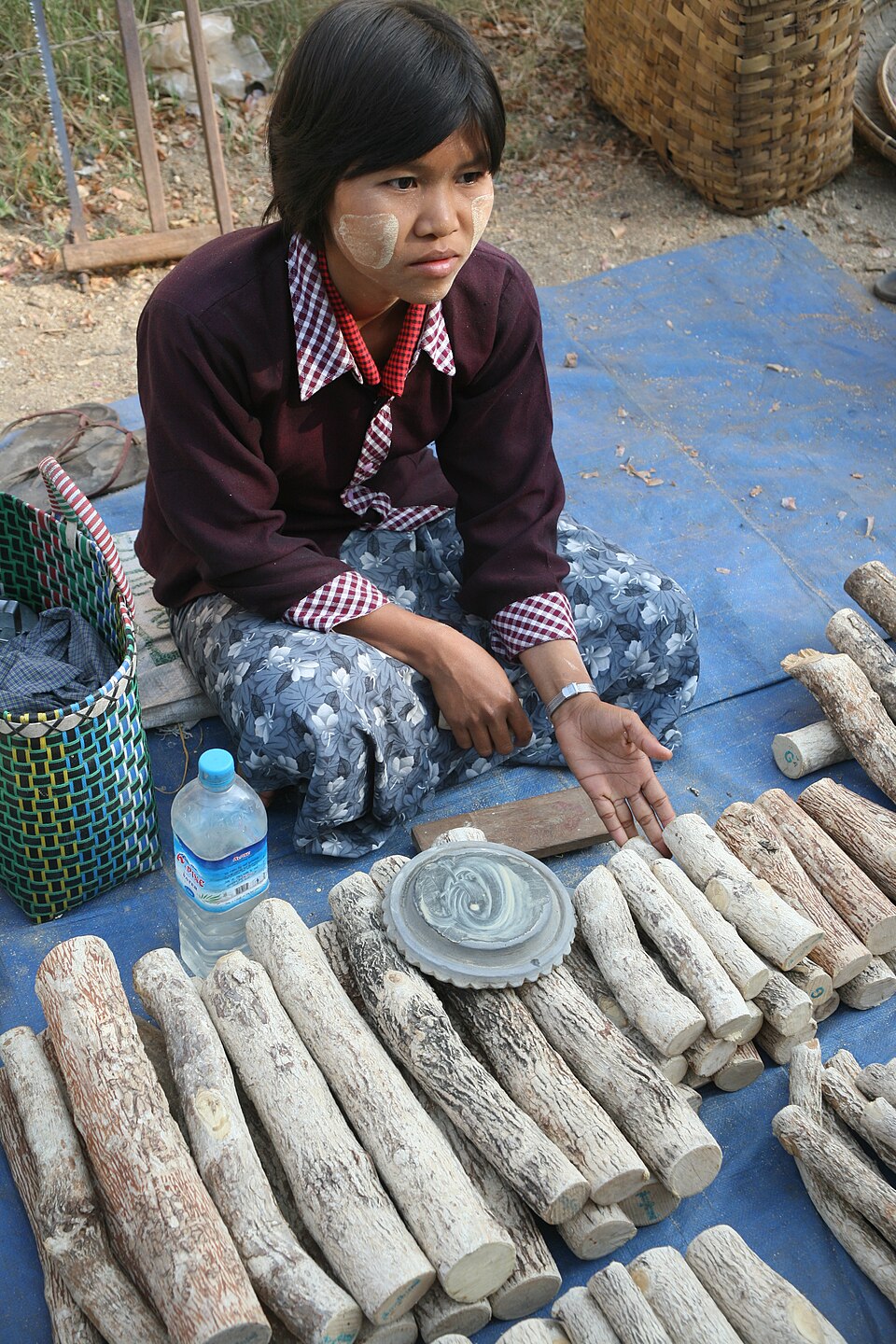
Extracts of its leaves, bark, stems and fruits are widely used in herbal medicinal applications against sores, scabies and intestinal infections, due to their antifungal and antimicrobial properties. Contains aromatic, essential oils, which are used in China for making perfumes. The ripe fruit is edible and has a sweet acidic flavor. Unripe fruits have a strongly astringent, resinous taste. The roots are used as a fish-poison in southern Vietnam. In India the wood is used for carving, poles, house construction and making the charcoal preferred by goldsmiths. And the tender leaves are used in salads and as a condiment. Its wood, called lakawood (a term covering a few different plants), is also used in incense production. It is particularly favoured by Taoist practitioners who are forbidden from using sandalwood.
Distribution
E. Asia - southern China, Indian subcontinent, Myanmar, Thailand, Cambodia, Laos, Vietnam, Malaysia, Indonesia, Philippines, New Guinea.
Where It Grows
Leaves, Fruit, Vegetable, Leaves - flavouring,
Cultivation
Plants can be grown from seed.
Other Uses
The leaves are put in stimulating baths. This is probably due to the action of an essential oil. The crushed leaves and fruits have a citrus smell. A fragrant oil from the stem and leaves is used in cosmetic perfumery. The bark is used for caulking boats and toughening nets. The wood is occasionally used in construction. The wood is sometimes used to make charcoal.
Production
It is fast growing. In NE Thailand fruit are ripe March to July.
Other Information
Rutaceae
Notes
A shrub or small tree. It grows 5 m tall. There are prickles along the stem. The leaves are twice divided and there are 8-18 pairs of pinnae. There are up to 50 pairs of pinnules on each pinnae. The flowers are yellow. They are in large clusters at the ends of branches. The pods are flattened.
Synonyms
Also Known As
Bai bai, Baiba, Bi bai, Bon jamir, Buoi bung, Jejerukan, Kayu semidra, Kecheruk, Ketiak, Kisarira, Limau hutan, Loajam, Maranggas, Melaman, Mutta-nari, Padulan, Paowlay, Paw, Pohon salira, Sarirah, Seda prey, Serira, Serang kampung, Tembusu jantan, Tramal
References (32)
- Ambasta S.P. (Ed.), 2000, The Useful Plants of India. CSIR India. p 12
- Arora, R. K., 2014, Diversity in Underutilized Plant Species - An Asia-Pacific Perspective. Bioversity International. p 55
- Biocyclopedia Edible Plant Species. biocyclopedia.org (As Acronychia laurifolia)
- Bircher, A. G. & Bircher, W. H., 2000, Encyclopedia of Fruit Trees and Edible Flowering Plants in Egypt and the Subtropics. AUC Press. p 8 (As Acronychia laurifolia)
- Burkill, I.H., 1966, A Dictionary of the Economic Products of the Malay Peninsula. Ministry of Agriculture and Cooperatives, Kuala Lumpur, Malaysia. Vol 1 (A-H) p 40 (As Acronychia laurifolia)
Show all 32 references Hide references
- Forest Inventory and Planning Institute, 1996, Vietnam Forest Trees. Agriculture Publishing House p 634
- Gardner, S., et al, 2000, A Field Guide to Forest Trees of Northern Thailand, Kobfai Publishing Project. p 100
- Hedrick, U.P., 1919, (Ed.), Sturtevant's edible plants of the world. p 24 (As Acronychia laurifolia)
- Hu, Shiu-ying, 2005, Food Plants of China. The Chinese University Press. p 491
- Kintzios, S. E., 2006, Terrestrial Plant-Derived Anticancer Agents and Plant Species Used in Anticancer research Critical Reviews in Plant Sciences. 25: pp 79-113
- Lembogi Biologi Nasional, 1980, Sayur-sayuran. Balai Pustaka, Jakarta. p 68
- Luo, B., et al, 2019, Wild edible plants collected by Hani from terraced rice paddy agroecosystem in Honghe Prefecture, Yunnan, China. Journal of Ethnobiology and Ethnomedicine 15:56
- Martin, F.W. & Ruberte, R.M., 1979, Edible Leaves of the Tropics. Antillian College Press, Mayaguez, Puerto Rico. p 98 (As Acronychia laurifolia) (Possibly as Acronychia paniculata)
- Martin, F. W., et al, 1987, Perennial Edible Fruits of the Tropics. USDA Handbook 642 p 76
- Nurfadilah, S., et al, 2017, Species richness, conservation status, and potential uses of plants in Segara Anakan Area of Sempu Island, East Java, Indonesia. BIODIVERSITAS. Volume 18, Number 4
- Ochse, J. J. et al, 1931, Vegetables of the Dutch East Indies. Asher reprint. p 641
- Pasha, M. K. & Uddin, S. B., 2019, Minor Edible Fruits of Bangladesh. Bangladesh J. Plant Taxon. 26(2): 299–313
- Phon, P., 2000, Plants used in Cambodia. © Pauline Dy Phon, Phnom Penh, Cambodia. p 7
- PROSEA handbook Volume 13 Spices. p 273
- Ramachandran,V. S., & Udhayavani, C., 2013, Knowledge and uses of wild edible plants by Paniyas and Kurumbas of Western Nilgiris, Tamil Nadu. Indian Journal of Natural Products and Resources. 4(4) December 2013, pp 412-418
- Reis, S. V. and Lipp, F. L., 1982, New Plant Sources for Drugs and Foods from the New York Botanical Garden herbarium. Harvard. p 143
- Seidemann J., 2005, World Spice Plants. Economic Usage, Botany, Taxonomy. Springer. p 6
- Siemonsma, J. S. & Kasem Piluek, eds. 1993. Vegetables. In: Plant Resources of South-East Asia (PROSEA) 8:311.
- Singh, H.B., Arora R.K.,1978, Wild edible Plants of India. Indian Council of Agricultural Research, New Delhi. p16
- Slik, F., www.asianplant.net
- Soepadmo, E. and Wong, K. M., 1995, Tree Flora of Sabah and Sarawak. Forestry Malaysia. Volume One. p 358
- Suksri, S., et al, 2005, Ethnobotany in Bung Khong Long Non-Hunting Area, Northeast Thailand. Kasetsart J., (Nat. Sci) 39: 519-533
- Tanaka, Y & Van Ke, N., 2007, Edible Wild Plants of Vietnam. Orchid Press. p 130
- Thorng, R., et al, 2015, Roles of Wild Food Plants in Ethnic Group Communities in Mondulkiri Province, Northeastern Cambodia. Journal of Mekong Societies Vol.11 No.2 May-August 2015 pp. 1-17
- Usher, G., 1974, A Dictionary of Plants Used by Man. Constable. p 19 (As Acronychia laurifolia)
- Van Sam, H. et al, 2008, Uses and Conservation of Plant Species in a National Park. A case study of Ben En, Vietnam. Economic Botany 62:574-593
- World Checklist of Useful Plant Species 2020. Royal Botanic Gardens, Kew