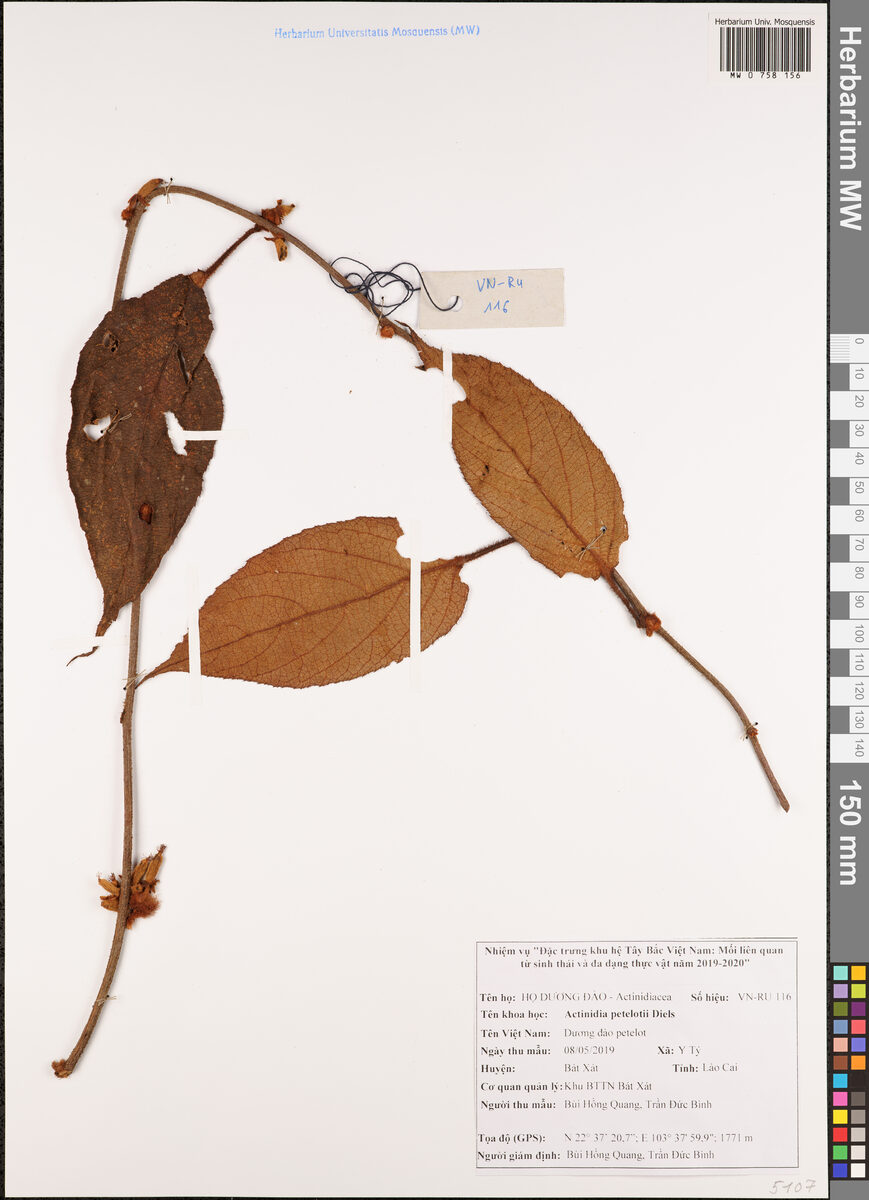
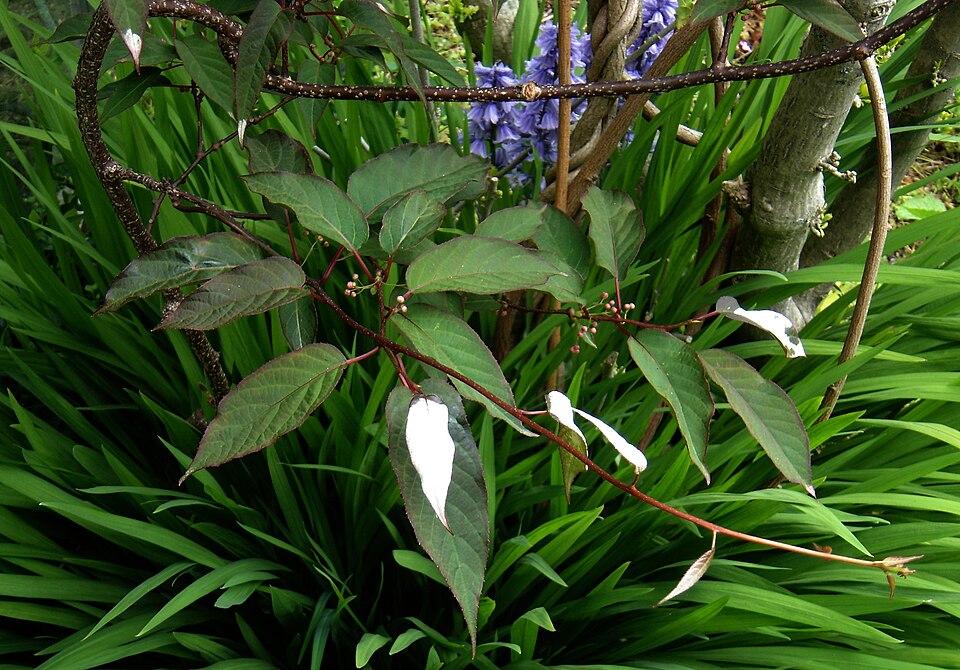
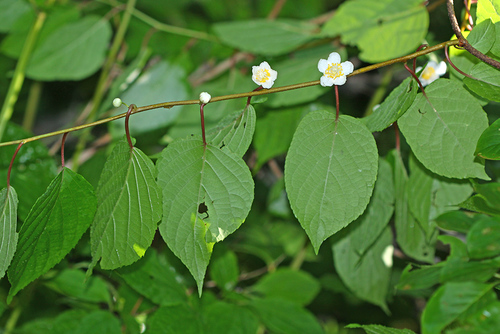
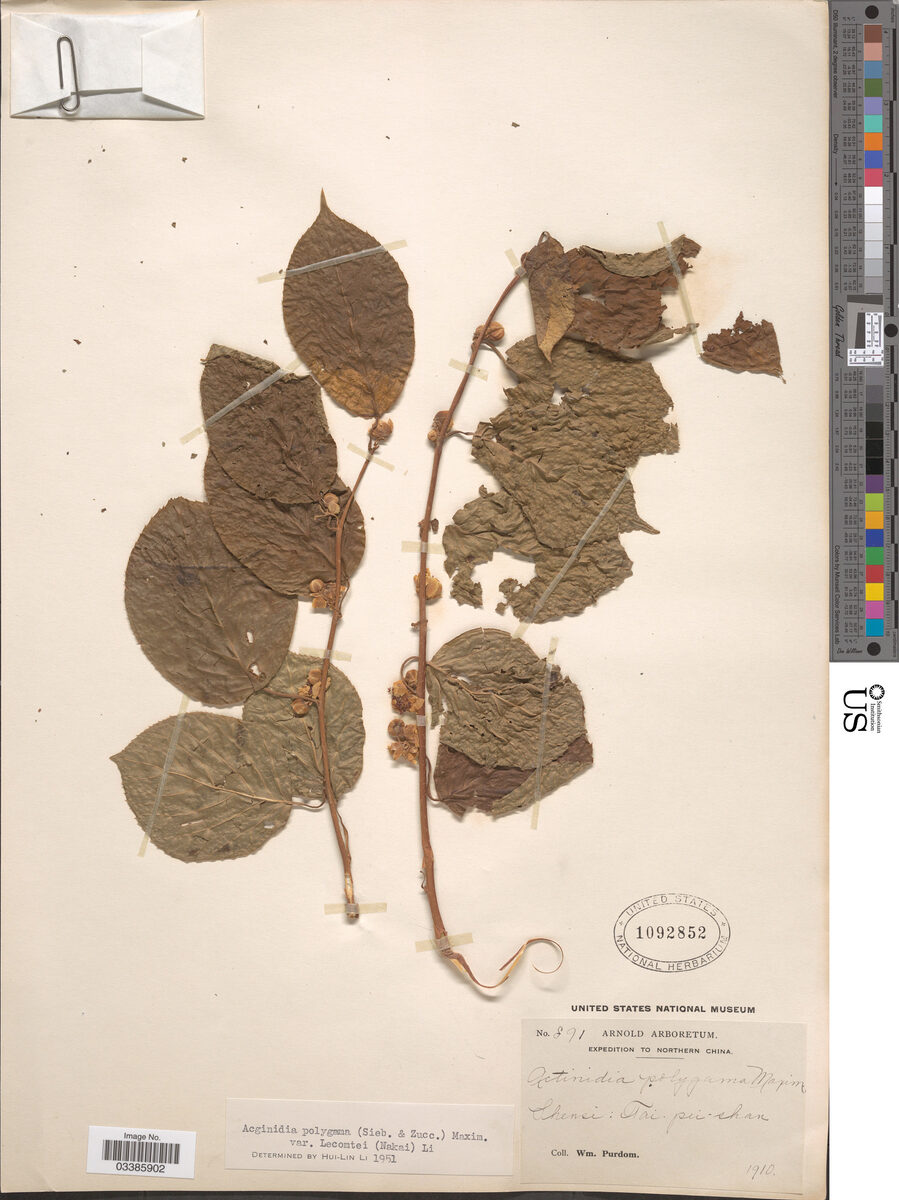
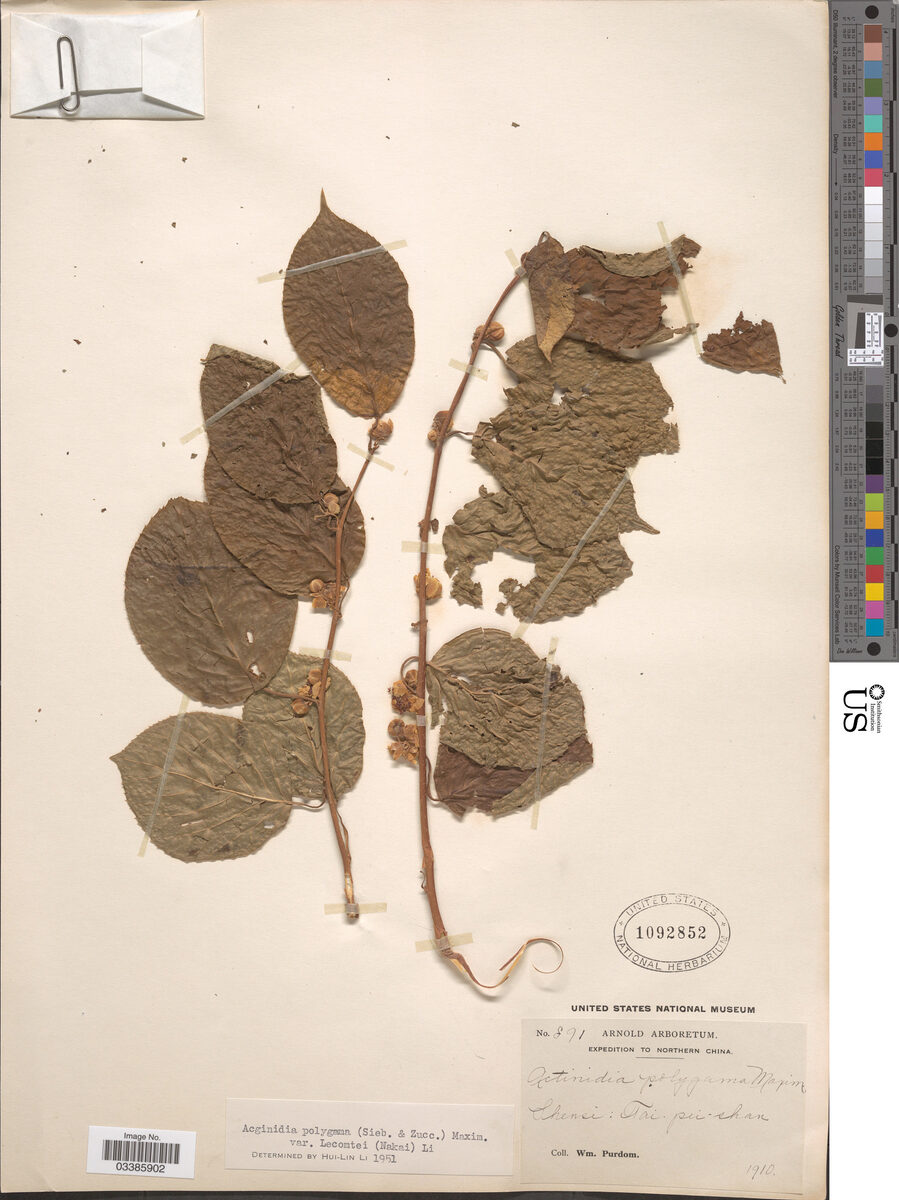
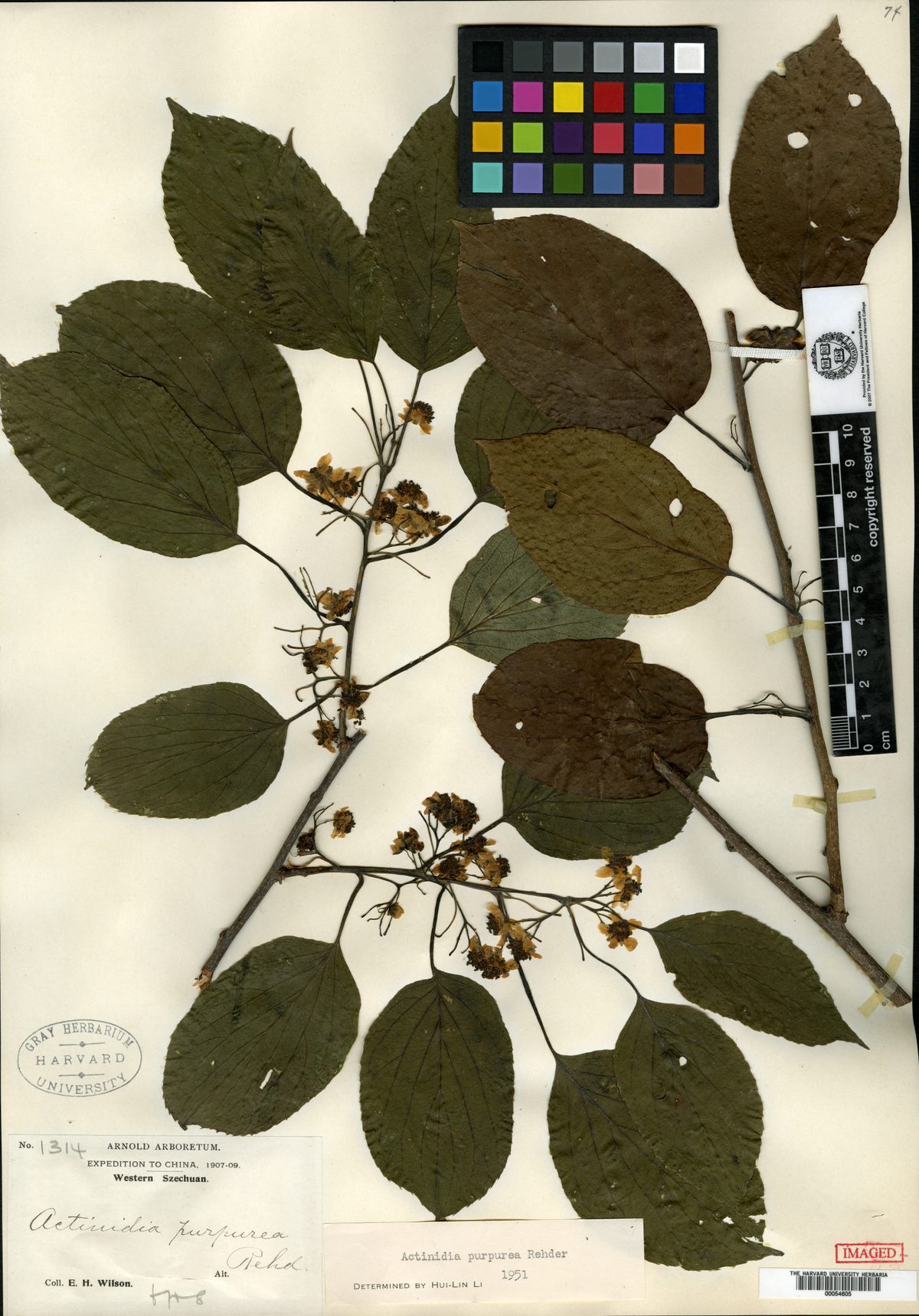
Actinidia callosa var. pubescens
Dunn.
gbif· cc0
Royal Botanic Garden Edinburgh
gbif· cc0
Conveyor Belt
gbif· cc-by
Royal Botanic Gardens, Kew
Summary
Source: WikipediaActinidia callosa, the Himalayan kiwi vine, is a species of flowering plant in the Chinese gooseberry family Actinidiaceae. A deciduous climber reaching 30 m (98 ft), it is found in a wide variety of habitats at elevations from 400 to 2,600 m (1,300 to 8,500 ft). Cultivated for its fruit, there is considerable doubt that it is a good species given vagrancies in the distributions of its varieties and its variable chromosome numbers.
Description
A tropical climbing vine reaching 7 meters long, found in forests of Yunnan, Assam, and Malaysia at 2000–2500 meters altitude. Male and female flowers occur on separate plants.
Edible Uses
The fruits are eaten raw or cooked.
Traditional Uses
The fruit are eaten raw or cooked.
This uses section is brief — help expand it
Distribution
A tropical plant. It occurs naturally in Yunnan Province in China and to Assam and Malaysia in forests between 2000 - 2500 metres altitude.
Where It Grows
Asia, China, Indochina, Malaysia, SE Asia, Thailand,
Cultivation
It can be grown from seed or cuttings.
Notes
There are 40-60 Actinidia species. The Actinidiaceae are a mainly tropical family.
Synonyms
References (1)
- Plants for a Future database, The Field, Penpol, Lostwithiel, Cornwall, PL22 0NG, UK. http://www.scs.leeds.ac.uk/pfaf/