Trichosanthes kirilowii subsp. japonica
(Miq.) Kitam.
Ki-karasu-uri
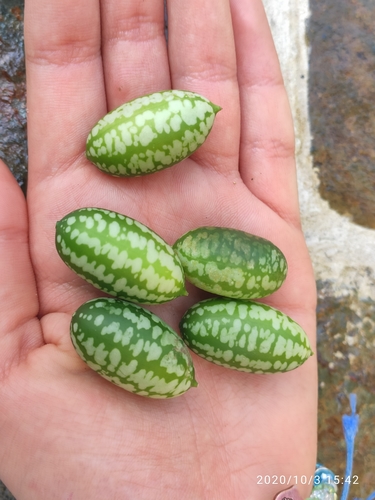
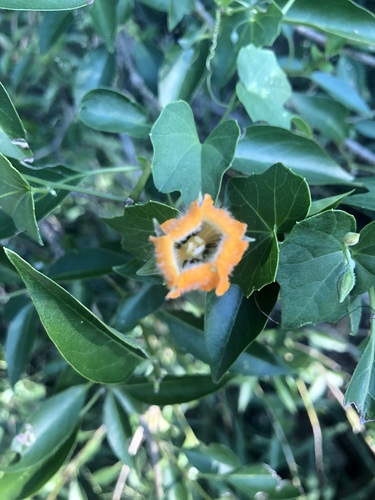
iNaturalist· cc-by-nc
(c) onidiras-iNaturalist, some rights reserved (CC BY-NC), uploaded by onidiras-iNaturalist
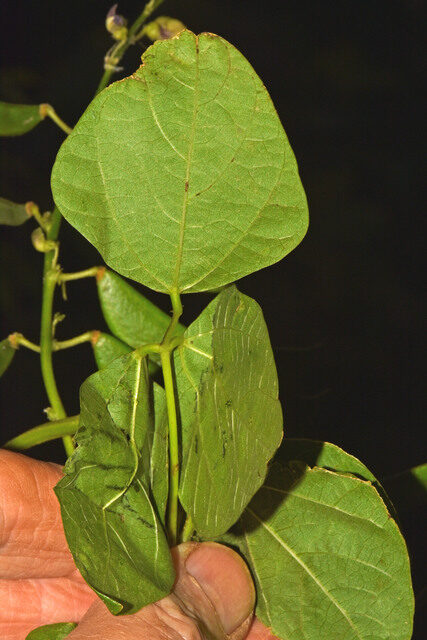
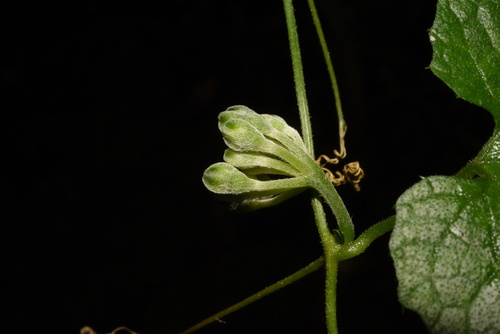
iNaturalist· cc-by-nc
(c) tretyakovmiy, some rights reserved (CC BY-NC), uploaded by tretyakovmiy
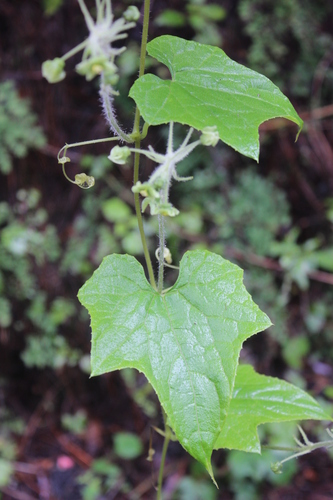
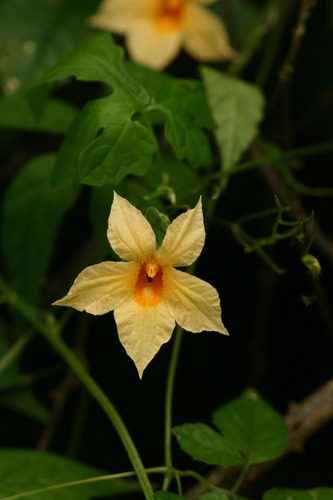
iNaturalist· cc-by-nc
(c) onidiras-iNaturalist, some rights reserved (CC BY-NC), uploaded by onidiras-iNaturalist
Summary
Source: WikipediaTrichosanthes kirilowii is a flowering plant in the family Cucurbitaceae found particularly in Henan, Shandong, Hebei, Shanxi, and Shaanxi (China). It is one of the 50 fundamental herbs used in traditional Chinese medicine, where it shares the name guālóu (Chinese: 栝蔞) with the related T. rosthornii. It is known as "Chinese cucumber" and "Chinese snake gourd" in English.
Description
A climbing vine in the pumpkin family (Cucurbitaceae) found in temperate regions. Multiple parts of the plant are edible, including the fruit, leaves, roots, and seeds.
Edible Uses
The fruit is preserved in salt. Seeds are pressed for edible oil. The starch extracted from roots is mixed with rice or wheat flour to make dumplings and noodles.
Traditional Uses
The fruit are preserved in salt. The seeds are used for an edible oil. The starch from the roots is mixed with rice or wheat flour to made dumplings and noodles.
Distribution
It is a temperate plant.
Where It Grows
Asia, Japan, Korea,
Also Known As
Noranghaneultari
References (5)
- Facciola, S., 1998, Cornucopia 2: a Source Book of Edible Plants. Kampong Publications, p 89
- Hwang, H., et al, 2013, A Study on the Flora of 15 Islands in the Western Sea of Jeollanamdo Province, Korea. Journal of Asia-Pacific Biodiversity Vol. 6, No. 2 281-310
- Plants for a Future database, The Field, Penpol, Lostwithiel, Cornwall, PL22 0NG, UK. http://www.scs.leeds.ac.uk/pfaf/
- Song, M., et al, 2013, Traditional knowledge of wild edible plants in Jeju Island, Korea. Indian Journal of Traditional Knowledge. 12(2) pp 177-194
- Tanaka,