Cistus albidus
L.
Mexican origanum, White-leafed Rockrose
iNaturalist· cc-by
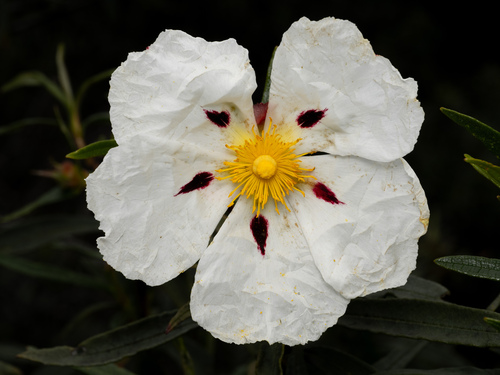
(c) Borja Fierro, some rights reserved (CC BY), uploaded by Borja Fierro
iNaturalist· cc-by-nc
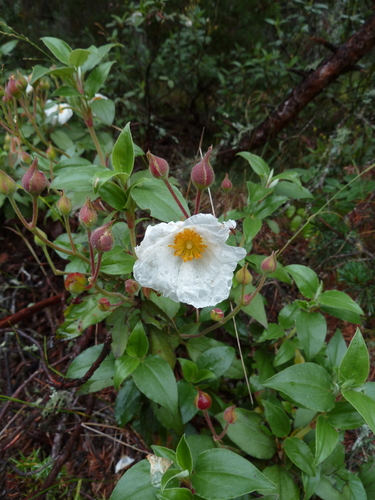
(c) Xavier Ma Ma, some rights reserved (CC BY-NC), uploaded by Xavier Ma Ma
iNaturalist· cc-by-nc
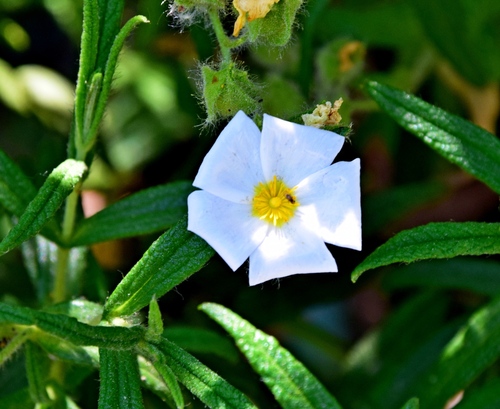
(c) Maria José D. Martins, some rights reserved (CC BY-NC), uploaded by Maria José D. Martins
Summary
Source: WikipediaCistus albidus, the grey-leaved cistus, is a shrubby species of flowering plant in the family Cistaceae, with pink to purple flowers, native to south-western Europe and western north Africa.
Description
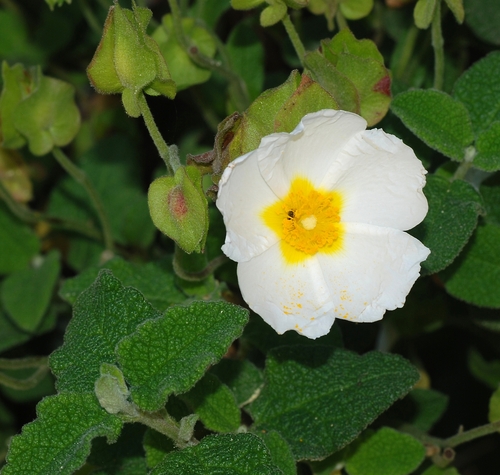
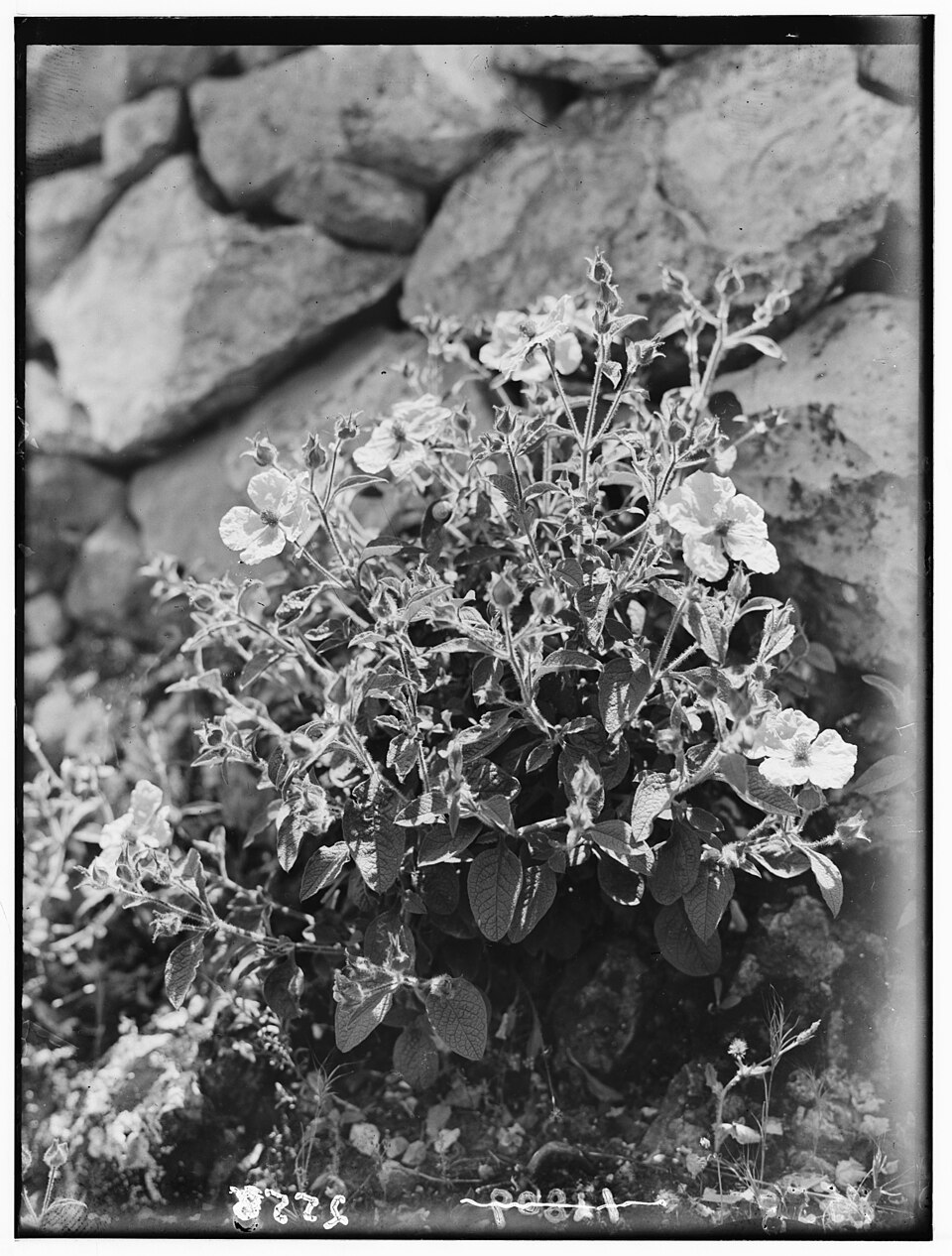
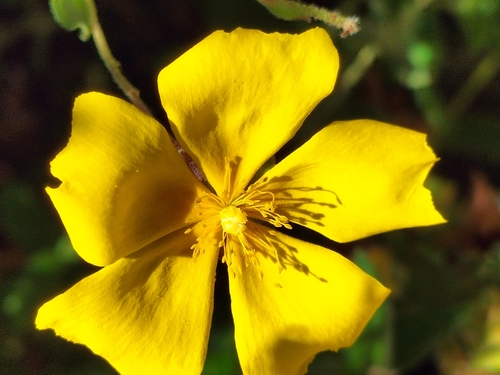
A compact shrub. It grows about 90 cm tall and spreads 1.2 m wide. It is usually broader than tall. The leaves are felty grey green. The flowers are at the ends of the twigs and are lilac colour. There is a small yellow blotch at the base of each petal.
Edible Uses
The leaves can be used as a tea substitute. Dried leaves are sometimes used as an adulterant for marjoram (Origanum majorana).
Traditional Uses
The leaves are used as a tea. The dried leaves are used to adulterate marjoram.
This uses section is brief — help expand it
Medicinal Uses
None known.
Distribution
It is very sensitive to excess moisture. It grows in dry limestone locations. It suits hardiness zones 7-9.
Where It Grows
Africa, Algeria, Australia, Europe*, France, Mediterranean, North Africa, Portugal, Spain,
Cultivation
Requires a sunny position in a well-drained light sandy soil. Prefers a calcareous soil. Withstands drought once it is established. Tolerates maritime exposure. One of the hardiest species in this genus, tolerating temperatures down to about -15°c and surviving all but the coldest winters in Britain, it is however apt to be short-lived. Plants are somewhat hardier when grown in poor soils. Individual flowers only last one day but there is a long succession of them. Dislikes pruning or root disturbance. Plants should be pot grown and then planted out in their final positions whilst still small. Plants in this genus are notably resistant to honey fungus. Hybridizes freely with other members of this genus.
Propagation
Gather seed when ripe and store dry. Surface sow in late winter in a greenhouse; germination usually occurs within 1–4 weeks at 20°C. Prick out seedlings as soon as they are large enough to handle into individual pots, grow on in the greenhouse through their first winter, and plant out the following spring or early summer after the last expected frosts. Seed stores for at least 3 years. Take softish to half-ripe cuttings 8cm long with a heel or at a node in June–August in a frame; roots form within 3 weeks at a high success rate. Alternatively, take cuttings of almost mature wood 8–12cm with a heel or at a node in September–October in a frame, also at a high percentage. Lift and pot up in spring, planting out once a good root system has formed. Layering can be done in spring.
Other Uses
None known.
Notes
There are about 20 Cistus species.
Also Known As
Black rose, Estepa, Grey-leaved Cistus
References (13)
- Blamey, M and Grey-Wilson, C., 2005, Wild flowers of the Mediterranean. A & C Black London. p 140
- Blanco-Salas, J., et al, 2019, Wild Plants Potentially Used in Human Food in the Protected Area “Sierra Grande de Hornachos” of Extremadura (Spain). Sustainability 2019, 11, 456
- Bodkin, F., 1991, Encyclopedia Botanica. Cornstalk publishing, p 260
- Brouk, B., 1975, Plants Consumed by Man. Academic Press, London. p 312
- Cundall, P., (ed.), 2004, Gardening Australia: flora: the gardener's bible. ABC Books. p 380
Show all 13 references Hide references
- Etherington, K., & Imwold, D., (Eds), 2001, Botanica's Trees & Shrubs. The illustrated A-Z of over 8500 trees and shrubs. Random House, Australia. p 212
- Facciola, S., 1998, Cornucopia 2: a Source Book of Edible Plants. Kampong Publications, p 78
- Hibbert, M., 2002, The Aussie Plant Finder 2002, Florilegium. p 67
- Lord, E.E., & Willis, J.H., 1999, Shrubs and Trees for Australian gardens. Lothian. p 213
- Morley, B. & Everard, B., 1970, Wild Flowers of the World. Ebury press. Plate 34
- Sp. pl. 1:524. 1753
- Uphof,
- Young, J., (Ed.), 2001, Botanica's Pocket Trees and Shrubs. Random House. p 248