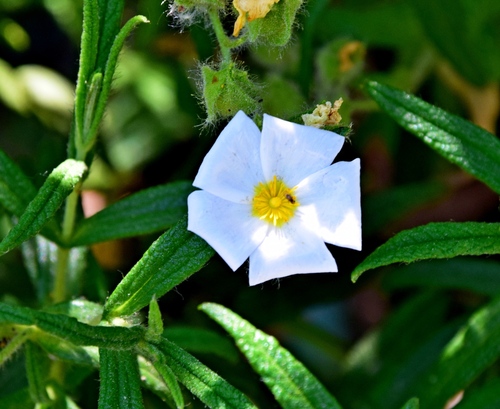
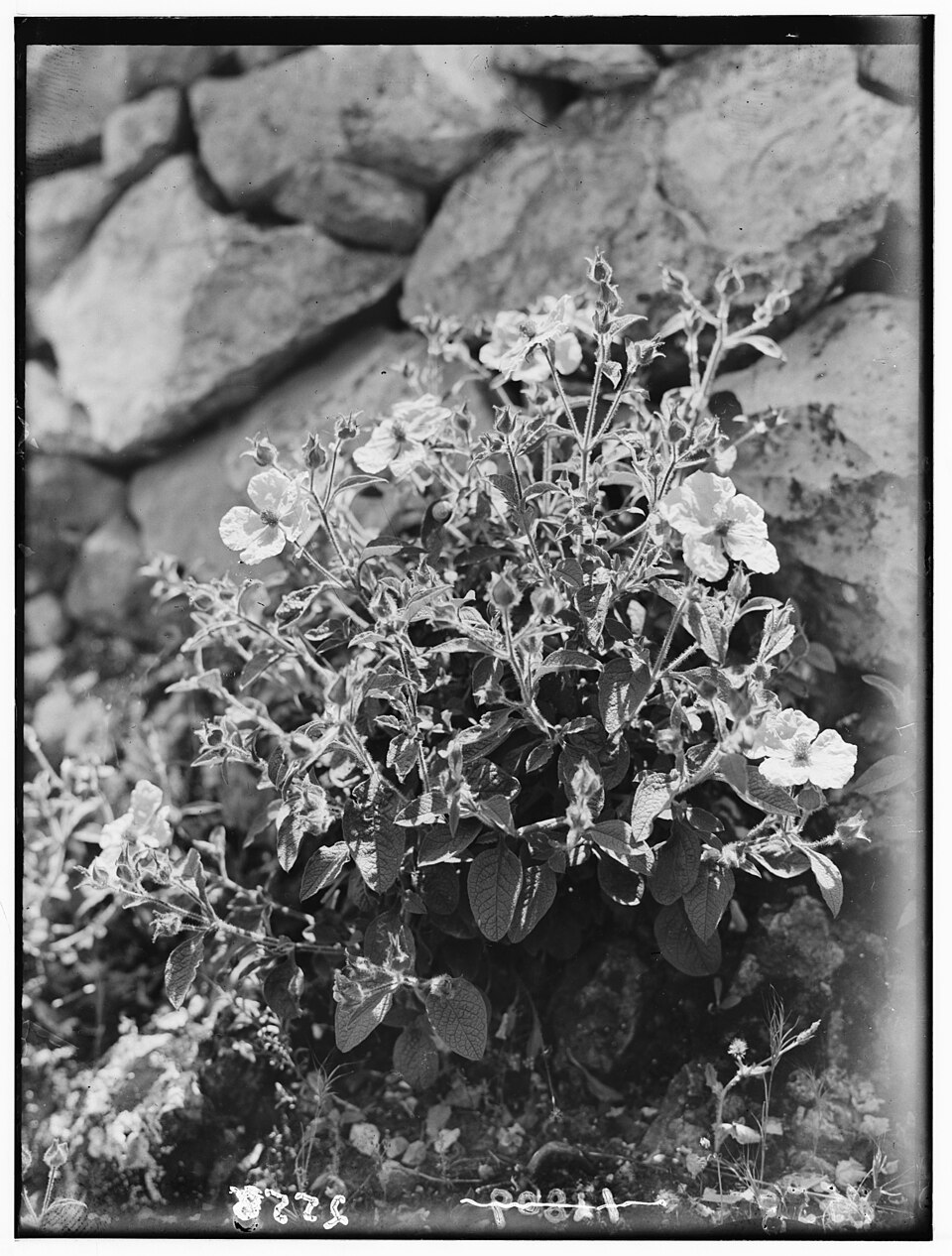
Cistus salviifolius
L.
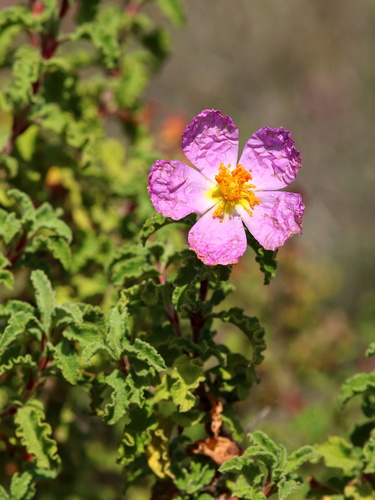
Mexican origanum, Sage-leaved Cistus, Sage-leafed rock rose
iNaturalist· cc-by-sa
(c) Alvesgaspar, some rights reserved (CC BY-SA)
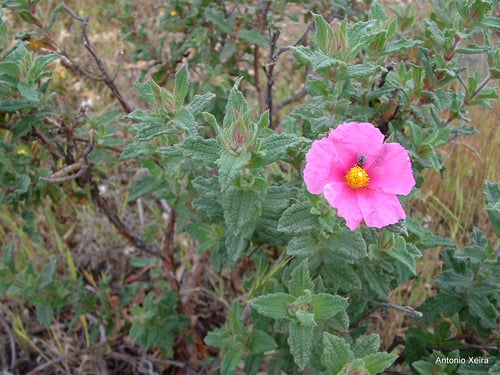
iNaturalist· cc-by-nc
(c) Felix Riegel, some rights reserved (CC BY-NC)
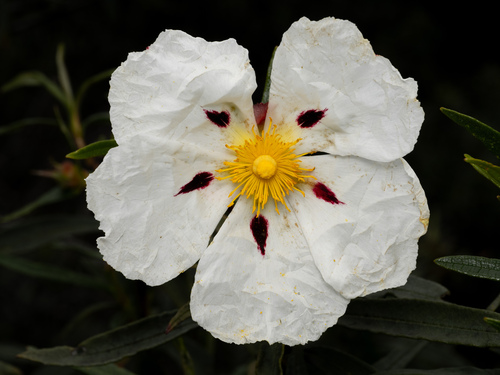
iNaturalist· cc-by-nc
(c) Felix Riegel, some rights reserved (CC BY-NC)
Summary
Source: WikipediaCistus salviifolius, common names sage-leaved rock-rose, salvia cistus or Gallipoli rose, is a shrub of the family Cistaceae.
Description
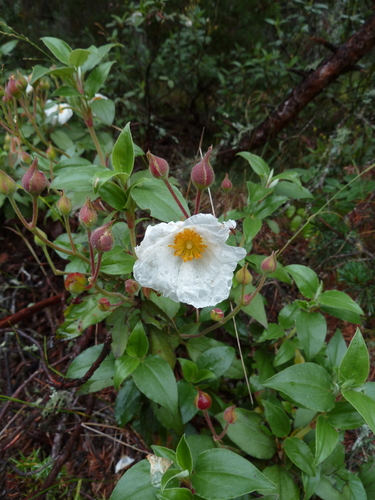
A low shrub. It lies along the ground. It grows 75 cm high and spreads 75 cm wide. The leaves are wrinkled and rough. They are dark grey-green on the upper surface and whitish grey underneath. They are downy on both surfaces. The leaves are oval and have a wedge shaped base. They are 10-40 mm long. They have 3 veins. The flowers are usually borne singly. They have white petals. The flowers are 30-50 mm across.
Edible Uses
The dried leaves are used as an adulterant for marjoram (Origanum majorana).
Traditional Uses
The dried leaves are used as an adulterant of marjoram.
This uses section is brief — help expand it
Medicinal Uses
None known.
Distribution
It is a Mediterranean climate plant. It grows in rocky places and stony dry hillsides. It suits hardiness zones 7-10.
Where It Grows
Australia, Europe*, France, Greece, Italy, Mediterranean, Morocco, Portugal, Spain, Turkey, Türkiye,
Cultivation
Requires a sunny position in a dry or moist well-drained light sandy soil. Withstands drought once it is established. Tolerates maritime exposure. Plants are hardy to about -12°c, but they require protection in severe winters. Plants are somewhat hardier when grown in poor soils. Individual flowers only last one day but there is a long succession of them. Dislikes pruning or root disturbance. Plants should be pot grown and then planted out in their final positions whilst still small. This species is notably resistant to honey fungus. The flowers are very attractive to bees. Hybridizes freely with other members of this genus. This species is closely related to C. hirsutus.
Propagation
Gather seed when ripe and store dry. Surface sow in late winter in a greenhouse; germination usually takes 1–4 weeks at 20°C. Prick out seedlings into individual pots as soon as they are large enough to handle. Overwinter in the greenhouse and plant out the following spring or early summer after the last expected frosts. Seed stores for at least 3 years. Softish to half-ripe cuttings, 8cm long with a heel or at a node, taken June–August in a frame; roots form within 3 weeks, with a high success rate. Near-mature wood cuttings, 8–12cm with a heel or at a node, taken September–October in a frame, also achieve a high percentage. Lift and pot in spring, planting out once a good root system has formed. Layering can also be done in spring.
Other Uses
A good ground cover plant for milder areas of Britain; the form 'Prostratus' is particularly recommended for this purpose.
Notes
There are about 20 Cistus species.
Also Known As
Irgual, Kartli
References (14)
- Blamey, M and Grey-Wilson, C., 2005, Wild flowers of the Mediterranean. A & C Black London. p 141
- Bodkin, F., 1991, Encyclopedia Botanica. Cornstalk publishing, p 260
- Brouk, B., 1975, Plants Consumed by Man. Academic Press, London. p 312
- Cundall, P., (ed.), 2004, Gardening Australia: flora: the gardener's bible. ABC Books. p 381
- Ertug, F, Yenen Bitkiler. Resimli Türkiye Florası -I- Flora of Turkey - Ethnobotany supplement
Show all 14 references Hide references
- Etherington, K., & Imwold, D., (Eds), 2001, Botanica's Trees & Shrubs. The illustrated A-Z of over 8500 trees and shrubs. Random House, Australia. p 213
- Facciola, S., 1998, Cornucopia 2: a Source Book of Edible Plants. Kampong Publications, p 78
- Ghanimi, R., et al, 2022, Ethnobotanical study on wild edible plants traditionally used by Messiwa people, Morocco. Journal of Ethnobiology and Ethnomedicine. 18:16
- Hibbert, M., 2002, The Aussie Plant Finder 2002, Florilegium. p 67
- INFOODSUpdatedFGU-list.xls
- Lord, E.E., & Willis, J.H., 1999, Shrubs and Trees for Australian gardens. Lothian. p 216
- Sfikas, G., 1984, Trees and shrubs of Greece. Efstathiadis Group. Athens. p 106
- Smith, N., Mori, S.A., et al, 2004, Flowering Plants of the Neotropics. Princeton. p 104
- Sp. pl. 1:524. 1753 "salvifolia"