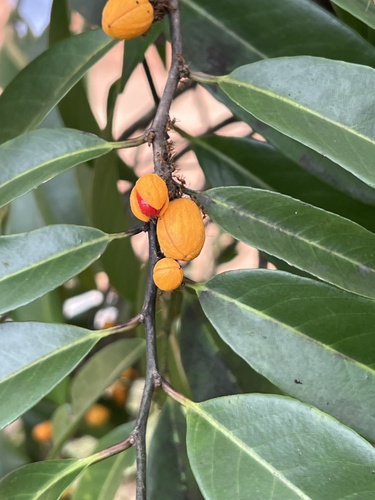
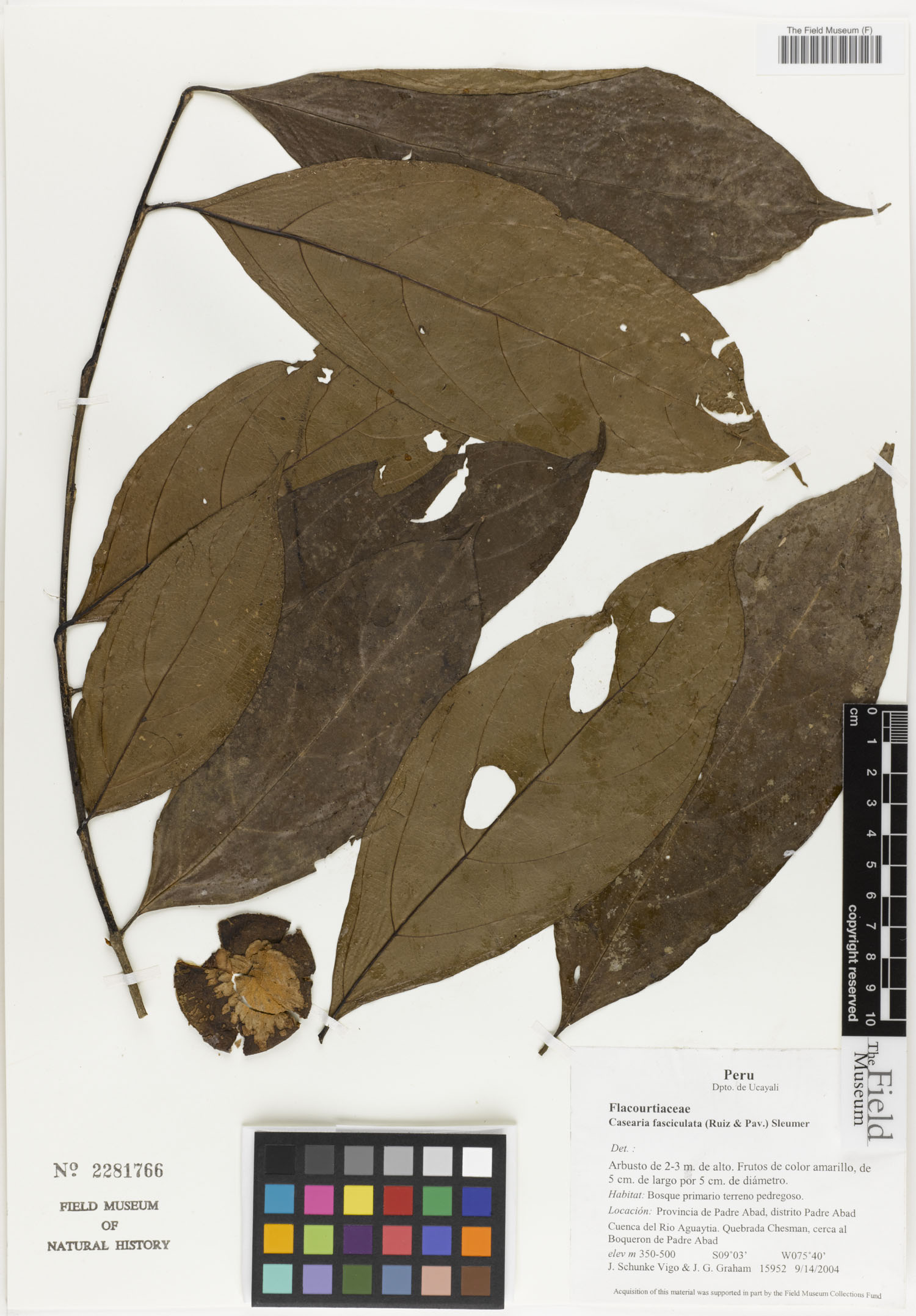
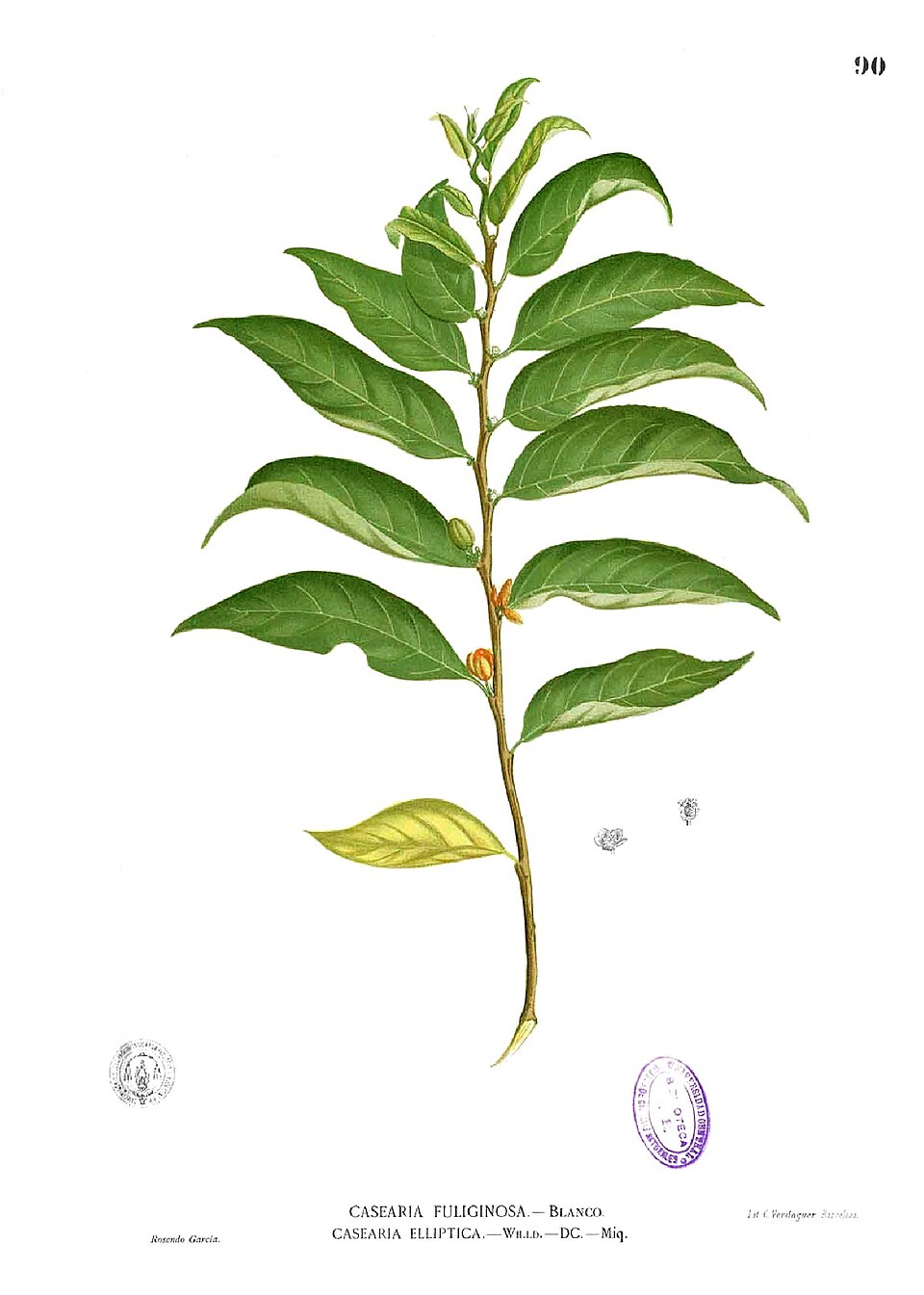
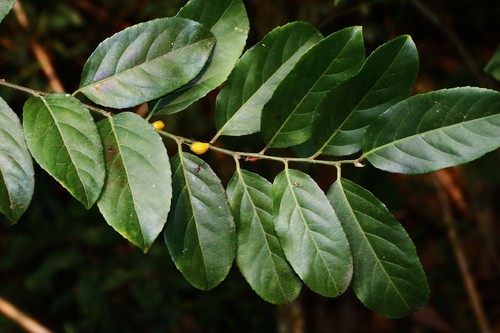
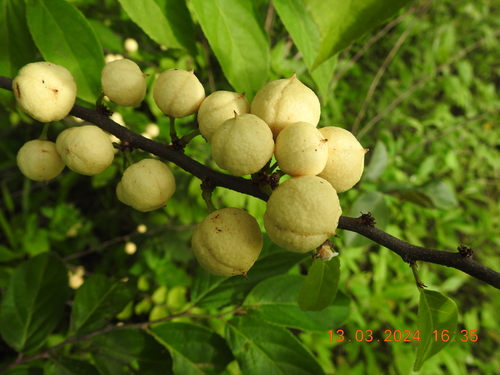
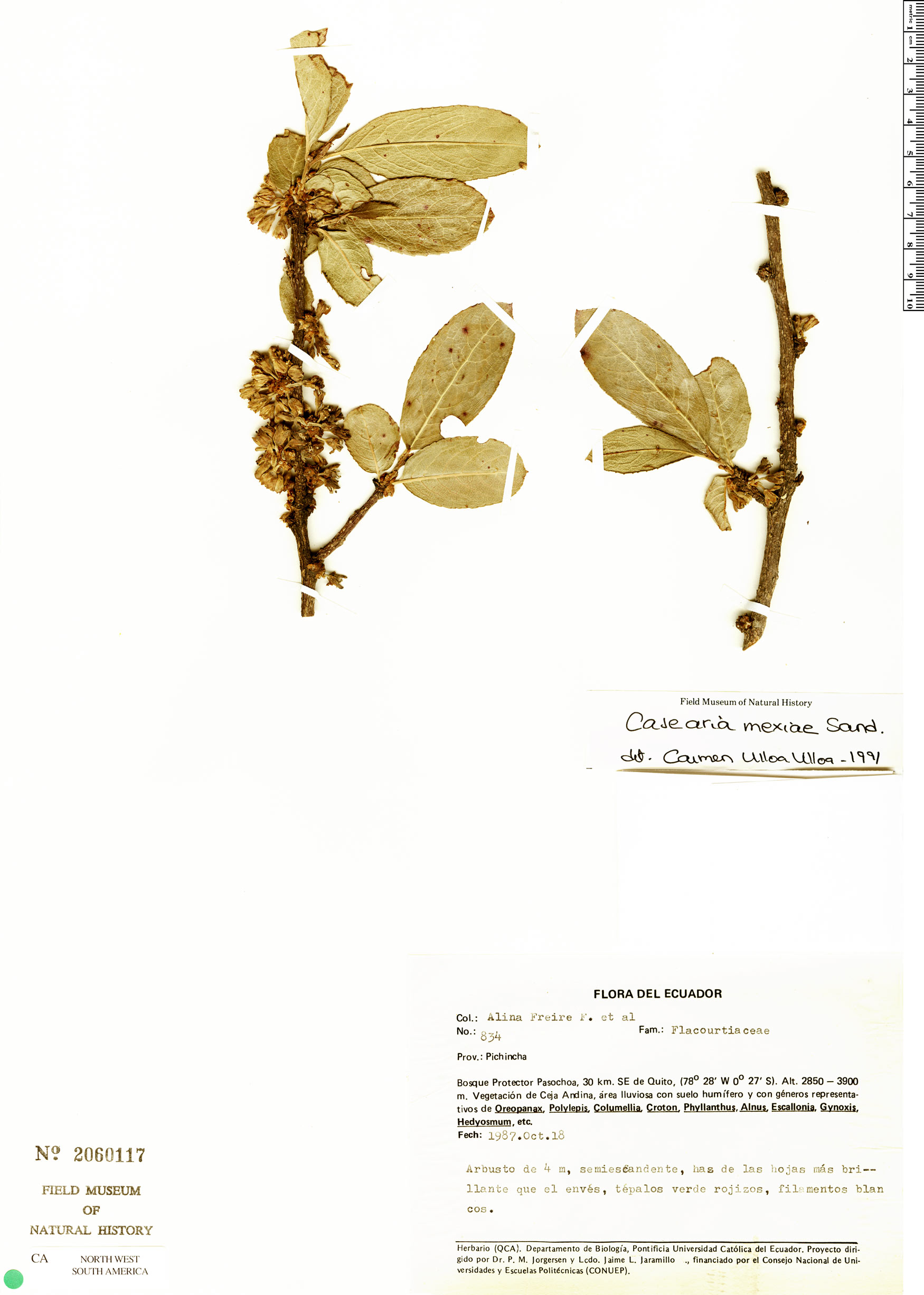
Xylosma flexuosa
(Kunth) Hemsl.
Brush holly
iNaturalist· cc0
no rights reserved, uploaded by Center for Urban Ecology
iNaturalist· cc-by-nc
(c) Jan Meerman, some rights reserved (CC BY-NC), uploaded by Jan Meerman
iNaturalist· cc-by
(c) Sam Kieschnick, some rights reserved (CC BY), uploaded by Sam Kieschnick
Summary
Source: WikipediaXylosma flexuosa, commonly known as brushholly or coronilla, is a species of flowering plant in the family Salicaceae, that is native to southern North America and northern South America. Its range stretches from southern Texas in the United States south through Mexico and Central America to Venezuela. It can also be found on the island of Curaçao in the Netherlands Antilles. Brush holly is a spiny evergreen shrub, usually reaching a height of 1–2 m (3.3–6.6 ft) but able to attain 6–8 m (20–26 ft) in height. Red and yellow berries around 7–8 mm (0.28–0.31 in) in diameter are found on the plant throughout the year. It is sometimes cultivated as an ornamental hedge.
Description
A tropical tree in the Salicaceae family (formerly Flacourtiaceae). It produces edible fruit and has stems used for beverages.
This description is brief — help expand it
Edible Uses
The stems are boiled to make an alcoholic drink, and the fruit is also eaten.
Traditional Uses
The stems are boiled and used to make an alcoholic drink.
This uses section is brief — help expand it
Distribution
It is a tropical plant.
Where It Grows
Caribbean, Central America, Colombia, Mexico, North America, South America, Venezuela, USA,
Notes
Previously put in the family Flacourtiaceae.
Synonyms
Also Known As
Capulin corona, Coronilla, Huismarin, Palo de brujo
References (6)
- Arriaga, M. R. et al, 2014, Catalogue of fruit species in the southeast of the State of Mexico, Mexico. Revista Mexicana de Ciencias Agricolas Vol. 5 Num. 8. pp 1509-1517
- Cruz, I. M., et al, 2015, Edible fruits and seeds in the State of Mexico. Revista Mexicana de Ciencias Agricolas. Vol. 6. Num. 2 pp 331-346
- Kermath, B. M., et al, 2014, Food Plants in the Americas: A survey of the domesticated, cultivated and wild plants used for Human food in North, Central and South America and the Caribbean. On line draft. p 931
- Piedra-Malagón, E. M., et al, 2022, Edible native plants of the Gulf of Mexico Province. Biodiversity Data Journal 10: e80565 p 29
- Roa, J. A. G. & Boada, D. S. G., 2018, Fundación para el Fortalecimiento de la Fruticultura y Plantas Alimenticias no Convencionales en Colombia.
Show all 6 references Hide references
- Segura, S., et al, 2018, The edible fruit species in Mexico. Genet Resour Crop Evol (2018) 65:1767–1793