Ardisia revoluta
Kunth
Revolute ardisia
iNaturalist· cc-by-nc
(c) Eric Hough, some rights reserved (CC BY-NC), uploaded by Eric Hough
iNaturalist· cc-by-nc
(c) Richard Joyce, some rights reserved (CC BY-NC), uploaded by Richard Joyce
iNaturalist· cc-by-nc-sa
(c) Daniel H. Janzen. Guanacaste Dry Forest Conservation Fund., some rights reserved (CC BY-NC-SA)
Description
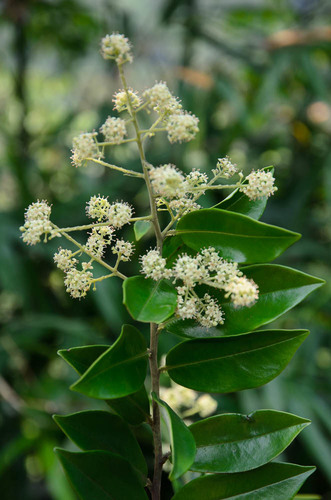
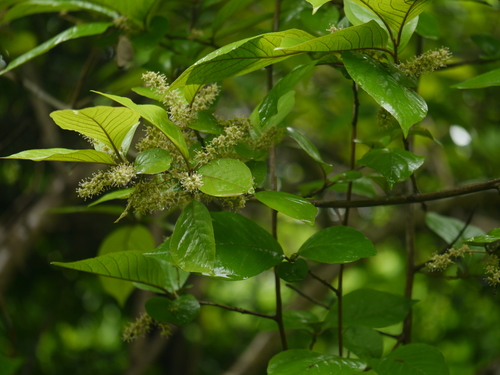
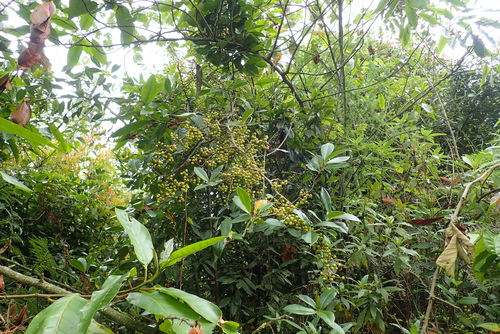
A tree. The wood is red. It grows 10 m tall. The leaves have short leaf stalks. The leaves are shiny. The leaf blade is 6-21 cm long by 3-9 cm wide. The flowers are in groups on long stalks. The fruit are dark purple berries. They are 5-8 mm across. There is only a small amount of juicy pulp.
Edible Uses
The pulp of the fruit is eaten raw, though fruits are only occasionally consumed.
Traditional Uses
The pulp of the fruit is eaten raw.
This uses section is brief — help expand it
Distribution
It is a tropical plant. In Central America it grows from sea level to 1,700 m altitude. It grows in dry forest.
Where It Grows
Belize, Central America, Colombia, Costa Rica, El Salvador, Guatemala, Honduras, Mexico, Nicaragua, North America, Panama, South America, Venezuela,
Other Information
Fruit are occasionally eaten.
Notes
Also put in the family Myrsinaceae.
Synonyms
Also Known As
Arayan Cerezo, Canelito, Canelo, Capulicillo, Cerecilla, Guastomata, Kayochokillitl, Tecuico, Tsu'ri, Uvito
References (11)
- Bircher, A. G. & Bircher, W. H., 2000, Encyclopedia of Fruit Trees and Edible Flowering Plants in Egypt and the Subtropics. AUC Press. p 39
- Chizmar Fernandez, C., et al, 2009, Plantas comestibles de Centroamerica. Instituto de Biodiversidad, Costa Rica. p 247
- Condit, R., et al, 2011, Trees of Panama and Costa Rica. Princeton Field Guides. p 346
- Diaz-Jose, J., et al, 2019, Traditional Knowledge of Edible Wild Plants Used by Indigenous Communities in Zongolica, Mexico. Ecology of Food and Nutrition.
- Fouqué, A., 1972, Espèces fruitières d'Amérique tropicale. Institut français de recherches fruitierès outre-mer
Show all 11 references Hide references
- Grandtner, M. M., 2008, World Dictionary of Trees. Wood and Forest Science Department. Laval University, Quebec, Qc Canada. (Internet database http://www.WDT.QC.ca)
- Grandtner, M. M. & Chevrette, J., 2013, Dictionary of Trees, Volume 2: South America: Nomenclature, Taxonomy and Ecology. Academic Press p 44
- Hellmuth, N. M., 2011, Maya Ethnobotany. Complete Inventory of plants. Associacion FLAAR Mesoamerica. Tenth edition.
- Kermath, B. M., et al, 2014, Food Plants in the Americas: A survey of the domesticated, cultivated and wild plants used for Human food in North, Central and South America and the Caribbean. On line draft. p 86
- Martin, P. S. et al, (Eds.), 1998, Gentry's Rio Mayo Plants. The Tropical Deciduous Forest & Environs of Northwest Mexico. University of Arizona Press.
- Segura, S., et al, 2018, The edible fruit species in Mexico. Genet Resour Crop Evol (2018) 65:1767–1793