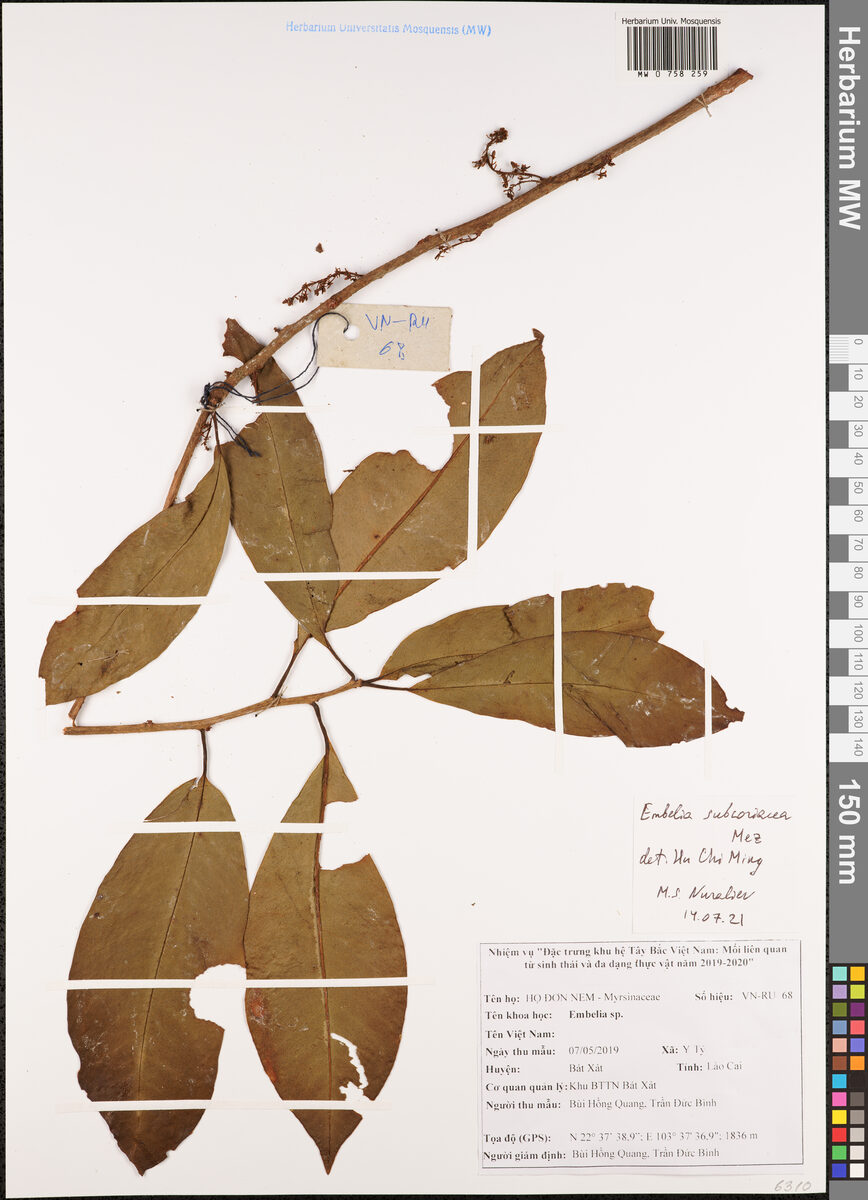
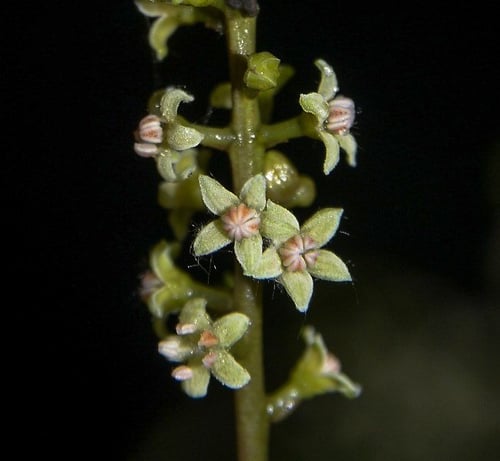
Ardisia solanacea
(Poir.) Roxburgh
Sour-shoots vegetable
iNaturalist· cc-by-nc
(c) Arun N, some rights reserved (CC BY-NC), uploaded by Arun N
iNaturalist· cc-by-nc
(c) Randall Jiménez, some rights reserved (CC BY-NC), uploaded by Randall Jiménez
iNaturalist· cc-by-nc
(c) James Bailey, some rights reserved (CC BY-NC), uploaded by James Bailey
Summary
Source: WikipediaArdisia solanacea, called shoebutton ardisia in English, is a species of the genus Ardisia in family Primulaceae (subfamily Myrsinoideae).
Description
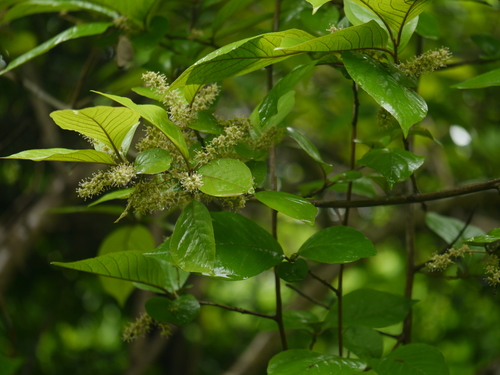
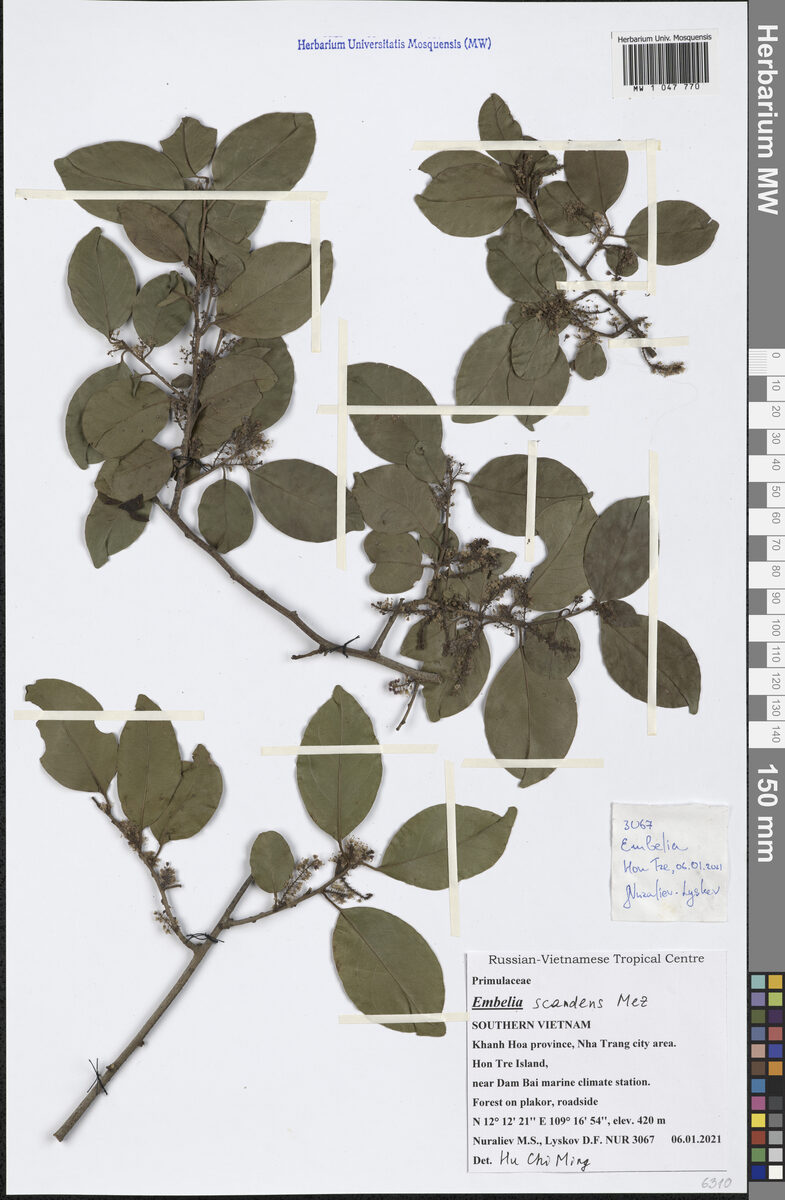
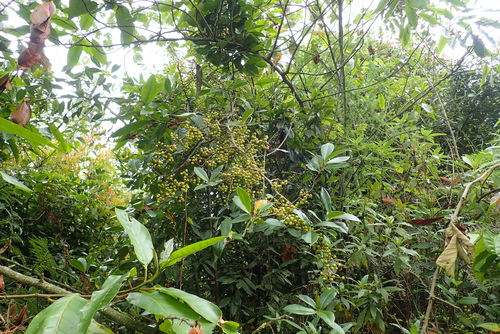
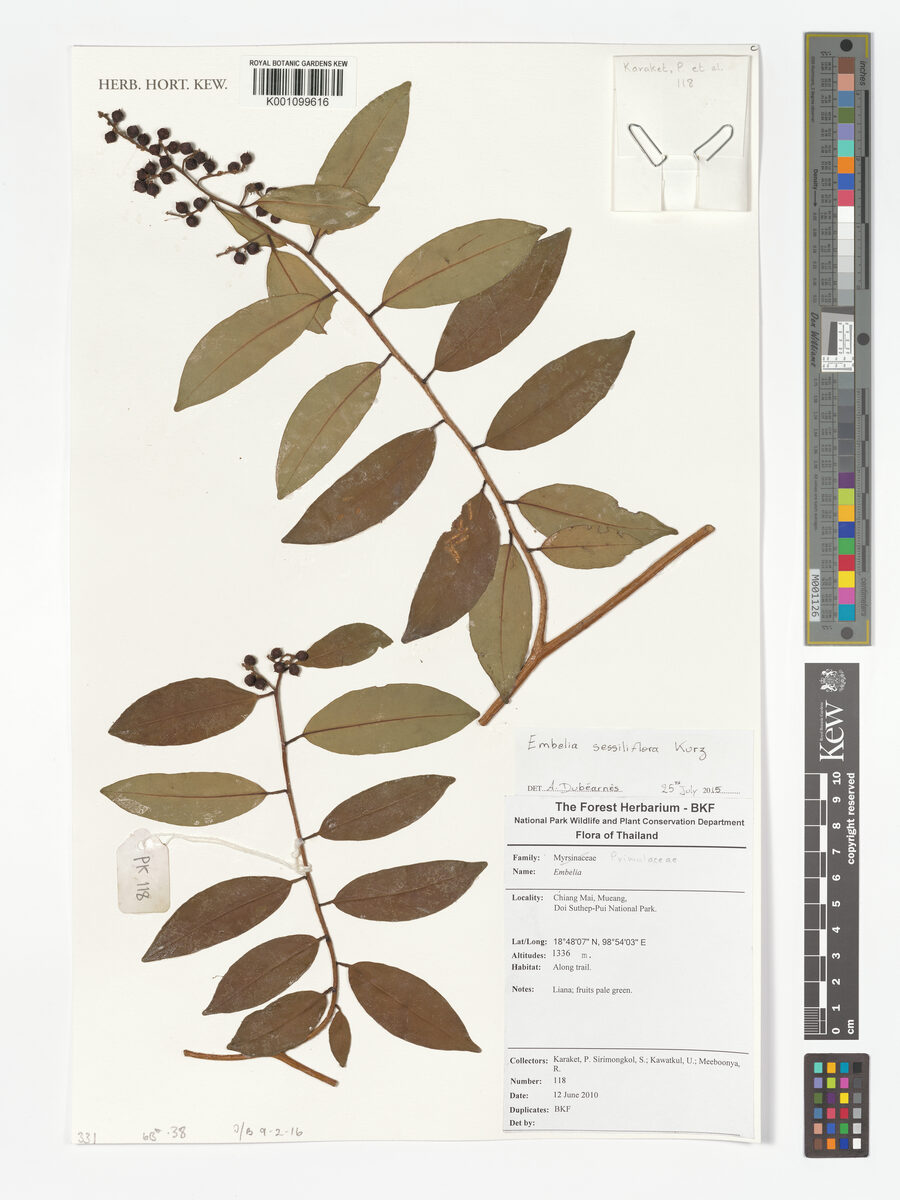
A shrub about 2-6 m high. The small branches are angular. They are 5-7 mm across. The leaves have leaf stalks. These are 1-2 cm long. The leaves are 6.5-22 cm long by 2.9-9.5 cm wide. They are oval or oblong. There are about 20 side veins each side of the midrib. They are raised on both surfaces. The flowers are pink. They are leathery and about 1 cm long. The fruit are round and black when ripe. They are 7-9 mm across.
Edible Uses
The ripe fruit are eaten raw or used for drinks. Young leafy shoots are parboiled, washed, drained, and seasoned for use in salads. The flowers are eaten as a vegetable.
Traditional Uses
The ripe fruit are eaten raw. They are used for drinks. The young leafy shoots are parboiled, washed, drained and seasoned for eating in salads. The flowers are eaten as a vegetable.
Medicinal Uses
The juice of the root is used to relieve indigestion.
Distribution
A tropical plant. It grows in Nepal at 200-1000 m altitude in moist, shady places. In China it grows in mixed forests and shrubby areas on hillsides between 400-1600 m altitude. In XTBG Yunnan.
Where It Grows
Andamans, Asia, Australia, Central America, China, Hawaii, Himalayas, India, Indochina, Malaysia, Myanmar, Nepal, Northeastern India, Pacific, Pakistan, Panama, SE Asia, Singapore, Sri Lanka, Thailand, Vietnam,
Cultivation
Plants are grown from seed.
Propagation
Seed - Semi-ripe cuttings.
Other Uses
A yellow dye is obtained from the fruit. The pinkish fruit provides a yellow dye, which becomes brown on paper.
Other Information
It is a popular food. The ripe fruit are eaten by children.
Notes
There are about 250-300 Ardisia species. They are mainly in the tropics. Also put in the family Myrsinaceae.
Synonyms
Also Known As
Aringudi, Bakle, Bisi, Bugdi, Chavvalakura, Comnguoi ca, Damai phal, Dikna, Garha gulainchi, Goyakpin, Hala lunde, Halad, Kholikafal, Kunti baha, Kyetma-ok, Kyetma-ok-po, Nyampen, Pa lei, Pa nei, Pri-prawn, Shadwe, Suan tai cai, Tinkoli, Wo qie wo bie, Yeshakema
References (33)
- Acharya K. P. and Acharya, R., 2010, Eating from the Wild: Indigenous knowledge on wild edible plants in Parroha VDC of Rupandehi District, Central Nepal. International Journal of Social Forestry. 3(1):28-48
- Ambasta S.P. (Ed.), 2000, The Useful Plants of India. CSIR India. p 50
- Bandyopadhyay, S. et al, 2009, Wild edible plants of Koch Bihar district, West Bengal. Natural Products Radiance 8(1) 64-72
- Behera K. K., et al, 2008, Wild Edible Plants of Mayurbhanj District, Orissa, India. J. Econ. Taxon. Bot. Vol. 32 (Suppl.) pp 305-314
- Burkill, H. M., 1985, The useful plants of west tropical Africa, Vol. 4. Kew.
Show all 33 references Hide references
- Cao, Y., et al, 2020, Ethnobotanical study on wild edible plants used by three trans-boundary ethnic groups in Jiangcheng County, Pu’er, Southwest China. Journal of Ethnobiology and Ethnomedicine (2020) 16:66
- Chen Jie, Pipoly 3, J.J., Myrsinaceae. Flora of China.
- Chowdery, T., et al, 2014, Wild edible plants of Uttar Dinajpur District, West Bengal. Life Science Leaflets. 47:pp 20-36 http://lifesciencesleaflets.ning.com
- Cooper, W. and Cooper, W., 2004, Fruits of the Australian Tropical Rainforest. Nokomis Editions, Victoria, Australia. p 335
- Dey, A. & Mukhererjee, A., 2015, Living and Survival Amidst Hunger: Wild Edible Botanicals as a Prime Forest Productivity in the Rural Purulia District, West Bengal, India from Colonial to Present. Research Journal of Forestry 9(3): 71-86
- Dobriyal, M. J. R. & Dobriyal, R., 2014, Non Wood Forest Produce an Option for Ethnic Food and Nutritional Security in India. Int. J. of Usuf. Mngt. 15(1):17-37
- Flora of Pakistan. www.eFloras.org
- Fu, Yongneng, et al, 2003, Relocating Plants from Swidden Fallows to Gardens in Southwestern China. Economic Botany, 57(3): 389-402
- Gautim, R. S., et al, 2020, Wild Edible Fruits of Nepal. Int. J. Appl. Sci. Biotechnol. Vol 8(3): 289-304
- Grubben, G. J. H. and Denton, O. A. (eds), 2004, Plant Resources of Tropical Africa 2. Vegetables. PROTA, Wageningen, Netherlands. p 559 (As Ardisia humilis)
- Hu, Shiu-ying, 2005, Food Plants of China. The Chinese University Press. p 614
- Jackes, B.R., 2001, Plants of the Tropics. Rainforest to Heath. An Identification Guide. James Cook University. p 67
- Jan, M., et al, 2018, Ethnobotanical Study of Plants Used By Ethnic People of Karbari Grant Village Dehradun, Uttarakhand. SERBD-International Journal of Multidisciplinary Sciences
- Kumar, R., et al, 2013, Ethnoboptany of Tharus or Dudhwa National Park, India. Mintage journal of Pharmaceutical & Medical Science 6-11
- Lungphi, P., Wangpan, T. & Tangjang, S., 2018, Wild edible plants and their additional uses by the Tangsa community living in the Changlang district of Arunachal Pradesh, India. Pleione 12(2): 151 - 164. 2018.
- Manandhar, N.P., 2002, Plants and People of Nepal. Timber Press. Portland, Oregon. p 94
- Martin, F.W. & Ruberte, R.M., 1979, Edible Leaves of the Tropics. Antillian College Press, Mayaguez, Puerto Rico. p 48, 207
- Misra S. & Misra M., 2016, Ethnobotanical and Nutritional Evaluation of Some Edible Fruit Plants of Southern Odisha, India. International Journal of Advances in Agricultural Science and Technology, Vol.3 Issue.1, March- 2016, pg. 1-30
- Misra, S., 2020, Survey of edible plants for human consumption in south Odisha, India. Journal of Emerging Technologies and Innovative Research (JETIR) Vol. 7, Issue 12 p 278
- Pl. Coromandel t. 27. 1795
- Reddy, K. N. et al, 2007, Traditional knowledge on wild food plants in Andhra Pradesh. Indian Journal of Traditional Knowledge. Vol. 6(1): 223-229
- Singh, B., et al, 2012, Wild edible plants used by Garo tribes of Nokrek Biosphere Reserve in Meghalaya, India. Indian Journal of Traditional Knowledge. 11(1) pp 166-171
- Singh, D. B., et al, 2001, Nutrient composition of some wild edible fruits of Andaman and Nicobar Islands. J. Appl. Hort., 3(1):60-62, January-June, 2001
- Singh, H.B., Arora R.K.,1978, Wild edible Plants of India. Indian Council of Agricultural Research, New Delhi. p17
- Singh, V. B., et al, (Ed.) Horticulture for Sustainable Income and Environmental Protection. Vol. 1 p 214
- Taram, M., et al, 2018, Wild Food Plant Resources of Komkar Adi Tribe of Upper Siang District in Arunachal Pradesh, India. Bulletin of Arunachal Forest Research, Vol. 33(2), 27-35
- Thapa, L. B., et al, 2014, Wild Edible Plants used by endangered and Indigenous Raji Tribe in Western Nepal. International Journal of Applied Sciences and Biotechnology. Vol 2(3):243-252
- Xu, You-Kai, et al, 2004, Wild Vegetable Resources and Market Survey in Xishuangbanna, Southwest China. Economic Botany. 58(4): 647-667.