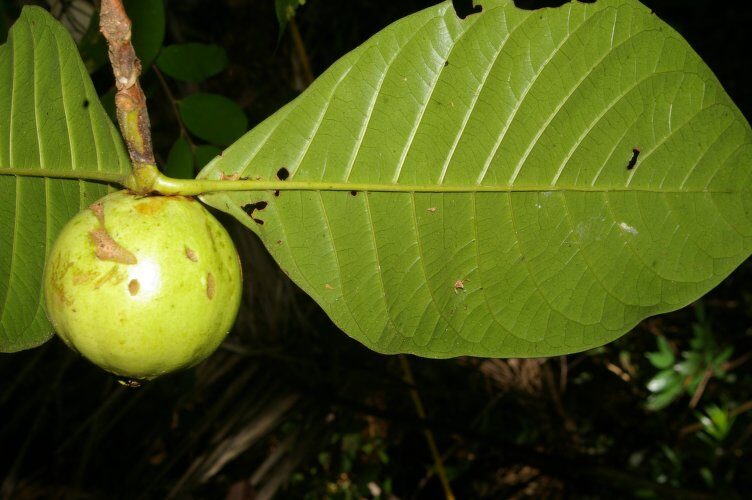
Pentagonia macrophylla
Benth.
iNaturalist· cc-by-nc
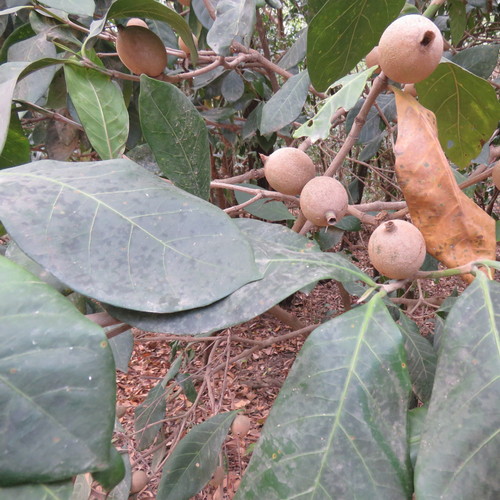
(c) Riley Fortier, some rights reserved (CC BY-NC), uploaded by Riley Fortier
iNaturalist· cc-by-nc
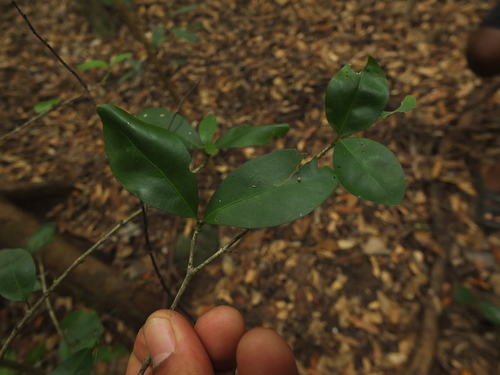
(c) Riley Fortier, some rights reserved (CC BY-NC), uploaded by Riley Fortier
iNaturalist· cc-by-nc-sa
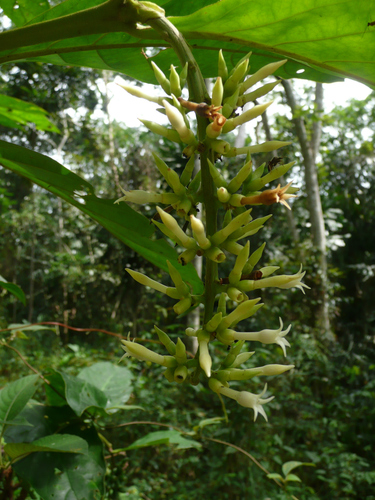
(c) Joel Abroad, some rights reserved (CC BY-NC-SA)
Summary
Source: WikipediaPentagonia macrophylla is a species of flowering plant in the family Rubiaceae, native from south-eastern Nicaragua to Ecuador. It was first described by George Bentham in 1844.
Description
A shrub or small tree. It grows 7 m tall. Trees are often unbranched with a crown of leaves at the top. The fruit are round and 3 cm across. They are orange.
Edible Uses
The pulp of the fruit is eaten raw.
Traditional Uses
The pulp of the fruit is eaten raw.
This uses section is brief — help expand it
Distribution
It is a tropical plant. It grows in the understorey between 10-900 m above sea level.
Where It Grows
Central America, Colombia, Costa Rica, Ecuador, Panama, Peru, South America*,
Synonyms
Also Known As
Bagre kaspi, Bagre muyu, Boyamo, Boyanowe, Boyemo, Boyom, Boyomoentay, Mangayajecho, Mintal, Mishki muyu, Murcielago, Pepa dulce, Pe duupijcha, Perico, Sacha guayaba, Tsikta panka
References (9)
- Barfod, A. S. & Kvist, L. P., 1996, Comparative Ethnobotanical Studies of the Amerindian Groups in Coastal Ecuador. The Danish Academy of Sciences and Letters. p 79
- Ferns, Useful Tropical Plants
- Galeano, G., 2000, Forest Use at the Pacific Coast of Choco, Colombia: A Quantitative Approach. Economic Botany, Vol. 54, No. 3, pp. 358-376 (Could be pig food!) (As Pentagonia donnell-smithii)
- Kermath, B. M., et al, 2014, Food Plants in the Americas: A survey of the domesticated, cultivated and wild plants used for Human food in North, Central and South America and the Caribbean. On line draft. p 628
- Lopez-Diago, D. & Garcia, N., 2021, Wild edible fruits of Colombia. Biota ColomBiana 22 (2) p 50
Show all 9 references Hide references
- NYBG herbarium 'edible"
- Roa, J. A. G. & Boada, D. S. G., 2018, Fundación para el Fortalecimiento de la Fruticultura y Plantas Alimenticias no Convencionales en Colombia.
- Torre, de la, L., et al, 2008, Enciclopedia de las Plantas Útiles del Ecuador. Herbario QCA. Pontificia Universidad Católica del Ecuador. p 550
- Van den Eynden, V., & Cueva, E., 2008, Las plantas en la alimentacion. Enciclopedia de las Plantas Utiles del Ecuador. Herbario QCA & Herbario AAU. Quito & Aarhus. 2008: 62–66