Cissus dinklagei
Gilg et M. Brandt
gbif· cc-by-nc-sa
Jan Klein & West & Central Africa program
gbif· cc-by-nc-sa
Jan Klein & West & Central Africa program
gbif· cc-by-nc-sa
Jan Klein & West & Central Africa program
Description
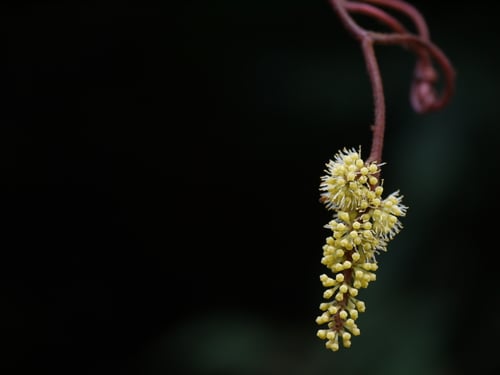
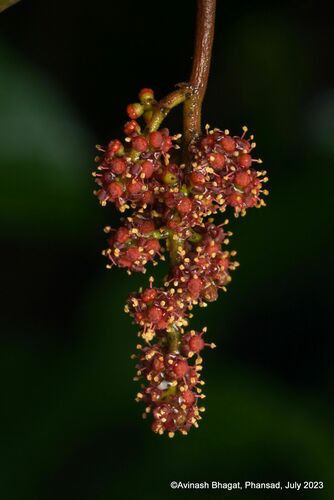
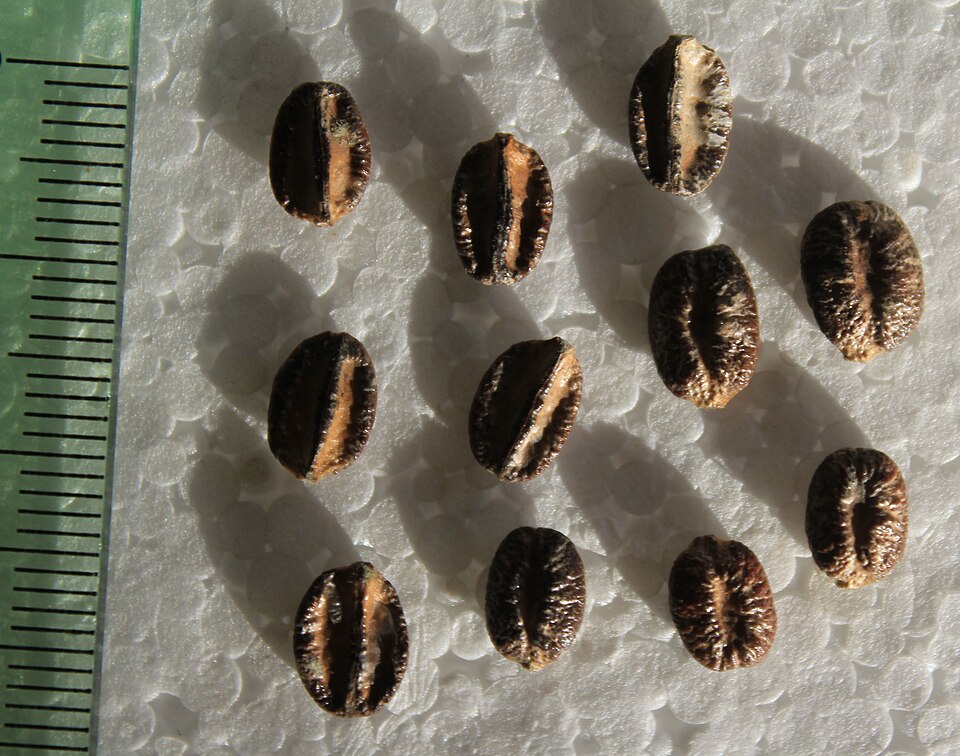
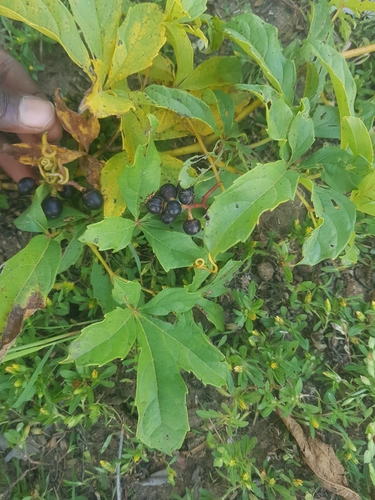
A woody creeper. It has tendrils opposite the leaves. The stem is round in cross section and 30 m long. The leaves are alternate and simple. The leaf stalk is 1-4 cm long. The leaf blade is oval and 10 cm long by 6 cm wide. The base is flattened and it tapers to the tip. The flowers are in clusters 4-10 cm long. The flowers have both sexes. They are small and green. The fruit is an oval berry. It is 3 cm long and 2 cm wide. It is red and has one seed. The seed is flattened and oval and 17 mm long.
Edible Uses
Leaves - cooked and eaten as a vegetable. An acid flavour, similar to sorrel (Rumex spp). The cut stems exude a copious, clear watery sap. It is used as a drink and is given to babies to stimulate their growth.
Traditional Uses
The sap of the stem is used as a drink. The leaves are eaten as a vegetable.
This uses section is brief — help expand it
Medicinal Uses
The stem sap is used as a drink in traditional practice.
Distribution
A tropical plant. It grows in dense evergreen forest.
Where It Grows
Africa, Angola, Cameroon, Central Africa, Central African Republic, CAR, Congo DR, Congo R, Equatorial-Guinea, Gabon,
Other Information
It is a minor vegetable.
Notes
There are about 200-350 Cissus species. There are about 75 species in tropical America.
Synonyms
Also Known As
Abondoko, Aligna, Limiambia, Mabon-doko, Mendome-ngoge, Nambodo, Okolo wi nkambi, Wese
References (5)
- Grubben, G. J. H. and Denton, O. A. (eds), 2004, Plant Resources of Tropical Africa 2. Vegetables. PROTA, Wageningen, Netherlands. p 180
- Martin, F.W. & Ruberte, R.M., 1979, Edible Leaves of the Tropics. Antillian College Press, Mayaguez, Puerto Rico. p 224
- Nkeoua, G. & Boundzanga, G. C., 1999, Donnees sur les produits forestieres non ligneux en Republique du Congo. FAO. p 22
- Raponda-Walker, A & Sillans, R., 1961, Les Plantes Utiles du Gabon. Editions Paul Lechevalier, Paris. p 53
- Termote, C., et al, 2011, Eating from the wild: Turumbu, Mbole and Bali traditional knowledge of non-cultivated edible plants, District Tshopo, DRCongo, Gen Resourc Crop Evol. 58:585-618