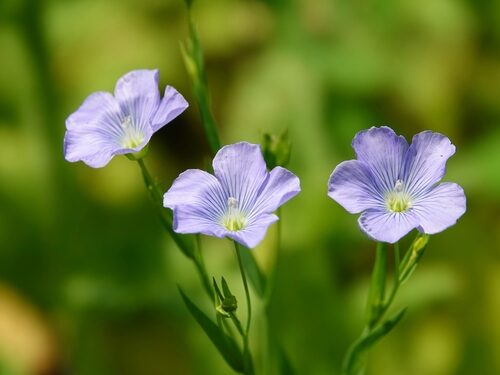
Linum bienne
Mill.
Blue flax
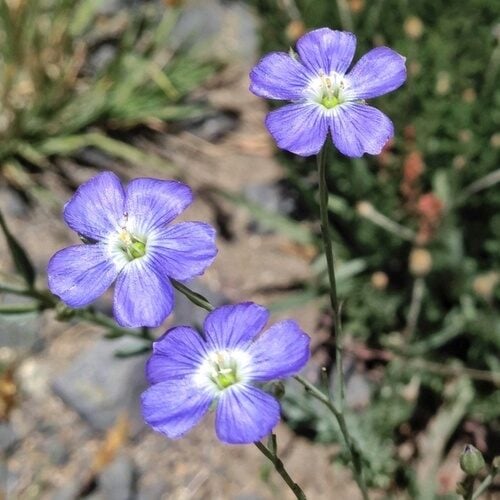
iNaturalist· cc-by
(c) Duarte Frade, some rights reserved (CC BY), uploaded by Duarte Frade
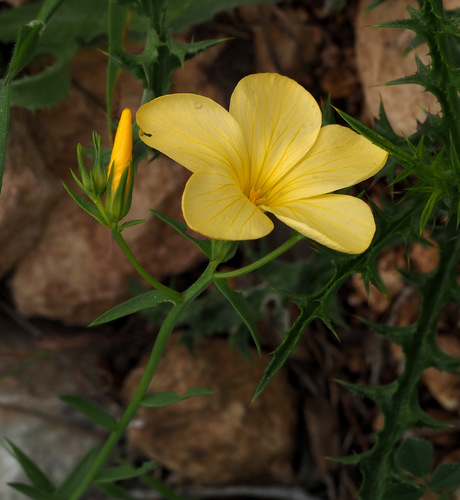
iNaturalist· cc-by-nc
(c) Yael Orgad, some rights reserved (CC BY-NC), uploaded by Yael Orgad
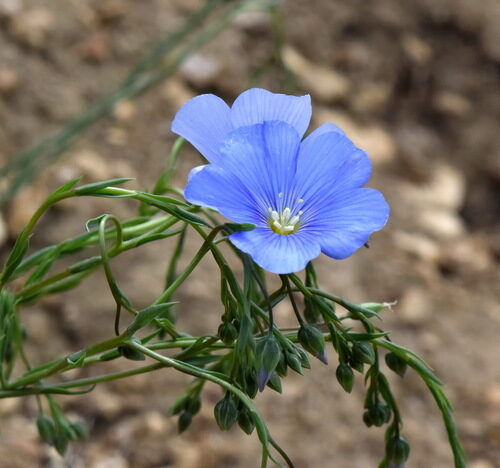
iNaturalist· cc-by-nc
(c) Sara Fonseca, some rights reserved (CC BY-NC)
Summary
Source: WikipediaLinum bienne, the pale or narrowleaf flax, is a flowering plant in the genus Linum, native to the Mediterranean region and western Europe, north to England and Ireland. Pale flax grows as a biennial or perennial plant in dry, sunny calcareous or neutral grasslands from sea level up to 1000 m. It has long, narrow stems to 60 cm tall and slender leaves 1.5–2.5 cm long. The flowers have five petals about 1 cm long and nearly round; they are pale blue but streaked with darker colour. It flowers in late spring and, at least in more temperate regions, through the summer. The flowers are hermaphroditic and are predominantly self-fertilising. Linum bienne (=L. angustifolium) is considered the probable wild forebear of the cultivated flax, and a fibre can be made from its stem. It is sometimes grown as a garden plant. It is an introduced species in Chile. Also, it has been introduced into North America, where it is naturalized on the Pacific coast from Oregon to the central coast of California, and also in Pennsylvania; it is found in Hawaii, as well.
Description
Linum bienne is an annual/perennial herb growing 0.6 m tall by 0.2 m wide. Hardy to UK zone 7 and not frost tender. Flowers from May to September with seeds ripening July to October. Hermaphroditic flowers pollinated by bees and flies. Prefers light sandy and medium loamy well-drained soils with mildly acid, neutral, or mildly alkaline pH. Requires full sun and moist soil. Tolerates strong winds but not maritime exposure.
Edible Uses
None known.
Medicinal Uses
None known.
Distribution
It is a temperate plant. In Argentina it grows from sea level to 1,000 m above sea level.
Where It Grows
Argentina, Armenia, Australia, Azerbaijan, Central Asia, Chile, Europe, Germany, Iran, Iraq, Kurdistan, Slovenia, South America, Tajikistan, Tasmania, Turkey, Türkiye,
Cultivation
Prefers a light well-drained moderately fertile humus-rich soil in a sunny sheltered position. L. angustifolium, mentioned above as a synonym of this species, is considered by some botanists to be a distinct species in its own right and the parent of L. usitatissimum, the cultivated flax.
Propagation
Sow seed in early spring in situ.
Other Uses
A fibre obtained from the stem is used to make cloth.
Synonyms
Also Known As
Dvoletni lan, Linhaca, Linho-brav0, Lino bienal
References (2)
- http://www.botanic-gardens-ljubljana.com/en/plants
- Zeven, A. C. & de West, J. M. J., 1982, Dictionary of cultivated plants and their regions of diversity. Wageningen. p 98