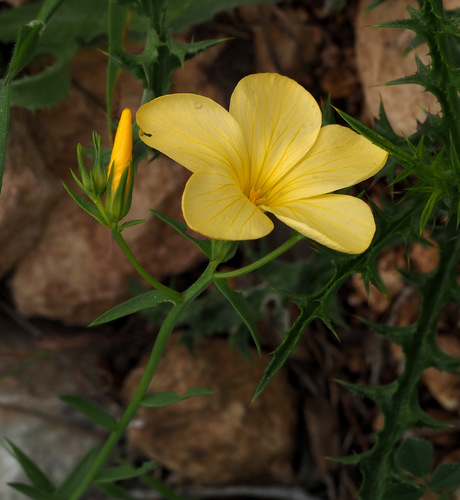
Linum perenne
L.
Perennial Flax, Blue flax, Alpine flax
iNaturalist· cc-by-nc
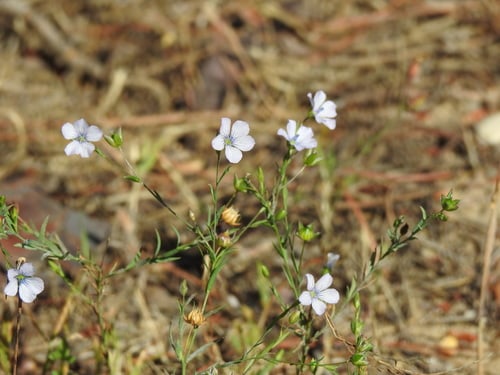
(c) Вадим, some rights reserved (CC BY-NC), uploaded by Вадим
iNaturalist· cc-by-nc
(c) Вадим, some rights reserved (CC BY-NC), uploaded by Вадим
iNaturalist· cc-by-nc
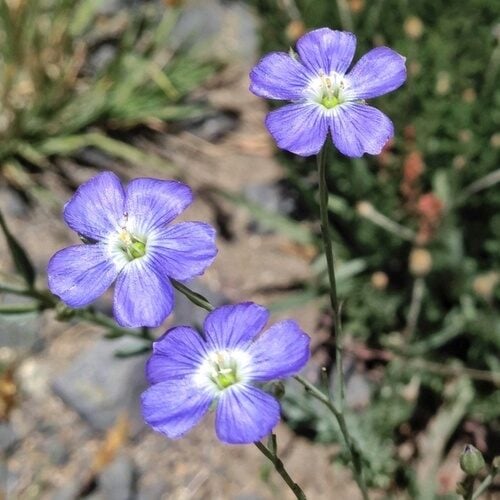
(c) Евгения, some rights reserved (CC BY-NC), uploaded by Евгения
Description
Linum perenne is a PERENNIAL growing to 0.3 m (1ft) by 0.2 m (0ft 8in) at a medium rate. See above for USDA hardiness. It is hardy to UK zone 7 and is not frost tender. It is in flower from June to July, and the seeds ripen in August. The species is hermaphrodite (has both male and female organs) and is pollinated by Bees, flies. Suitable for: light (sandy) and medium (loamy) soils and prefers well-drained soil. Suitable pH: mildly acid, neutral and basic (mildly alkaline) soils and can grow in very alkaline soils. It cannot grow in the shade. It prefers dry or moist soil and can tolerate drought.
Edible Uses
Oil. Seed - cooked. A pleasant nutty taste and very nutritious. The seed has a high oil content and can be eaten on its own or used as a flavouring. It should not be eaten raw because it contains cyanide but this is destroyed in the cooking process.
Medicinal Uses
Antirheumatic Carminative Emollient Ophthalmic Poultice Stomachic. The plant is antirheumatic, carminative and stomachic. The oil in the seed has soothing and lubricating properties, and is used in medicines to soothe tonsillitis, sore throats, coughs, colds, constipation, gravel and stones. When mixed with an equal quantity of lime water it is used to treat burns and scalds. A poultice of the fresh crushed leaves has been used to treat eye problems. A tincture of the entire plant is used in the treatment of diarrhoea. The fresh herb is boiled and taken internally for the treatment of rheumatic pains, heartburn, colds, coughs and dropsy. A poultice of the plant is applied to bruises to reduce the swelling. The seeds are emollient. An eye medicine is made from them. An infusion of the roots is used as an eyewash.
Known Hazards
The raw seed contains cyanide and should not be eaten raw. The cooked seed is perfectly safe.
Distribution
Europe. Western N. America.
Where It Grows
TEMPERATE ASIA: Russian Federation-Western Siberia (Western Siberia (south)) EUROPE: United Kingdom, Czechoslovakia, Austria, Switzerland, Germany, Hungary, Poland, Russian Federation-European part (European part (south)), Belarus, Moldova, Ukraine, Former Yugoslavia, Albania, Bulgaria, Greece, Italy, Romania, Spain (northeast), France
Cultivation
Prefers a light dry well-drained moderately fertile humus-rich soil in a sunny sheltered position. Prefers an alkaline soil. Established plants are drought tolerant. A very ornamental plant, it is not generally very long-lived though it normally self-sows freely. The sub-species lewisii (which is seen as a separate species by some botanists or as no more than a synonym of this species by others) is more desirable for its fibre and has been cultivated by the N. American Indians for this purpose.
Propagation
Seed - sow spring in greenhouse. When they are large enough to handle, prick the seedlings out into individual pots and plant them out in the summer. Basal cuttings in spring. Harvest the shoots when they are about 8 - 10cm long with plenty of underground stem. Pot them up into individual pots and keep them in light shade in a cold frame or greenhouse until they are rooting well. Plant them out in the summer.
Other Uses
Cosmetic Fibre Hair Oil PaperA drying oil is obtained from the seed. Used mainly for lighting, though it could also be used in all the ways that linseed oil (from Linum usitatissimum) is used - in paints, varnishes etc. An infusion of the whole plant is used as a hair and skin wash. It is said to be very beneficial to the skin and also to help prevent hair loss. A good fibre is obtained from the stems, it is inferior to flax (Linum usitatissimum) but is used for making cloth, nets, string, baskets, mats etc and in paper making[4, 46, 61, 74, 94, 115]. When used for paper making, the stems are harvested in late summer or autumn when they are two thirds yellow and are then retted. The fibre is then stripped from the stem, cooked for two hours or more with lye and then beaten in a Hollander beater.