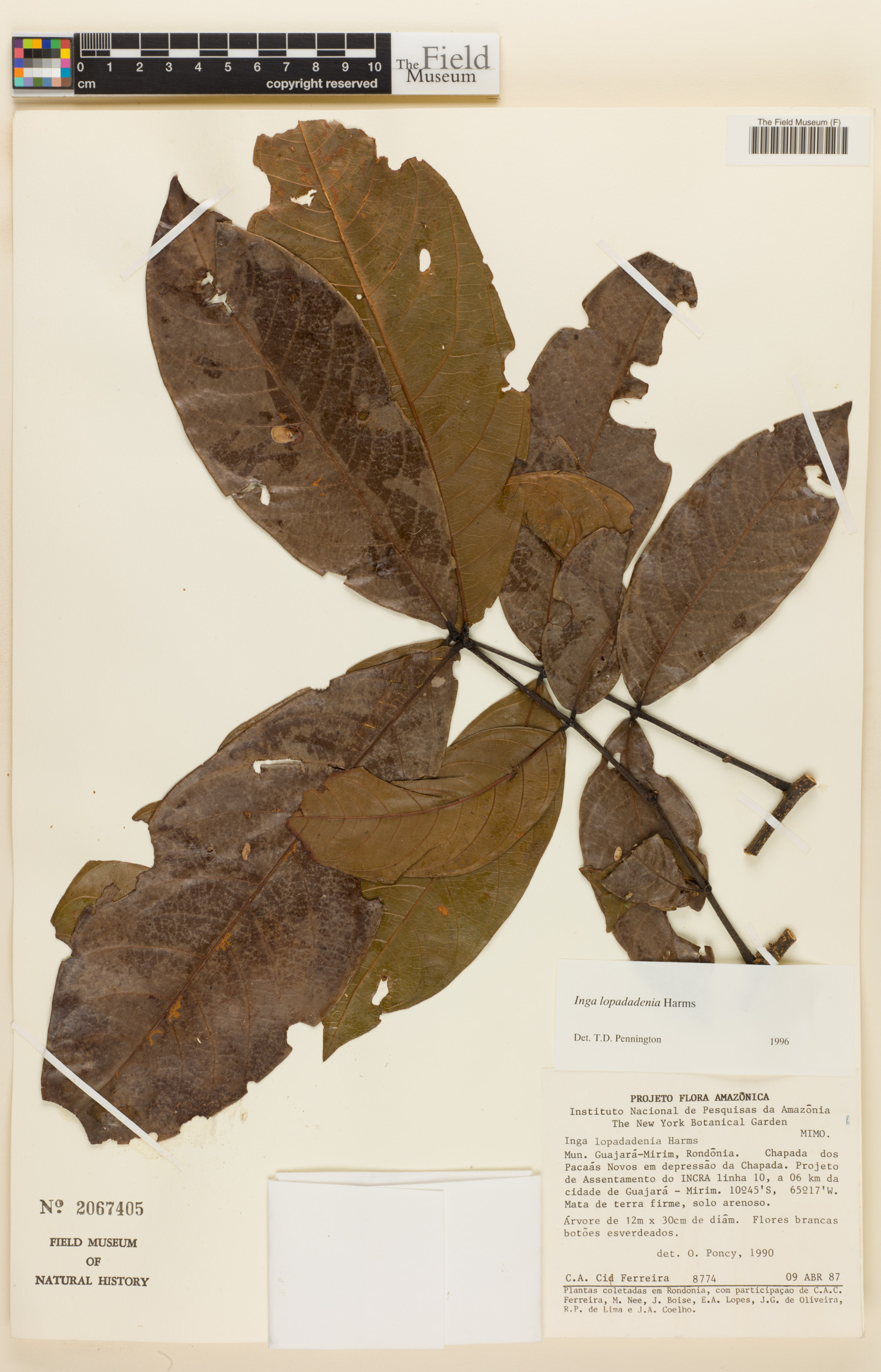
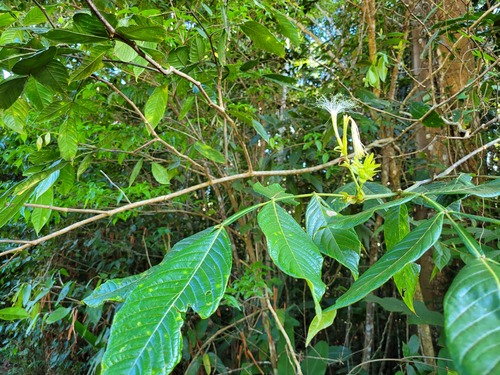
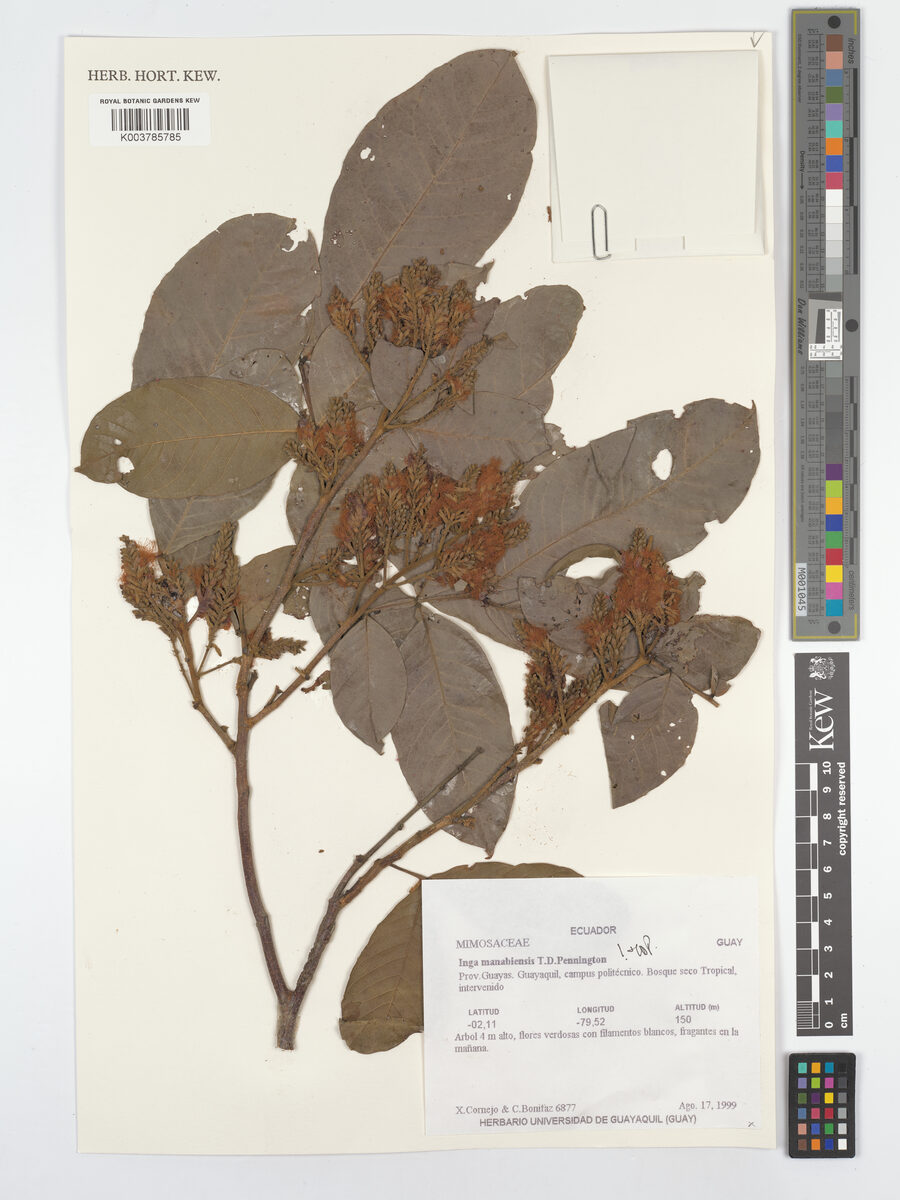
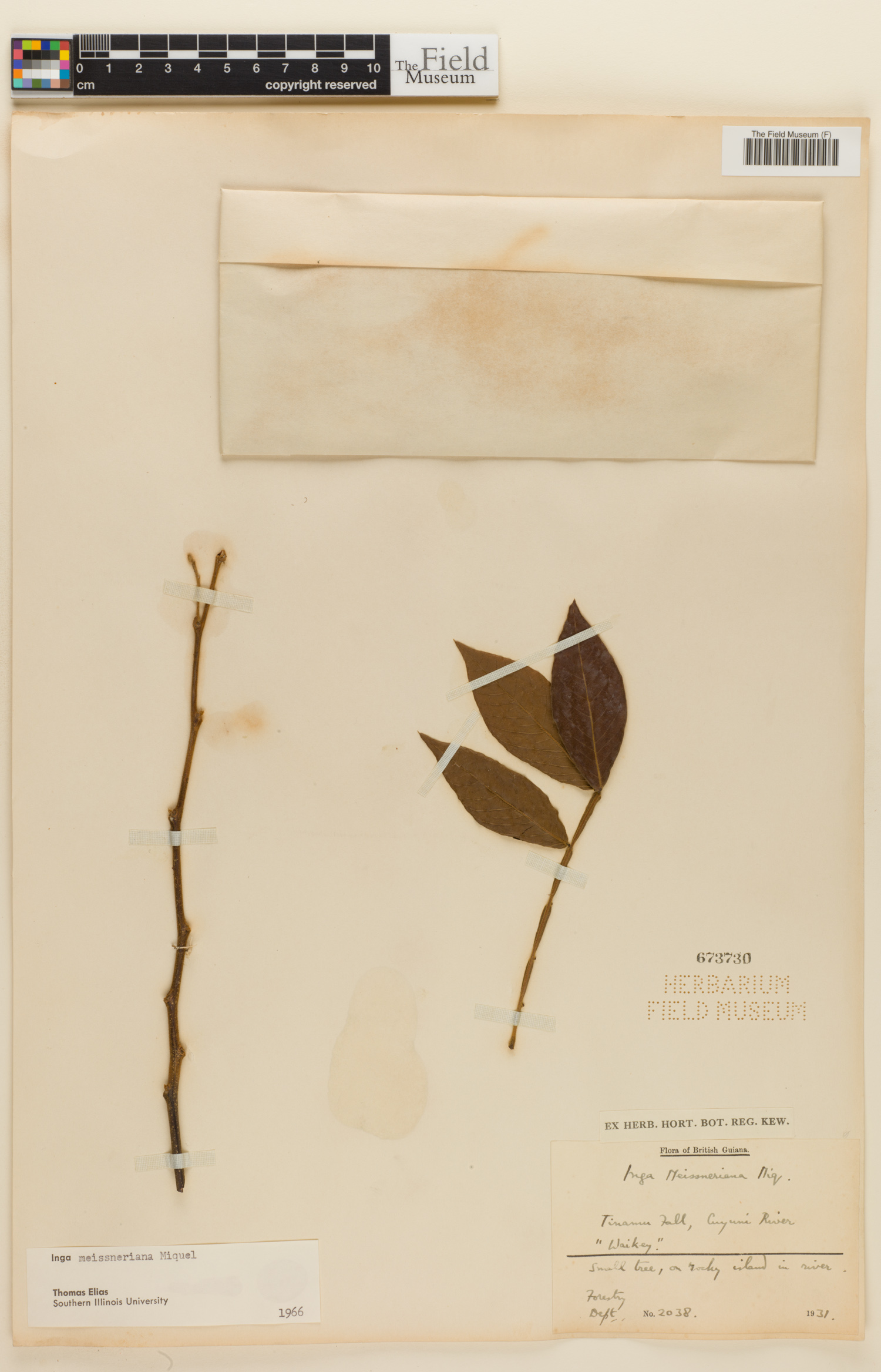
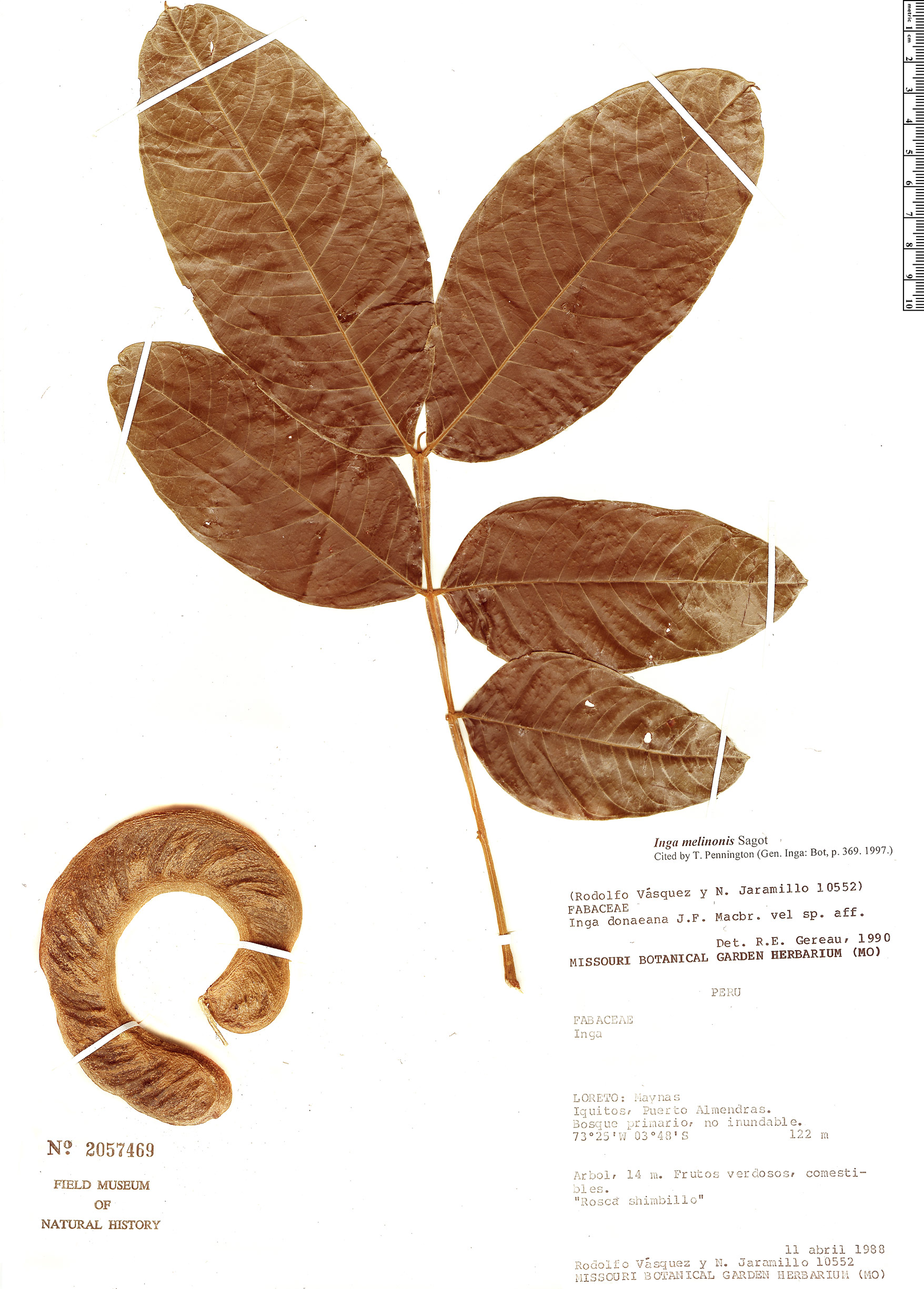
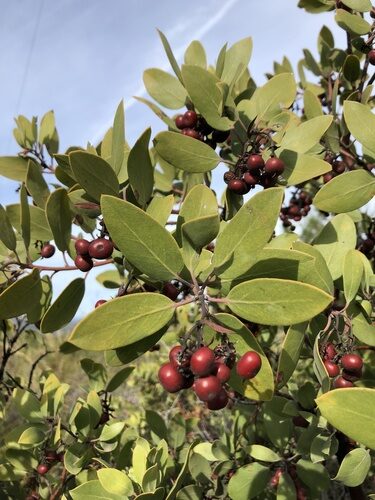
Inga cayennensis
Sagot ex Benth.
Cayenne inga
iNaturalist· cc-by-nc
(c) Guillaume Léotard, some rights reserved (CC BY-NC), uploaded by Guillaume Léotard
iNaturalist· cc-by-nc
(c) Guillaume Léotard, some rights reserved (CC BY-NC), uploaded by Guillaume Léotard
iNaturalist· cc-by-nc
(c) Nils Servientis - Bivouac Naturaliste, some rights reserved (CC BY-NC), uploaded by Nils Servientis - Bivouac Naturaliste
Description
A tropical tree in the Fabaceae family that produces long edible fruit pods.
This description is brief — help expand it
Edible Uses
The pod pulp and fruit aril are eaten.
Traditional Uses
The pulp of the fruit is edible.
This uses section is brief — help expand it
Distribution
It is a tropical plant.
Where It Grows
Amazon, Bolivia, Brazil, Colombia, Ecuador, French Guiana, Guianas, Guyana, Peru, South America, Suriname, Venezuela,
Synonyms
Also Known As
Do'naxa, Echepen, Inga-verdadeiro, Inga vermelho, Sacha pakay, Sampii
References (5)
- Grandtner, M. M. & Chevrette, J., 2013, Dictionary of Trees, Volume 2: South America: Nomenclature, Taxonomy and Ecology. Academic Press p 319
- Kermath, B. M., et al, 2014, Food Plants in the Americas: A survey of the domesticated, cultivated and wild plants used for Human food in North, Central and South America and the Caribbean. On line draft. p 437
- Kew Plants of the World On line
- Roa, J. A. G. & Boada, D. S. G., 2018, Fundación para el Fortalecimiento de la Fruticultura y Plantas Alimenticias no Convencionales en Colombia.
- Torre, de la, L., et al, 2008, Enciclopedia de las Plantas Útiles del Ecuador. Herbario QCA. Pontificia Universidad Católica del Ecuador. p 343