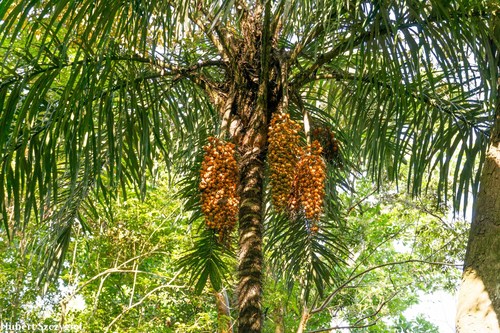
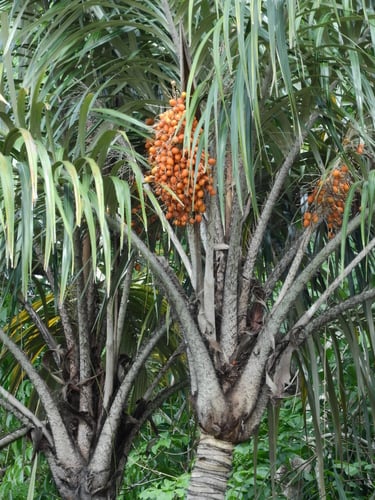
Bactris macroacantha
Mart.
Arecaceae Edible: Fruit, Palm heart
gbif· cc-by-nc
I. Huamantupa : Universidad Nacional San Antonio Abad de Cusco
Description
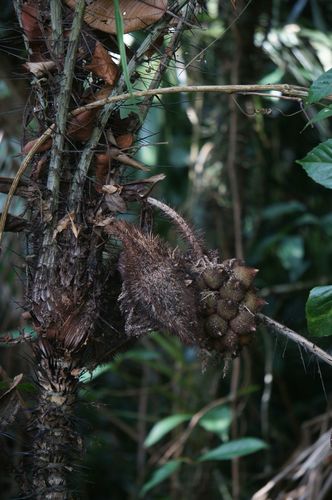
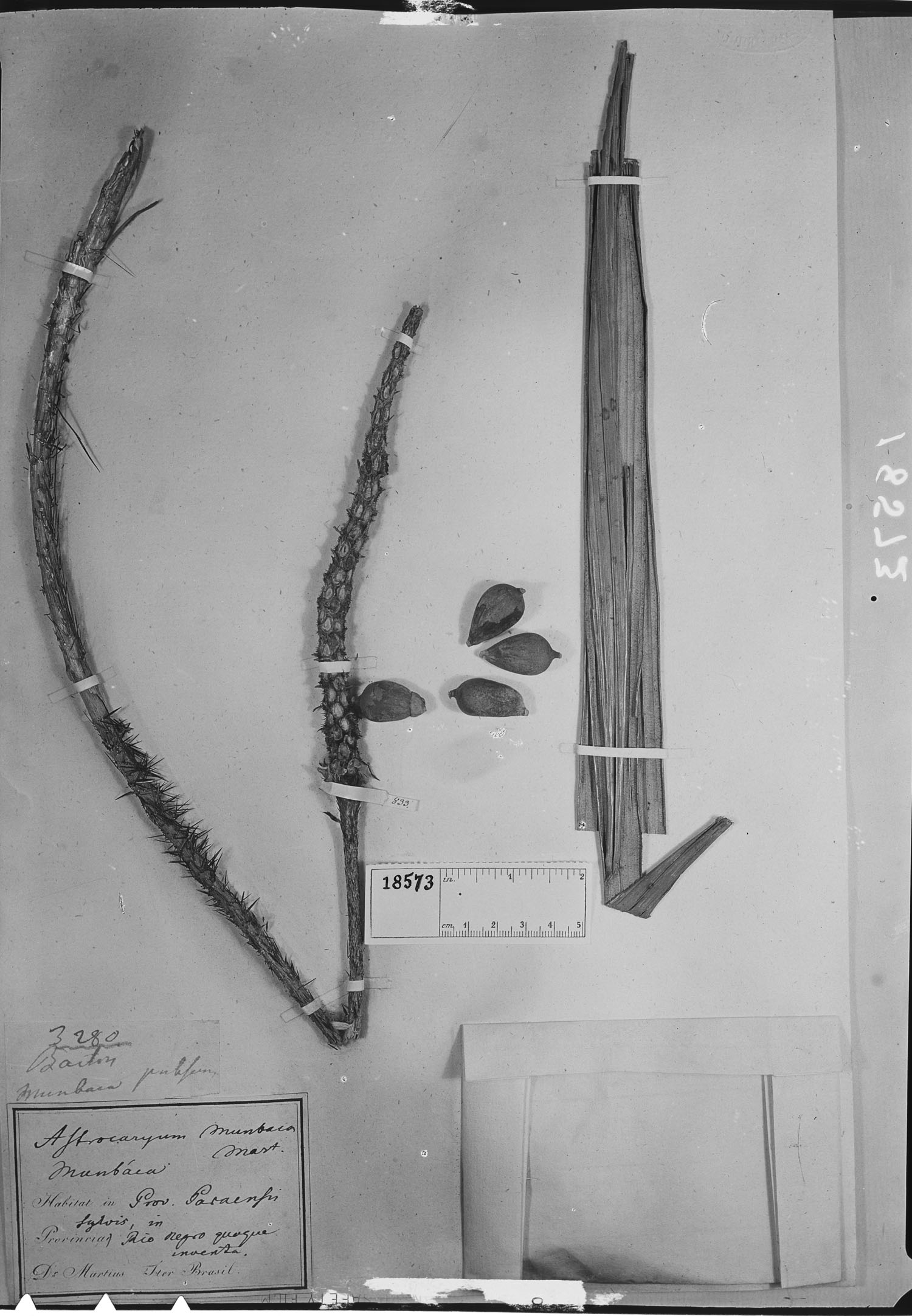
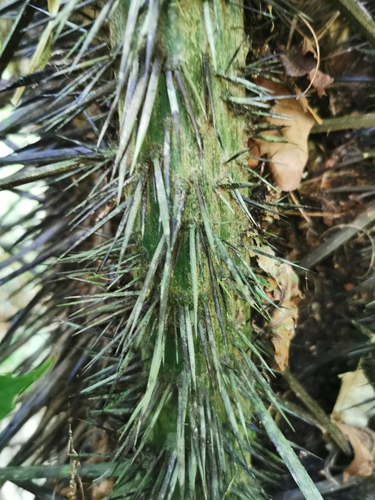
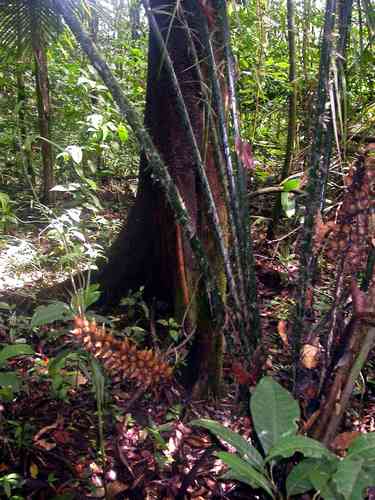
A small palm. It can be in clumps. It grows 1-4 m tall and the trunk is 2-4 cm across. It can be spiny at the internodes. There are 2-6 leaves. The leaf sheath is 25-47 cm long. The leaves are 1-1.8 m long. There are 13-30 leaflets on each side. The flowering shoots are between the leaves. The fruit are 2.5-3.2 cm long by 2-2.3 cm wide. The fruit are round and yellow.
Edible Uses
The fruit and palm heart are edible.
Distribution
It is a tropical plant. It grows in lowland forests between 120-370 m above sea level.
Where It Grows
Amazon, Bolivia, Brazil, Colombia, Ecuador, Peru, South America,
Synonyms
Bactris acanthospatha Trail ex DrudeBactris confluens var. acanthospatha TrailBactris platyacantha Burret
Also Known As
Chonta brava, Chontilla de coco, Kamancha, Maraja, Shipu
References (7)
- Kermath, B. M., et al, 2014, Food Plants in the Americas: A survey of the domesticated, cultivated and wild plants used for Human food in North, Central and South America and the Caribbean. On line draft. p 117
- Kew Plants of the World onLine
- Lopez-Diago, D. & Garcia, N., 2021, Wild edible fruits of Colombia. Biota ColomBiana 22 (2) p 31
- Marcia, M. J., et al, 2011, Palm Uses in Northwestern South America: A Quantitative Review. Bot. Rev. (2011) 77:462-570
- Roa, J. A. G. & Boada, D. S. G., 2018, Fundación para el Fortalecimiento de la Fruticultura y Plantas Alimenticias no Convencionales en Colombia.
Show all 7 references Hide references
- Torre, de la L., et al, 2008, Enciclopedia de las Plantas Útiles del Ecuador. Herbario QCA. Pontificia Universidad Católica del Ecuador. p 196
- World Checklist of Useful Plant Species 2020. Royal Botanic Gardens, Kew