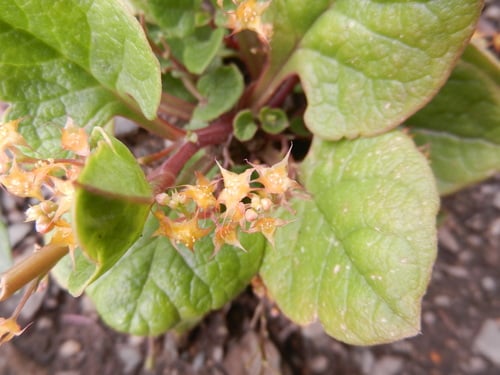
Anredera vesicaria
(Lam.) C. F. Gauertn.
iNaturalist· cc-by
(c) johnyochum, some rights reserved (CC BY), uploaded by johnyochum
iNaturalist· cc-by-nc
(c) Bodo Nuñez Oberg, some rights reserved (CC BY-NC), uploaded by Bodo Nuñez Oberg
Summary
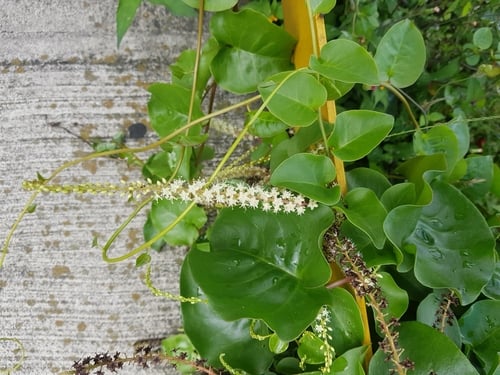
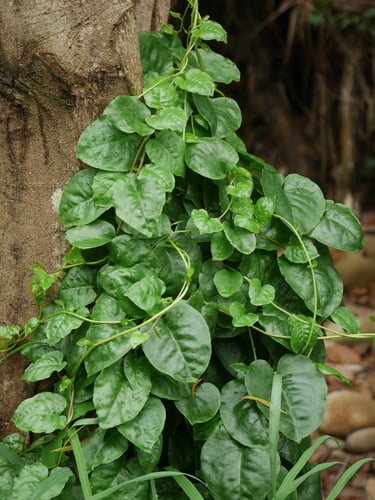
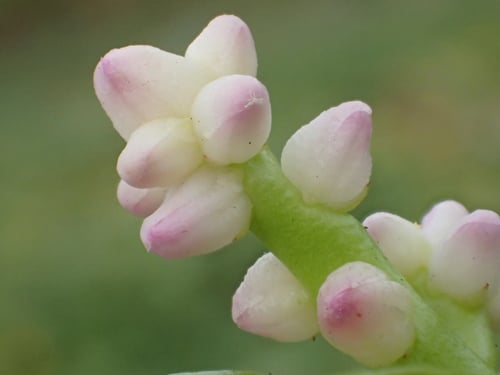
Source: WikipediaAnredera vesicaria, common names Texas madeiravine or sacasile, and the related A. cordifolia are the only two species of the family Basellaceae known to occur in the wild in the contiguous United States. Both are sometimes cultivated for their showy and fragrant floral displays. Anredera cordifolia is widespread throughout the warmer regions of the world, including outside its natural range as an invasive species. Anredera vesicaria is native to Texas as well as to Mexico, Central America, West Indies, and Venezuela and it is introduced in Florida. In Texas and Florida the species grows in thickets and in disturbed areas such as roadsides and fence rows at elevations less than 500 m (1650 feet). Anredera vesicaria is an herbaceous, twining vine that can reach a height of 8 m (27 feet). It has small, cream-colored flowers less than 2 mm (0.08 inches) across but borne in large racemes or panicles as much as 70 cm (28 inches) long. The flowers produce an intense and pleasant scent.
Description
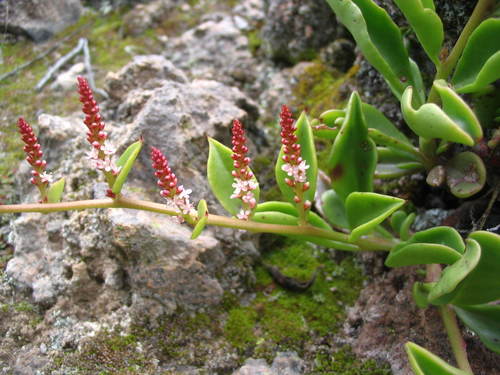
A twining vine. It can be 15 m long. The roots form tubers. The stems are slender and have a reddish tinge. The leaves are alternate and 3-11 cm long by 2-7 cm wide. They are oval and fleshy. The base is rounded and the upper surface is dull. The flowers hang in groups from the axils of the leaves. These can be 10-20 cm long and the one at the end of the branches 30-50 cm long.
Edible Uses
The leaves are eaten as a cooked green vegetable.
Traditional Uses
The leaves are eaten as a green.
This uses section is brief — help expand it
Medicinal Uses
The plant, part not specified, is analgesic, antiiflammatory, CNS depressant, hypoglycaemic and vulnerary. It is used in the treatment of a range of conditions, including asthma, bleeding, bronchosis, callus, cardiopathy, corns, diabetes, fractures, hyperglycemia, inflammation, myalgia, pain, palpitations, pulmonosis, rheumatism, sprains, toothache and wounds. The crushed tubers are used externally to treat conditions such as wounds, inflammations, muscular pains, rheumatism, fractures, sprains, calluses and corns. The leaf is eaten for the viscous substance it contains, which refreshes and remedies inflammations of the intestines.. The fresh leaf juice is used to ease toothache. A decoction of the leaves is used to make a relaxing soothing bath. An aqueous extract of the plant has been shown to be strongly hypoglycemic.
Distribution
It is a tropical plant.
Where It Grows
Antilles, Asia, India, Mexico, North America, Puerto Rico, South America, USA, West Indies,
Cultivation
The plant is grown as an ornamental and has sometimes escaped from cultivation and become established outside its native range. The flowers are functionallv unisexual (unlike most species in this family, the plants are dioecious). The plant produces both aerial and subterranean tubers. This species seems to reproduce well by means of its vegetative tubers, which explains why only staminate individuals have been found in some areas.
Other Uses
A liquid made from the ground leaves contains a viscous substance and is used as an external wash to make the skin and hair supple,
Notes
Anredera scandens (L.) Moq is a synonym of Fallopia scandens and Anredera scandens Sm. is a synonym of Anredera vesicaria