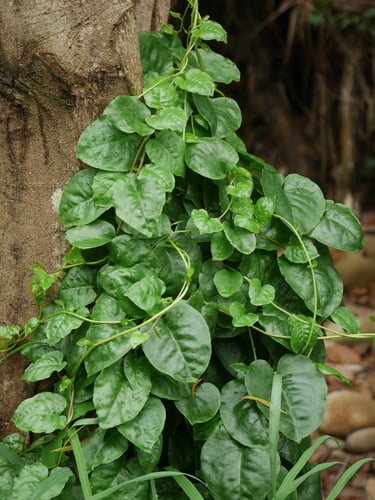
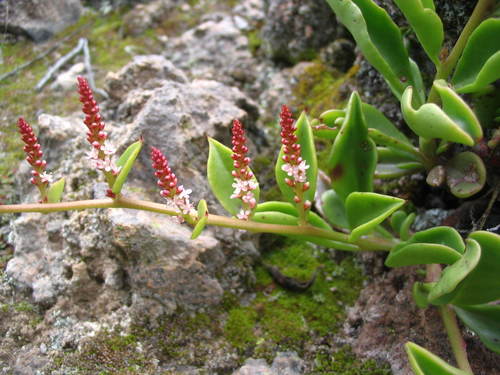
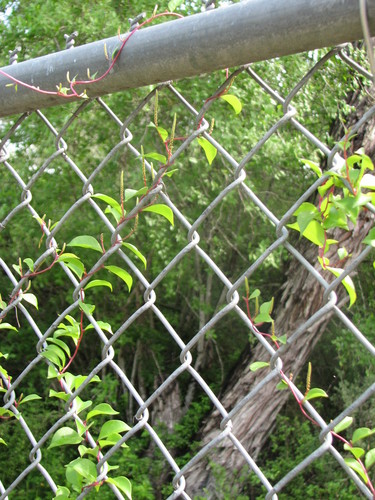
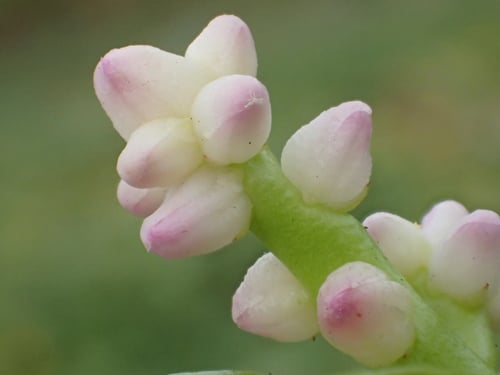
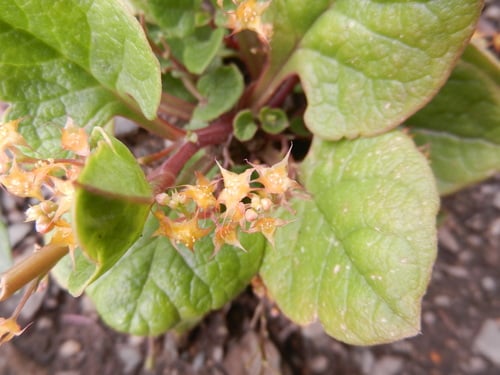
Anredera baselloides
(Kunth) Baill.
Madeira vine
iNaturalist· cc-by-nc-nd
(c) David W K Foster, some rights reserved (CC BY-NC-ND), uploaded by David W K Foster
iNaturalist· cc-by
(c) Alison Copeland, some rights reserved (CC BY)
Description
A climbing plant. It keeps growing from year to year. It has a tuberous rootstock. It produces annual stems. These lie along the ground and climb over other plants.
Edible Uses
The young leaves are cooked and eaten; fresh tubers are eaten raw. It is cultivated for its leaves.
Traditional Uses
The young leaves are cooked and eaten. The fresh tubers are eaten.
This uses section is brief — help expand it
Distribution
It is a tropical plant. It grows between 1,500-3,000 m above sea level in Ecuador.
Where It Grows
Asia, Central America, Dominican Republic, Ecuador, India, Mexico, Peru, South America, West Indies,
Cultivation
A plant of higher elevations in the tropics, it can also be grown at lower elevations in the subtropics.
Other Information
It is cultivated for its leaves.
Synonyms
Also Known As
Luo kui shu, Pasalai
References (4)
- Fern, K., 2012, Tropical Species Database http://theferns.info/tropical/
- Kermath, B. M., et al, 2014, Food Plants in the Americas: A survey of the domesticated, cultivated and wild plants used for Human food in North, Central and South America and the Caribbean. On line draft. p 74
- Lim, T. K., 2015, Edible Medicinal and Non Medicinal Plants. Volume 9, Modified Stems, Roots, Bulbs. Springer p 9
- Ramachandran,V. S., & Udhayavani, C., 2013, Knowledge and uses of wild edible plants by Paniyas and Kurumbas of Western Nilgiris, Tamil Nadu. Indian Journal of Natural Products and Resources. 4(4) December 2013, pp 412-418 (As Boussingaultia baselloides)