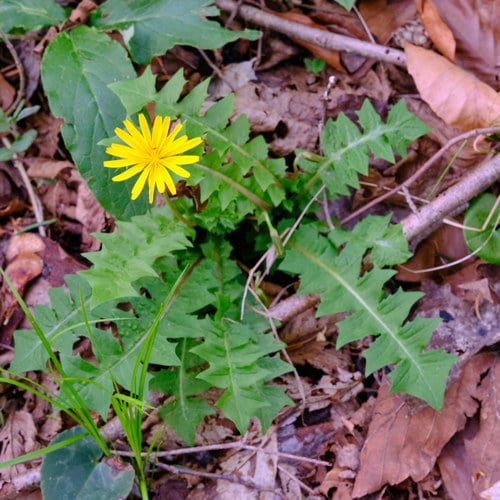
Cirsium nipponicum
(Maxim.) Makino
iNaturalist· cc-by-nc
(c) Keita Watanabe, some rights reserved (CC BY-NC), uploaded by Keita Watanabe
iNaturalist· cc-by
(c) carex1002, some rights reserved (CC BY)
Summary
A perennial thistle reaching 1.5 m (5 ft) tall. Flowers August to October with seeds ripening September to November. Hermaphroditic and self-fertile, pollinated by bees, flies, moths, butterflies, and beetles. Grows in light sandy, medium loamy, and heavy clay soils with mildly acidic to mildly alkaline pH. Requires full sun, prefers moist soil, and tolerates maritime exposure.
Description
A perennial thistle reaching 1.5 m (5 ft) tall. Flowers August to October with seeds ripening September to November. Hermaphroditic and self-fertile, pollinated by bees, flies, moths, butterflies, and beetles. Grows in light sandy, medium loamy, and heavy clay soils with mildly acidic to mildly alkaline pH. Requires full sun, prefers moist soil, and tolerates maritime exposure.
Edible Uses
The young plant is eaten cooked.
Traditional Uses
The leaves are dried and par boiled. They are also used as a tea drink.
This uses section is brief — help expand it
Medicinal Uses
Diaphoretic and vulnerary.
Distribution
It is a temperate plant. It grows along the edges of forests and in grassland.
Where It Grows
Asia, Japan, Korea,
Propagation
Sow seed in early spring or autumn directly in situ. Germination typically occurs within 2–8 weeks at 20°C. Can also be propagated by division in spring or autumn.
Other Uses
The seeds of all thistle species yield a useful oil by expression. No details on potential yields are available.
Notes
There are about 150-250 Cirsium species. They grow in temperate regions.
Also Known As
Eonggeongkkuppuri, Eonggeokku, Ulleungdo-eonggeongkwi
References (3)
- Chen, B. & Qiu, Z., Consumer's Attitudes towards Edible Wild Plants, Ishikawa Prefecture, Japan. p 22 www.hindawi.com/journals/ijfr/aip/872413.pdf
- Ong, H. G., et al, 2015, Ethnobotany of the wild edible plants gathered in Ulleung Island, South Korea. Genet Resourc Crop Evol. Springer
- Plants for a Future database, The Field, Penpol, Lostwithiel, Cornwall, PL22 0NG, UK. http://www.scs.leeds.ac.uk/pfaf/