Delphinium brunonianum
Royle
Musk larkspur
iNaturalist· cc-by-nc
(c) connk, some rights reserved (CC BY-NC)
iNaturalist· cc-by-nc
(c) hyeonsoo_kim, some rights reserved (CC BY-NC)
iNaturalist· cc-by-nc
(c) hyeonsoo_kim, some rights reserved (CC BY-NC)
Summary
Source: WikipediaDelphinium brunonianum, common name musk larkspur, is a species of larkspur belonging to the family Ranunculaceae.
Description
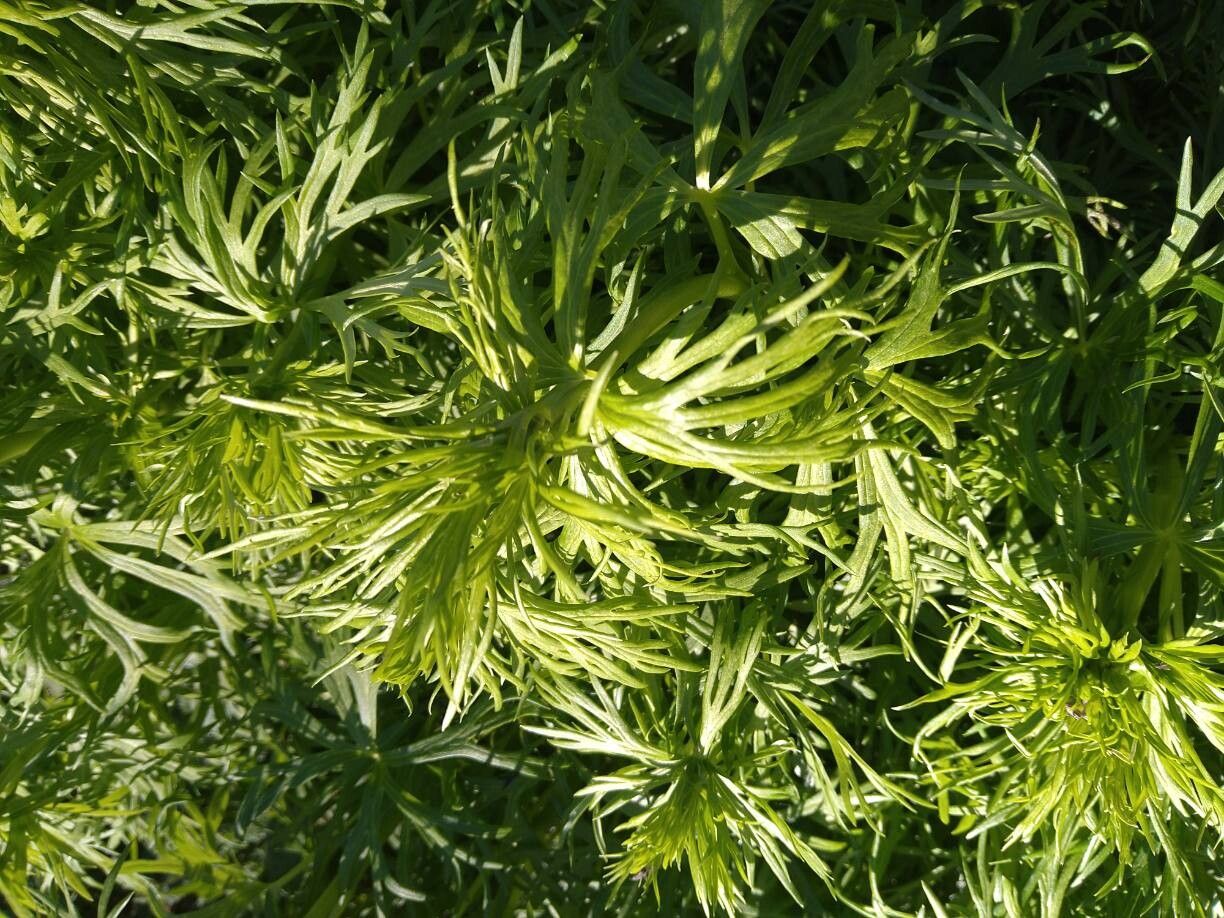
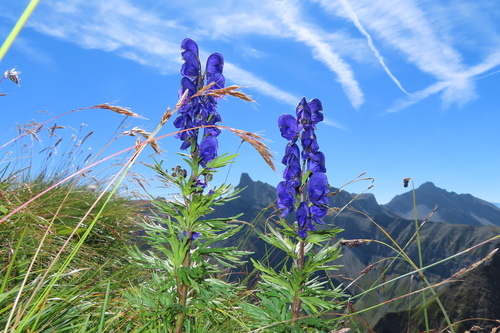
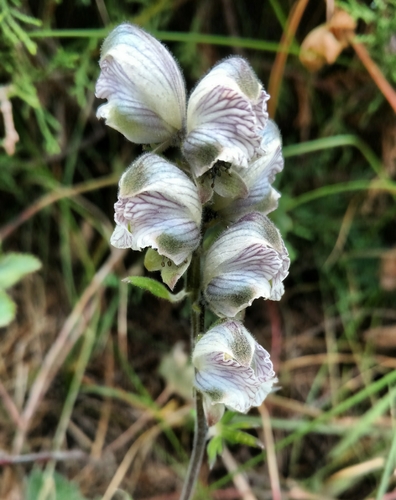
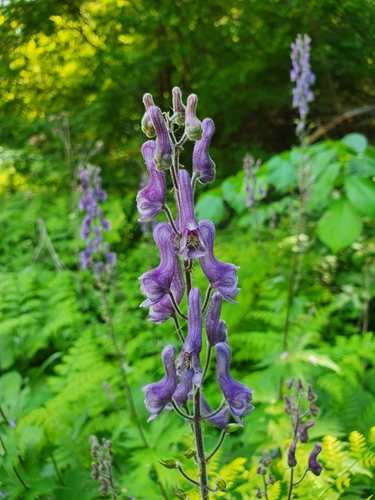
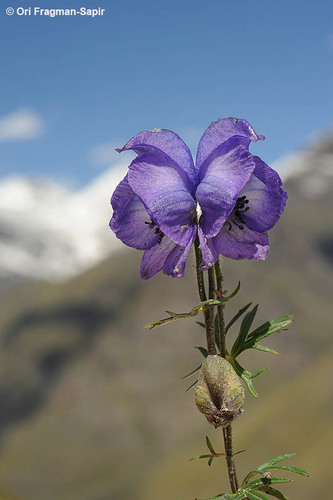
A herb. It grows 10-25 cm tall. It has a musky smell. The leaves have lobes arranged like fingers on a hand. The leaves are alternate. The flowers are cup shaped and blue to purple. They occur in groups of 5-10.
Edible Uses
No edible uses are known for this plant, despite oil being present in the seed.
Traditional Uses
The leaves and flowers are mixed with wheat flour and water to prepare ferments. Caution:
This uses section is brief — help expand it
Medicinal Uses
No specific medicinal uses are known, though the plant has parasiticide properties.
Known Hazards
All parts of the plant are toxic. The plant is most toxic when it is young.
Distribution
It is a subtropical plant. It grows in stony mountain slopes between 4,300-5,500 m above sea level. It suits hardiness zone 4.
Where It Grows
Afghanistan, Asia, Central Asia, Himalayas, India, Pakistan, Tajikistan, Tibet,
Cultivation
Prefers a rich well-drained soil that stays moist in the summer. Dislikes water-logged soils, it is liable to die out in heavy soils over winter. Requires an open sunny position. Plants are generally hardy to about -20°c, though they are best given a protective mulch of bracken or some similar material during the winter. The flowers emit a powerful, musk-like scent until they begin to fade. A greedy plant, inhibiting the growth of nearby plants, especially legumes. Grows well in the rock garden. This species is closely related to C. cashmerianum.
Propagation
Sow seed in March/April in a cold frame, or outdoors in May, keeping it moist and shaded until germination. Seed has limited viability and should be stored in a sealed container at around 3°C; temperatures above 15°C inhibit germination. Seed usually germinates in 2–9 weeks at 15°C. Once large enough to handle, prick seedlings into individual pots and plant out into permanent positions during summer. Basal cuttings taken in April/May — before the stems become hollow at the base — can be rooted in a cold frame. Division is also possible in spring or early autumn.
Other Uses
A parasiticide obtained from the leaves is quite toxic and suitable for external use only; in the Himalayas it is used specifically to destroy ticks on animals. The seed contains 30% of an oil with industrial uses, though the seed is very small and a large area of plants would be needed to obtain worthwhile yields.
Synonyms
Also Known As
Bya rgod spos
References (1)
- Boesi, A., 2014, Traditional knowledge of wild food plants in a few Tibetan communities. Journal of Ethnobiology and Ethnomedicine 10:75