Ranunculus vernus
Huds.
Lesser Celadine, Common buttercup, Pilewort
wikimedia· cc-by
Wikimedia Commons - Robert Flogaus-Faust
wikimedia· cc-by-sa
Wikimedia Commons - Uoaei1
Description
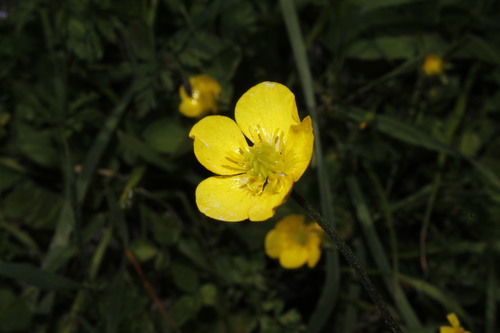
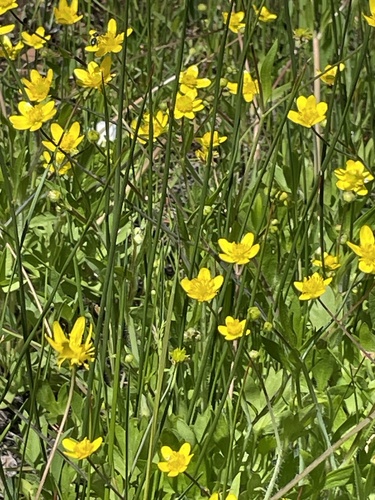
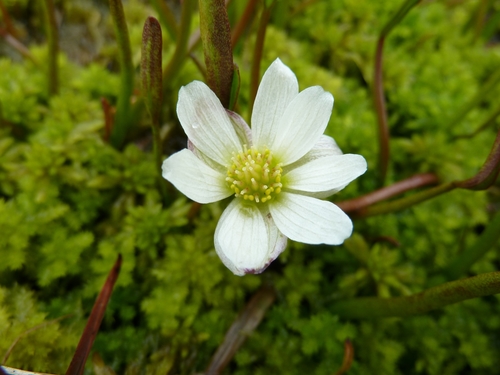
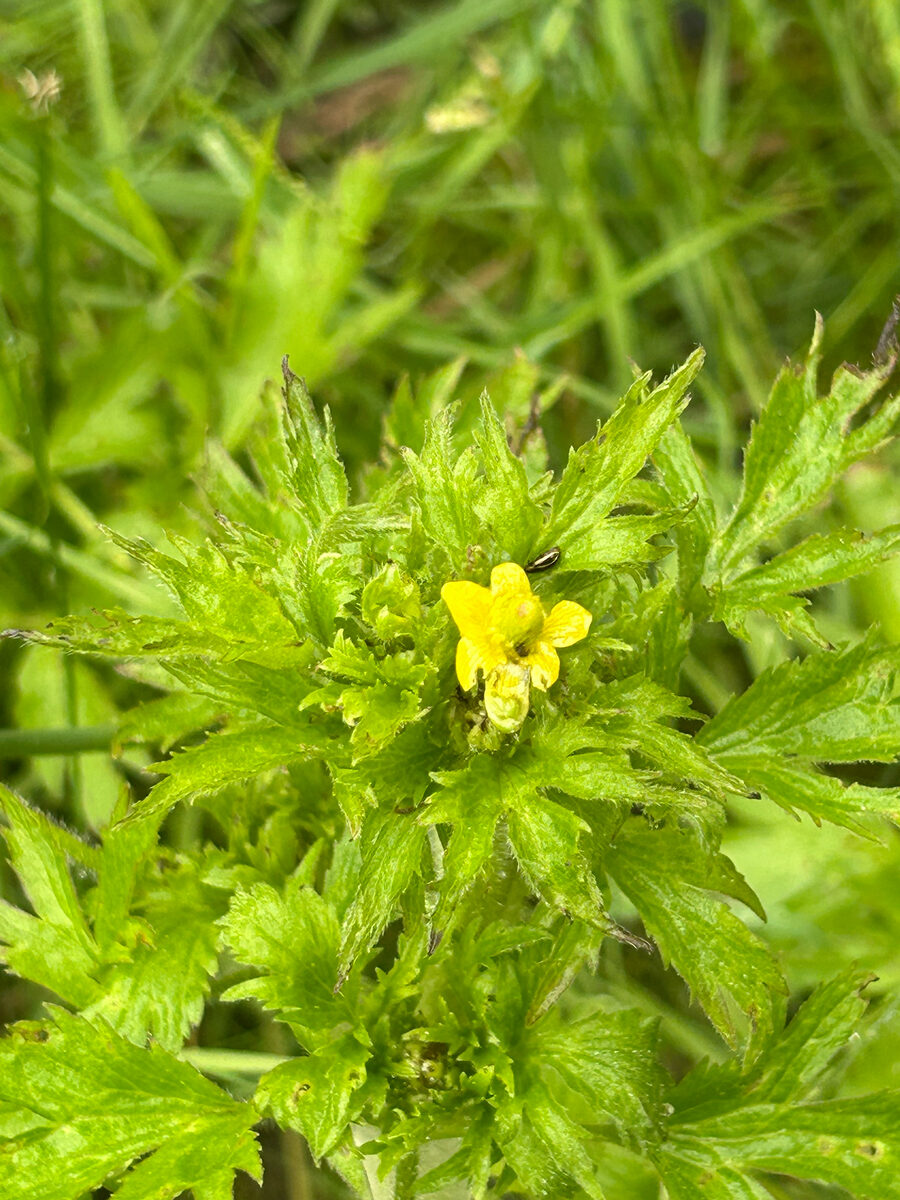
A small herb. It grows 5-20 cm high and spreads 20-60 cm wide. It keeps growing from year to year. The leaves are heart shaped and dark green. They are 35 mm long. The flowers usually occur singly and are 25 mm across. They are golden yellow.
Edible Uses
Young leaves are boiled and eaten in salads, sandwiches, or soups. Bleached stems are cooked and eaten. Bulbils and roots are soaked in salt water and cooked, often served with meat. Flower buds are used as a substitute for capers. Leaves are sold in local markets.
Traditional Uses
The young leaves are boiled then eaten in salads and sandwiches or used in soups. The bleached stems are cooked and eaten. The bulbils and the roots can be cooked and served with meat. They are first soaked in salt water. The flower buds are a substitute for capers.
Medicinal Uses
Traditionally used in various preparations.
Known Hazards
All plants of the buttercup family (Ranunculaceae) contain a compound known as protoanemonin. When the plant is wounded, the unstable glucoside ranunculin turns into the toxin protoanemonin. Contact with damaged or crushed Ficaria leaves can cause itching, rashes or blistering on the skin or mucosa. Ingesting the toxin can cause nausea, vomiting, dizziness, spasms, or paralysis. In one case, a patient experienced acute hepatitis and jaundice when taking untreated lesser celandine extracts internally as an herbal remedy for hemorrhoids.
Distribution
It is a temperate plant. It suits hardiness zones 5-9.
Where It Grows
Africa, Algeria, Asia, Australia, Belgium, Britain, Caucasus, Crete, Estonia, Europe, Georgia, Germany, Greece, Hungary, Ireland, Italy, Mediterranean, North Africa, North America, Norway, Romania, Scandinavia, Sicily, Slovakia, Spain, Sweden, Tasmania, Turkey, Türkiye, USA,
Other Information
Leaves are sold in the local markets.
Notes
There are about 400 Ranunculus species.
Nutrition
| Part | Moisture | kJ | kcal | Protein | Vit A | Vit C | Iron | Zinc |
|---|---|---|---|---|---|---|---|---|
| Leaves | 63 | 15 | 2.5 | — | — | — | — | — |
Synonyms
Also Known As
Blyskac, Blystekm Favagello, Ficaria, Kanakoole, Katirnali, Lobiana, Purk'ak'ala, Varkal, Yaghot
References (25)
- Blamey, M and Grey-Wilson, C., 2005, Wild flowers of the Mediterranean. A & C Black London. p 56
- Bodkin, F., 1991, Encyclopedia Botanica. Cornstalk publishing, p 868
- Brickell, C. (Ed.), 1999, The Royal Horticultural Society A-Z Encyclopedia of Garden Plants. Convent Garden Books. p 858
- Cundall, P., (ed.), 2004, Gardening Australia: flora: the gardener's bible. ABC Books. p 1131
- Denes, A., et al, 2012, Wild plants used for food by Hungarian ethnic groups living in the Carpathian Basin. Acta Societatis Botanicorum Poloniae 81 (4): 381-396
Show all 25 references Hide references
- Dogan, Y., 2012, Traditionally used wild edible greens in the Aegean Region of Turkey. Acta Societatis Botanicorum Poloniae 81(4): 329-342
- Dogan, Y. et al, 2013, Wild Edible Plants sold in the Local Markets of Izmir, Turkey. Pak. J. Bot. 45(S1): 177-184
- Ertug, F., 2004, Wild Edible Plants of the Bodrum Area. (Mugla, Turkey). Turk. J. Bot. 28 (2004): 161-174 (As subsp. ficariformis)
- Facciola, S., 1998, Cornucopia 2: a Source Book of Edible Plants. Kampong Publications, p 190
- Girard, N. J., 2020, Sustainable Foraging of Wild Edible Plants in Norway. A Biocultural Approach. M. Sc. thesis Norwegian University. p 134
- Hedrick, U.P., 1919, (Ed.), Sturtevant's edible plants of the world. p 548
- Hibbert, M., 2002, The Aussie Plant Finder 2002, Florilegium. p 245
- Irving, M., 2009, The Forager Handbook, A Guide to the Edible Plants of Britain. Ebury Press p 73
- Jardin, C., 1970, List of Foods Used In Africa, FAO Nutrition Information Document Series No 2.p 19
- Kalle, R. & Soukand, R., 2012, Historical ethnobotanical review of wild edible plants of Estonia (1770s-1960s) Acta Societatis Botanicorum Poloniae 81(4):271-281
- Kermath, B. M., et al, 2014, Food Plants in the Americas: A survey of the domesticated, cultivated and wild plants used for Human food in North, Central and South America and the Caribbean. On line draft. p 738
- Lim, T. K., 2015, Edible Medicinal and Non Medicinal Plants. Volume 9, Modified Stems, Roots, Bulbs. Springer p 72
- Luczaj, L., 2012, Ethnobotanical review of wild edible plants of Slovakia. Acta Societatis Botanicorum Poloniae 81(4):245-255
- Luczaj, L., et al, 2015, Wild food plants and fungi used by Ukrainians in the western part of the Maramureş region in Romania. Acta Soc Bot Pol 84(3):339–346
- Luczaj, L. et al, 2017, Comfrey and Buttercup Eaters: Wild Vegetables of the Imereti Region in Western Georgia, Caucasus. Economic Botany, 71(2), 2017, pp. 188–193
- Paoletti, M.G., Dreon, A.L., and Lorenzoni, G.G., 1995, Pistic, Traditional Food from Western Friuli, NE Italy. Economic Botany 49(1) pp 26-30
- Pasta, S., et al, 2020, An Updated Checklist of the Sicilian Native Edible Plants: Preserving the Traditional Ecological Knowledge of Century-Old Agro-Pastoral Landscapes. Frontiers in Plant Science. Volume 11|Article 388 (As Ficaria verna)
- Pieroni, A., 1999, Gathered wild food plants in the Upper Valley of the Serchio River (Garfagnana), Central Italy. Economic Botany 53(3) pp 327-341
- Plants for a Future database, The Field, Penpol, Lostwithiel, Cornwall, PL22 0NG, UK. http://www.scs.leeds.ac.uk/pfaf/
- Sp. pl. 1:550. 1753