Daemonorops palembanica
Blume
Palembang rattan
gbif· cc-by-sa
GBIF
Description
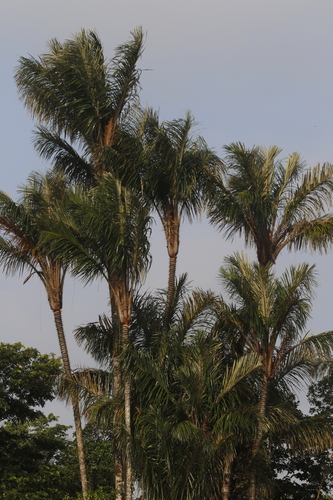
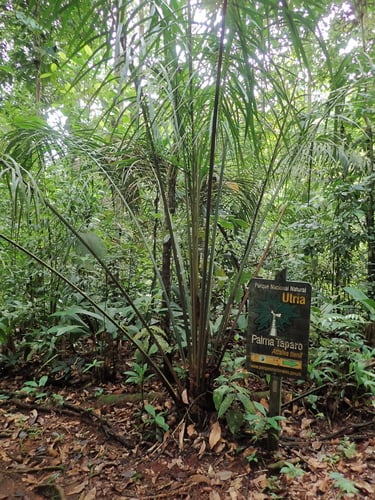
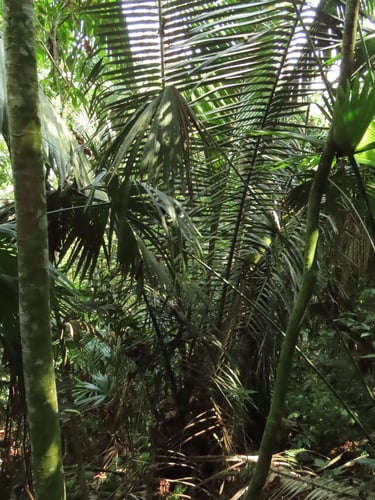
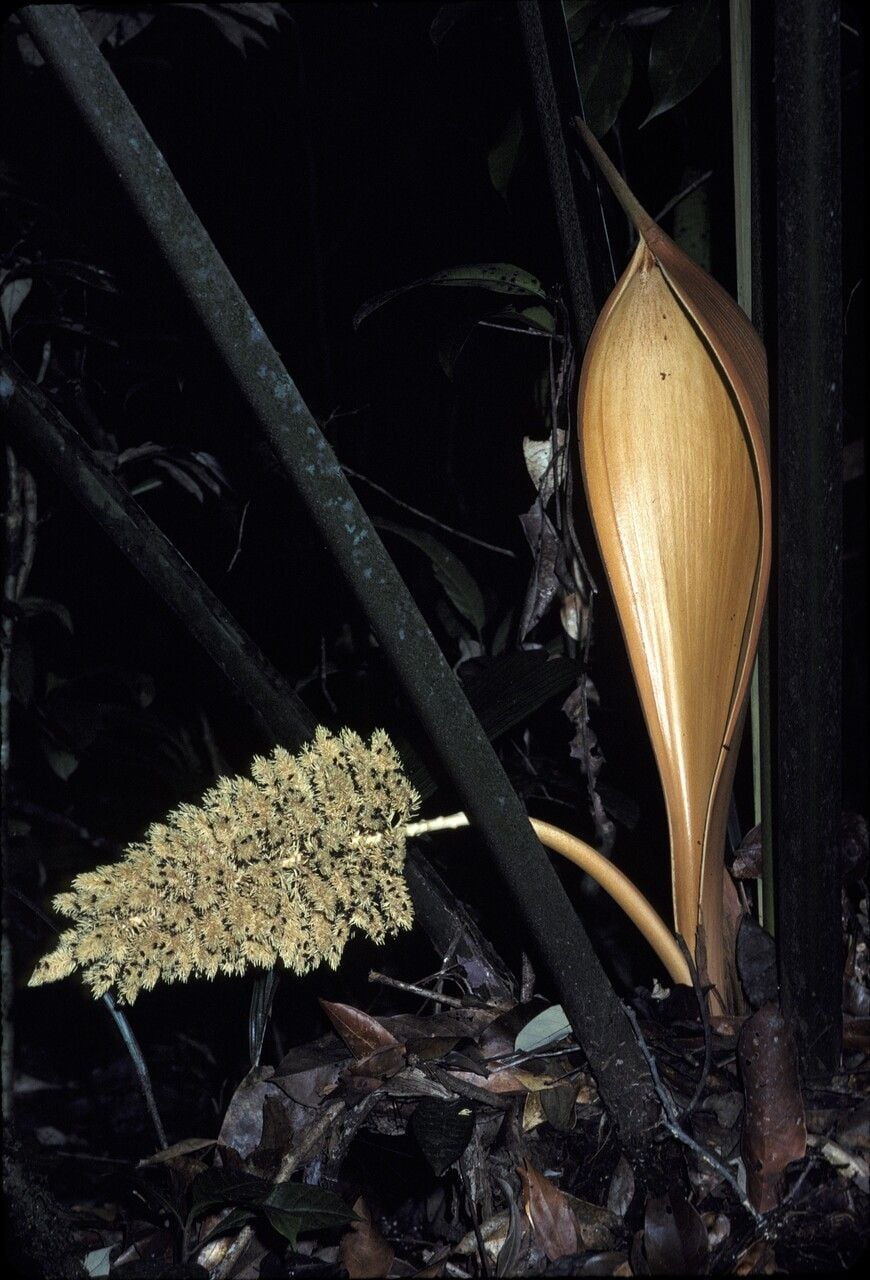
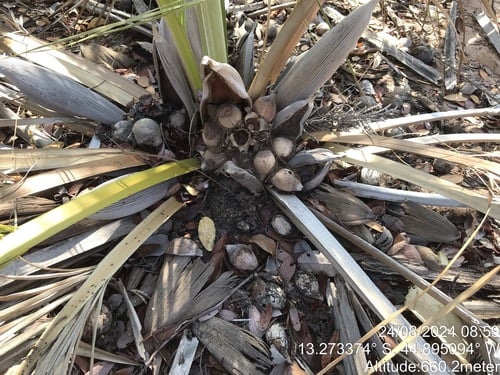
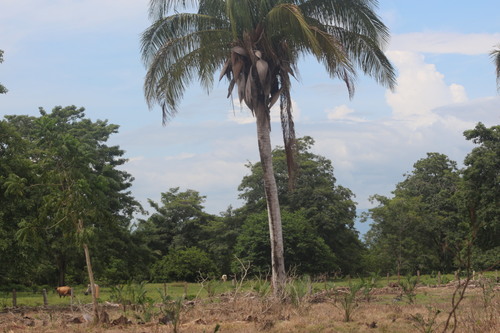
A climbing tropical palm that grows in clusters in lowland rainforests. It can be propagated from seeds.
This description is brief — help expand it
Edible Uses
The resin obtained from the fruit scales is used as a red flavouring and colouring in non-alcoholic drinks.
Medicinal Uses
The resin is astringent and stimulant. It has been used in dentifrices and as a mouth wash.
Distribution
It is a tropical plant. It grows in lowland rainforests.
Cultivation
Plants can be grown from seeds.
Other Uses
An orange to red resin, known as 'dragon's blood', is extracted from the fruit scales and leaf sheaths. It is used as dye for textiles, baskets, varnishes, toothpastes, tinctures, and plasters for dyeing horns to imitate tortoise shells. It is also used in varnishes and lacquers, especially on violins, where it gives a mahogany-like stain; and in photo engraving on zinc, where it protects the metal parts that are not to be etched. Extraction of the resin can be by dry or wet methods. Dry extraction is done by sun-drying the collected fruits and then crushing them. The resulting resin is screened and flushed with hot water to form a batter. The resin is turned into granules, sticks and powder. Alternatively, the fruits are first dried and the resin then removed by rubbing the fruit with cockle shells. The resin so collected is processed by wrapping in a cloth, dampening in hot water and then being squeezed. The best dragon blood comes in cylinder form of 30 - 35cm in length and 20 - 25mm in thickness and when dissolved in alcohol the residue content is below 9%. For wet-extraction, the crushed fruits are boiled in water, but the dyes extracted in this way are of inferior quality.
Synonyms
Also Known As
Rotan palembang
References (3)
- Brevard County Edible Acres
- Sukarya, D. G., (Ed.) 2013, 3,500 Plant Species of the Botanic Gardens of Indonesia. LIPI p 775
- World Checklist of Useful Plant Species 2020. Royal Botanic Gardens, Kew (As Calamus palembanicus)