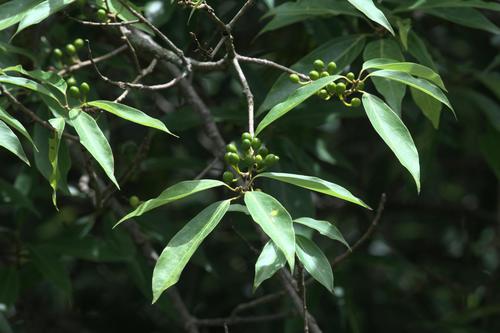
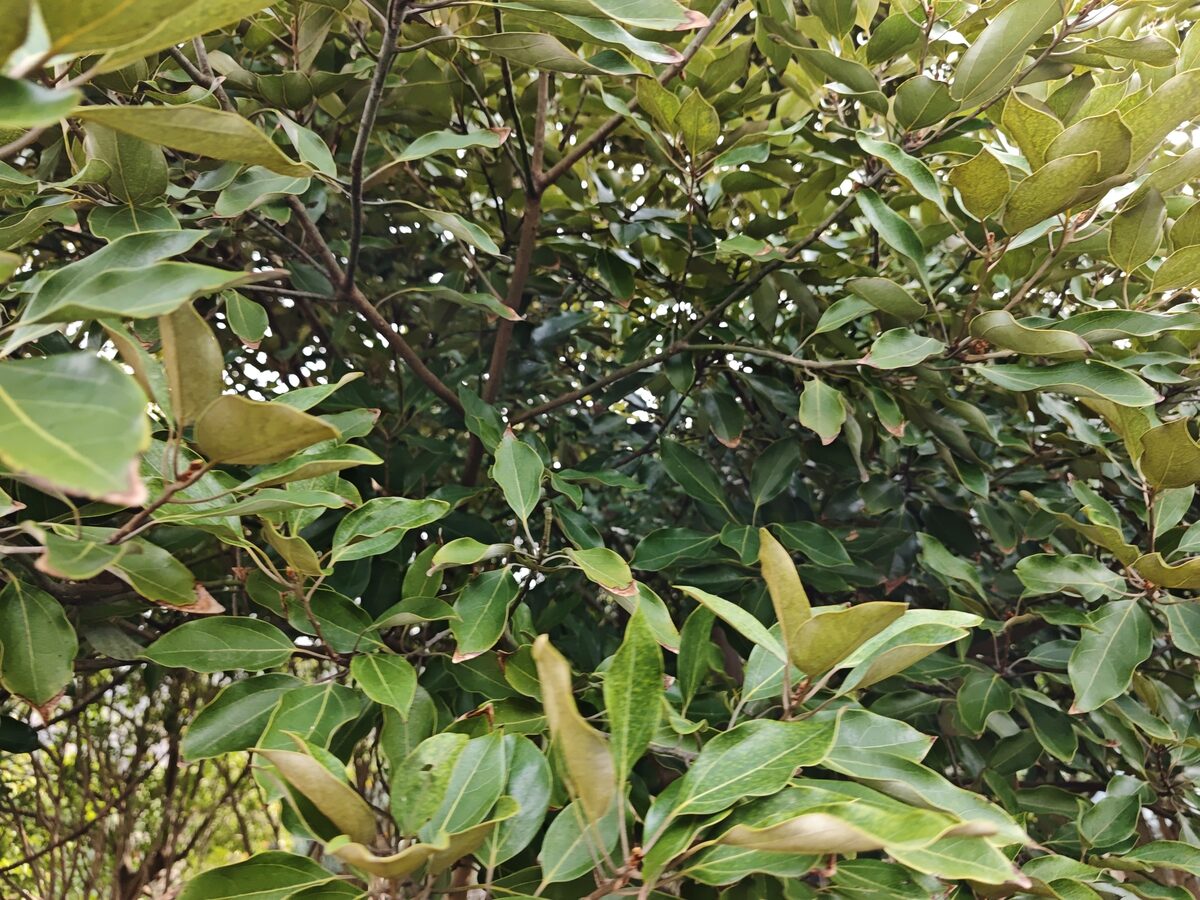
Sassafras albidum
(Nuttall) Nees
American sassafras, Fennel Wood, Ague tree
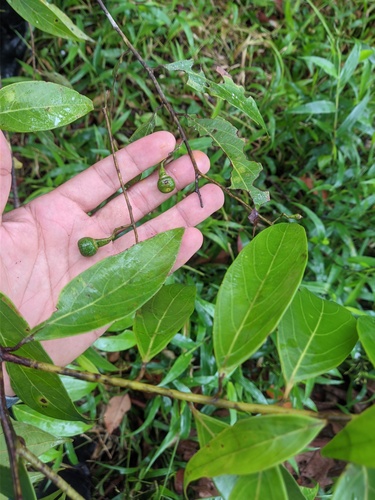
iNaturalist· cc-by-nc-sa
(c) Tom Potterfield, some rights reserved (CC BY-NC-SA)
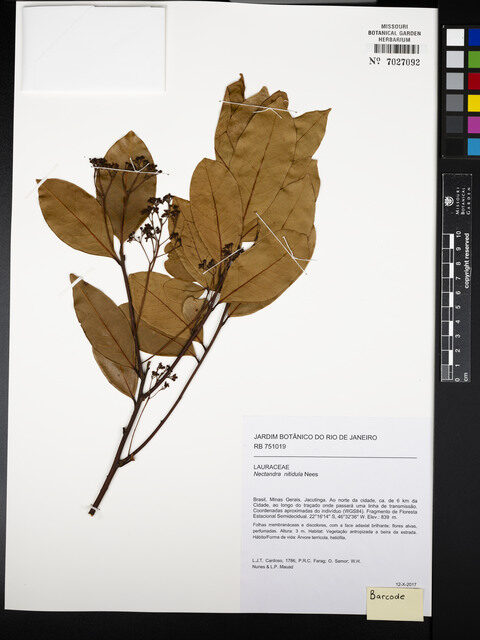
iNaturalist· cc-by-nc
(c) Mechy Myagi, some rights reserved (CC BY-NC)
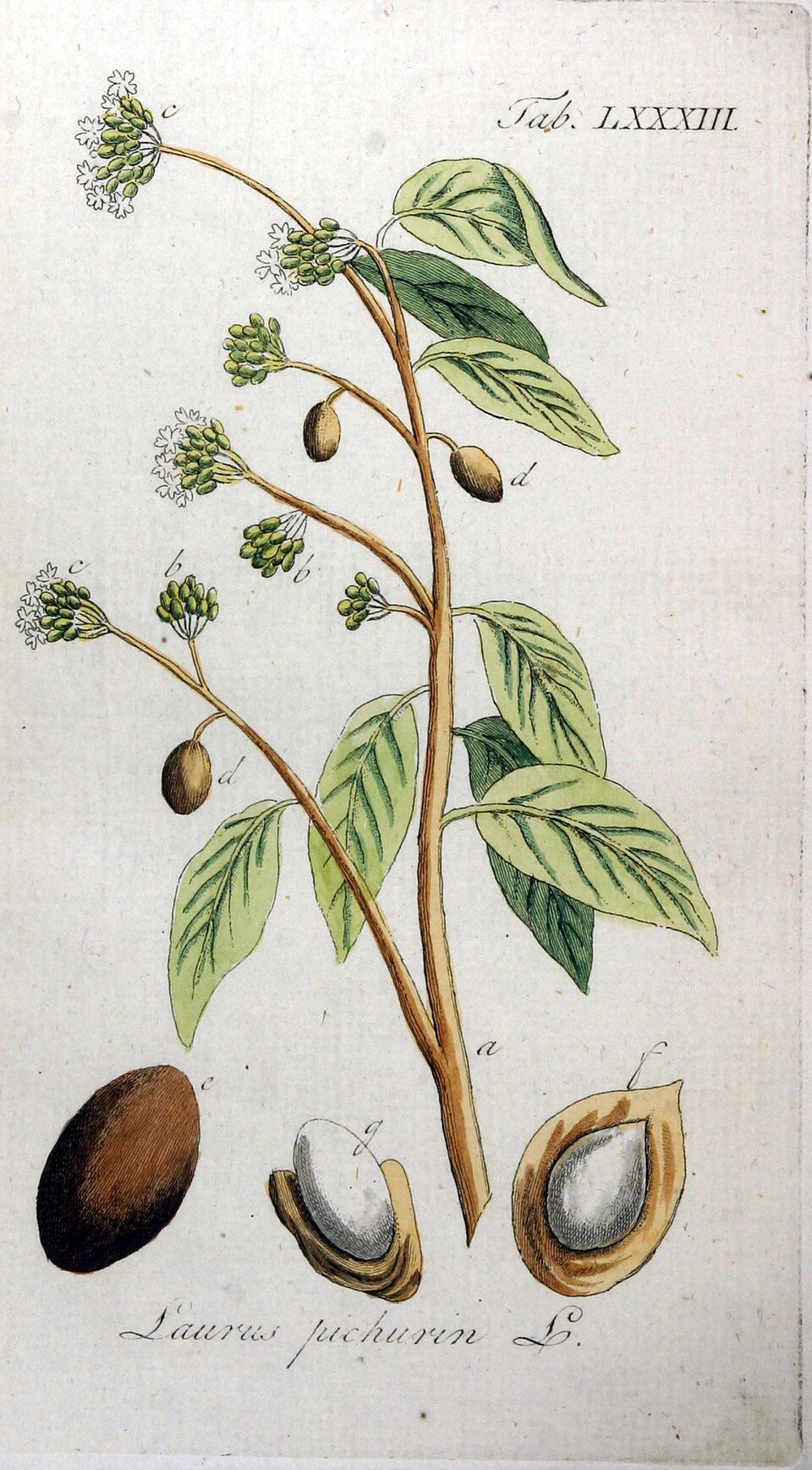
iNaturalist· cc-by-sa
(c) Douglas Goldman, some rights reserved (CC BY-SA), uploaded by Douglas Goldman
Summary
Source: WikipediaSassafras albidum (sassafras, white sassafras, red sassafras, or silky sassafras) is a species of Sassafras native to eastern North America. It has a number of culinary and other uses.
Description
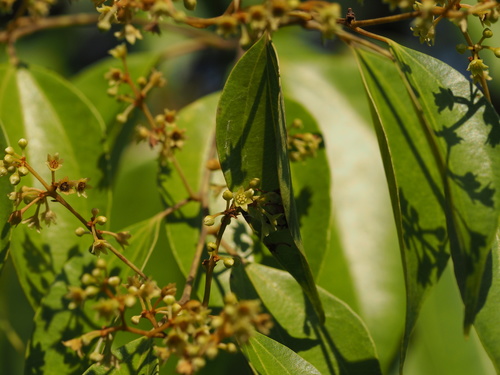
A small tree. It grows up to 20-30 m high. The trunk is 50 cm across. The branches are spreading, crooked and brittle. The bark is orange-brown. The leaves are alternate and simple. The leaves fall off during the year. The leaves are 10-15 cm long. They have a blunt tip and the base is wedge shaped. The leaves have 3 prominent veins. There may be 1, 2 or 3 lobes to the leaf. Leaves turn yellow or red in autumn. They have a spicy odour when bruised. The flowers are small and greenish-yellow. The male and female flowers are often on separate trees. They occur in loose clusters at the base of new shoots. These are 5 cm long. The fruit are like berries. They are 10-15 mm long and dark blue. They have one large stone-like seed. The fruit is in a red cup on a long red stalk.
Edible Uses
Young leaves can be added raw to salads, while both young and older leaves are used as a flavouring and thickening agent in soups and similar dishes, with a mild aromatic flavour. Leaves are often dried and ground into powder for later use. The dried root bark can be boiled with sugar and water to form a thick paste used as a condiment. The roots and berries can also be used as flavourings. Winter buds and young leaves are eaten raw. Young shoots have been used to make a kind of beer. Several teas can be prepared from this plant: root bark tea is considered a tonic and can also be brewed in maple syrup and concentrated into a jelly; tea can be made from the leaves and roots and is considered best in spring; and a tea can also be made from the flowers.
Traditional Uses
CAUTION The safrole which gives flavour to root beer can cause cancer, but it is only one fourteenth as carcinogenic as ethanol in ordinary beer. The oil from the roots is used to flavour root beer. The roots are added to maple syrup and brewed into a tea. The spicy bark of the trunk and roots is dried and used for flavouring. The leaves are used for tea. They are also added to soups. The young buds are eaten.
Medicinal Uses
Sassafras has a long history of herbal use, valued especially by many native North American peoples as a tonic and treatment for a wide range of complaints. The root bark and root pith are alterative, anodyne, antiseptic, aromatic, carminative, diaphoretic, diuretic, stimulant, and vasodilator. Root bark tea is particularly well regarded as a spring tonic and blood purifier, and as a household remedy for gastrointestinal complaints, colds, kidney ailments, rheumatism, and skin eruptions. The mucilaginous pith from the twigs can be applied as a poultice or wash for eye ailments and taken internally as a tea for chest, liver, and kidney complaints. An essential oil from the root bark is used as an antiseptic in dentistry and as an anodyne. The oil contains safrole, which is said to have carcinogenic activity and has been banned from use in American foods, though it is considered less likely to cause cancer than alcohol. In large doses the oil is poisonous, causing dilated pupils, vomiting, stupor, collapse, and kidney and liver damage. The oil has been applied externally to control lice and treat insect bites, though it can cause skin irritation.
Distribution
It is a temperate plant. It grows naturally in thickly wooded areas in Eastern North America. It can grow on a variety of soils. It can tolerate shade. It grows on the edges of mixed forests. It cannot tolerate alkaline soils. It suits hardiness zones 5-9.
Where It Grows
Australia, Britain, Canada, Europe, India, Mexico, North America, Turkey, Türkiye, USA,
Cultivation
Plants are grown from suckers from the roots. They can also be grown by seeds or cuttings.
Propagation
Seed is best sown as soon as ripe in a cold frame. Stored seed requires 4 months of cold stratification at 4°C and should be sown as early in the year as possible. Prick seedlings into individual pots as soon as possible and grow on in the greenhouse. Young plants are frost-tender, so it is recommended to keep them under glass through their first winter and plant out in early summer, with protection maintained for at least the first winter outdoors. Root cuttings taken from suckers, 1–2 cm long, can be taken in December and planted horizontally in pots in a greenhouse. Suckers can be taken in late winter and planted directly into their permanent positions.
Other Uses
An essential oil is obtained from the bark of the root and from the fruits — every 100 kilos of root chips yields approximately one litre of essential oil under steam pressure, comprising around 90% safrole. The oil is used medicinally and also in soaps, coarser perfumery, toothpastes, and soft drinks, as well as an antiseptic in dentistry. A yellow dye ranging from brown to orange is obtained from the wood and bark. The plant repels mosquitoes and other insects. The wood is coarse-grained, soft, weak, fragrant, brittle, and very durable in the soil, weighing 31 lb per cubic foot. It is used for fence posts and items where lightness is an advantage.
Production
It is only a short lived plant.
Notes
There are 3 Sassafras species.
Synonyms
Also Known As
Silky sassifras
References (28)
- Ambasta S.P. (Ed.), 2000, The Useful Plants of India. CSIR India. p 551
- Beckstrom-Sternberg, Stephen M., and James A. Duke. "The Foodplant Database." http://probe.nalusda.gov:8300/cgi-bin/browse/foodplantdb.(ACEDB version 4.0 - data version July 1994) (As Sassafras variifolium)
- Bodkin, F., 1991, Encyclopedia Botanica. Cornstalk publishing, p 911
- Bremness, L., 1994, Herbs. Collins Eyewitness Handbooks. Harper Collins. p 83
- Brickell, C. (Ed.), 1999, The Royal Horticultural Society A-Z Encyclopedia of Garden Plants. Convent Garden Books. p 936
Show all 28 references Hide references
- Coombes, A.J., 2000, Trees. Dorling Kindersley Handbooks. p 189
- Cundall, P., (ed.), 2004, Gardening Australia: flora: the gardener's bible. ABC Books. p 1316
- Elias, T.S. & Dykeman P.A., 1990, Edible Wild Plants. A North American Field guide. Sterling, New York p 125
- Esperanca, M. J., 1988. Surviving in the wild. A glance at the wild plants and their uses. Vol. 2. p 202
- Facciola, S., 1998, Cornucopia 2: a Source Book of Edible Plants. Kampong Publications, p 139
- Farrar, J.L., 1995, Trees of the Northern United States and Canada. Iowa State University press/Ames p 242
- Grandtner, M. M., 2008, World Dictionary of Trees. Wood and Forest Science Department. Laval University, Quebec, Qc Canada. (Internet database http://www.wdt.qc.ca)
- Hedrick, U.P., 1919, (Ed.), Sturtevant's edible plants of the world. p 595 (As Sassafras officinalis)
- Hemphill, I, 2002, Spice Notes Macmillan. p 183 (As Sassafras officinalis)
- Jackes, D. A., 2007, Edible Forest Gardens
- Kermath, B. M., et al, 2014, Food Plants in the Americas: A survey of the domesticated, cultivated and wild plants used for Human food in North, Central and South America and the Caribbean. On line draft. p 785
- Kiple, K.F. & Ornelas, K.C., (eds), 2000, The Cambridge World History of Food. CUP p 1848
- Little, E.L., 1980, National Audubon Society Field Guide to North American Trees. Alfred A. Knopf. p 451
- MacKinnon, A., et al, 2009, Edible & Medicinal Plants of Canada. Lone Pine. p 103
- Moerman, D. F., 2010, Native American Ethnobotany. Timber Press. p 519
- Plants for a Future database, The Field, Penpol, Lostwithiel, Cornwall, PL22 0NG, UK. http://www.scs.leeds.ac.uk/pfaf/
- Purseglove, J.W., 1968, Tropical Crops Dicotyledons, Longmans. p 187
- Schuler, S., (Ed.), 1977, Simon & Schuster's Guide to Trees. Simon & Schuster. No. 167
- Syst. laur. 490. 1836
- Toupal, R. S. & Hollenback, K., 2009, An Ethnobotany of Indiana Dunes National Lakeshore: Plant Uses of the Ojibwa People. Bureau of Applied Research in Anthropology. University of Arizona
- Wiersema, J. H. & Leon, B., 2013, World Economic Plants. A Standard Reference CRC Press. 2nd Ed. p 616
- Wild Edible Plants of the Whitmire Wildflower Garden. Missouri Botanical Gardens.
- World Checklist of Useful Plant Species 2020. Royal Botanic Gardens, Kew