Actinidia arguta
(Siebold & Zucc.) Planchon ex Miq.
Hardy Kiwi
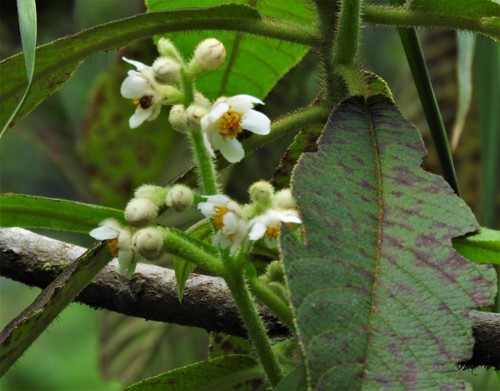
iNaturalist· cc-by-sa
(c) Qwert1234, some rights reserved (CC BY-SA)
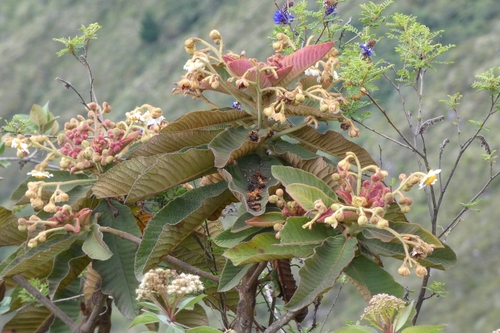
gbif· cc-by-nc
rory_li
iNaturalist· cc-by-nc
(c) Chuangzao, some rights reserved (CC BY-NC), uploaded by Chuangzao
iNaturalist· cc-by-nc
(c) onidiras-iNaturalist, some rights reserved (CC BY-NC), uploaded by onidiras-iNaturalist
Summary
Source: WikipediaActinidia arguta is a perennial vine native to Japan, Korea, Northern China, and the Russian Far East. The fruit is known as kiwiberry or hardy kiwi, which are small kiwifruits without the hair-like fiber covering the outside, unlike most other species of the genus.
Description
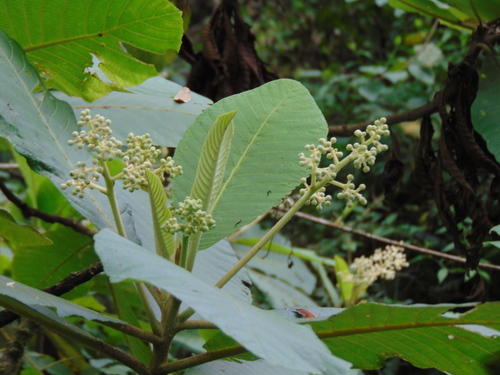
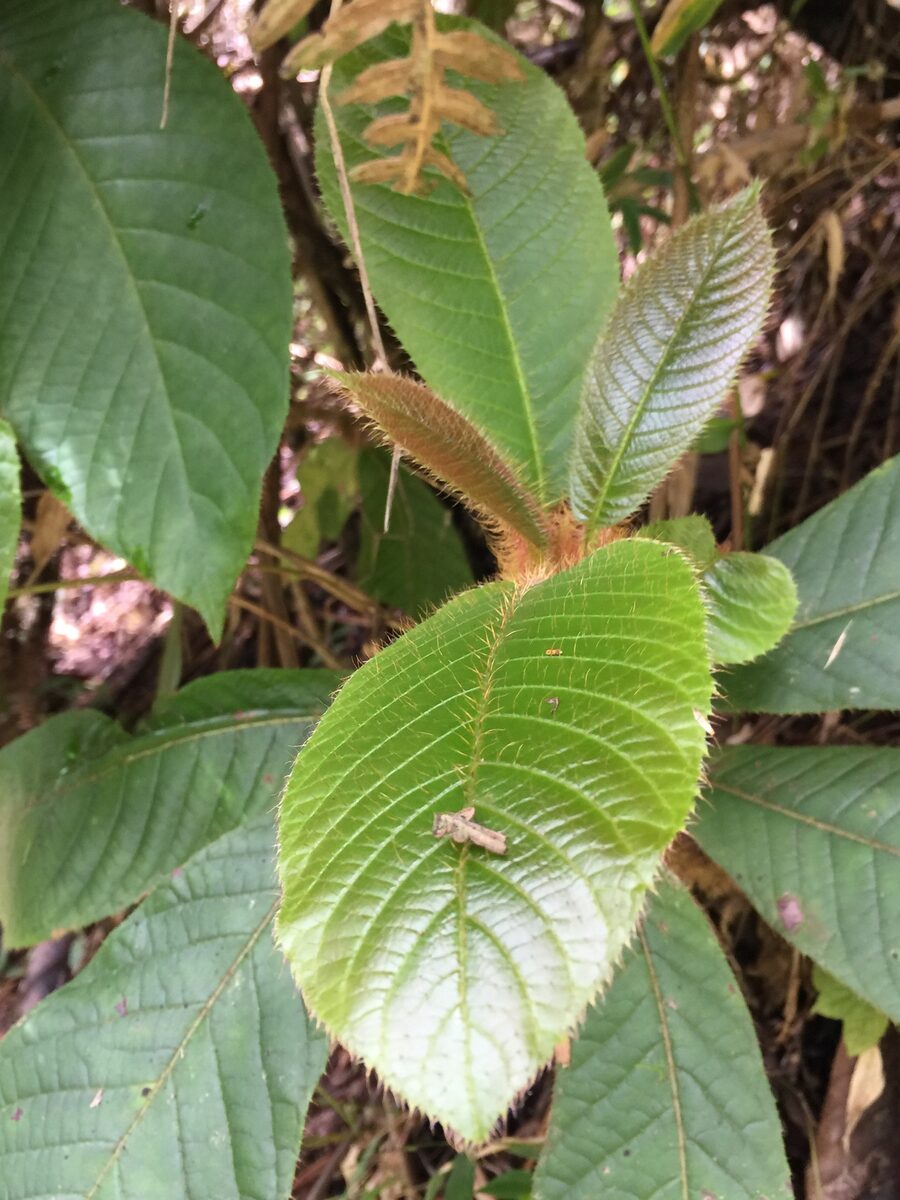
A vine up to 15-20 m long. It loses its leaves during the year. Leaves are elongated or heart-shaped and 5-13 cm long. They are light green and have toothed edges. They are attached to the stem by red petioles. The leaves turn rich golden colour in autumn. The fruit are green and 2-3 cm long. The skin is green. It has few hairs. Male and female plants are borne on separate plants. Both are needed for fruit production. Flowers are about 1 cm across. Fruit are dull green and lime-green flesh. They are edible.
Edible Uses
The fruit can be eaten raw, cooked, or dried for later use. Sweeter than A. deliciosa (kiwi fruit), it has a smooth skin that can be eaten along with the flesh. The fruit contains up to five times the vitamin C content of blackcurrants. One report considers it highly esteemed, while another describes it as insipid. Fruits are greenish-yellow or purple-red when mature and measure about 2–3cm long. They contain numerous small seeds, which are easily eaten along with the fruit. The plant produces abundant sap, which can be tapped and drunk in spring.
Medicinal Uses
The fruit is a rich source of vitamin C.
Distribution
A temperate plant. It needs 150 frost free days. During the dormant period is can withstand heavy frosts. All selections need a chilling requirement to flower and fruit. They prefer a sunny position. It needs protection from strong winds. They need a well drained somewhat acid (pH 5-6.5) soil. The plants will not tolerate salty soils. They need plenty of water during the growing season. It occurs naturally climbing up trees in woodland at elevations of 100 - 2000 metres in China and Japan. It suits hardiness zones 4-9. In Sichuan and Yunnan.
Where It Grows
Asia, Australia, Britain, Canada, China, Europe, Japan, Korea, Lithuania, Manchuria, New Zealand, North America, North Korea, Poland, Russia, Siberia, Taiwan, Tibet, USA,
Propagation
Sow seed in spring in a greenhouse. Three months of stratification is recommended — either sow in a cold frame as soon as seed is ripe in November, or as soon as it is received. Fresh seed germinates in 2–3 months at 10°C; stored seed may take longer. When seedlings are large enough to handle, prick out into individual pots and grow on in light shade in the greenhouse for at least their first winter. Plant out into permanent positions in late spring or early summer when plants reach 30cm or more, after the last expected frosts. Most seedlings are male. Seedlings are prone to damping off and must be kept well ventilated. Softwood cuttings can be taken as soon as growth is ready in spring and rooted in a frame. Half-ripe cuttings taken in July/August root at a very high percentage. Ripe wood cuttings can be taken in October/November in a frame.
Other Uses
None known.
Notes
The fruit contains up to 5 times the vitamin C content of blackcurrants. There are 62 Actinidia species. The Actinidiaceae are a mainly tropical family.
Synonyms
Also Known As
Bower actinidia, Bower vine, Chamdarae, Cocktail kiwi, Darae, Dessert kiwi, Kokuwa, Sarunashi, Siberian gooseberry, Tara Vine, Tarae, Vine-pear, Yang-tao
References (27)
- Ann. Mus. Bot. Lugdano-Batavum 3:15. 1867
- Bircher, A. G. & Bircher, W. H., 2000, Encyclopedia of Fruit Trees and Edible Flowering Plants in Egypt and the Subtropics. AUC Press. p 9
- Brickell, C. (Ed.), 1999, The Royal Horticultural Society A-Z Encyclopedia of Garden Plants. Convent Garden Books. p 76
- Chen, B. & Qiu, Z., Consumer's Attitudes towards Edible Wild Plants, Ishikawa Prefecture, Japan. p 22 www.hindawi.com/journals/ijfr/aip/872413.pdf
- Crandall, C & Crandall, B., 1996, Flowering Fruiting and Foliage vines. Sterling. p 88
Show all 27 references Hide references
- Cundall, P., (ed.), 2004, Gardening Australia: flora: the gardener's bible. ABC Books. p 96
- Facciola, S., 1998, Cornucopia 2: a Source Book of Edible Plants. Kampong Publications. p 2
- Flowerdew, B., 2000, Complete Fruit Book. Kyle Cathie Ltd., London. p 134
- Hu, Shiu-ying, 2005, Food Plants of China. The Chinese University Press. p 549
- INFOODS:FAO/INFOODS Databases
- John, L., & Stevenson, V., 1979, The Complete Book of Fruit. Angus & Robertson p 111
- Joyce, D., 1998, The Garden Plant Selector. Ryland, Peters and Small. p 176
- Ju, Y., et al, 2013, Eating from the wild: diversity of wild edible plants used by Tibetans in Shangri-la region, Yunnan, China, Journal of Ethnobiology and Ethno medicine 9:28
- Lim, S., et al, 2016, Inhibition of hardy kiwifruit (Actinidia arguta) ripening by 1-methylcyclopene during cold storage and anticancer properties of the fruit extract. Food Chemistry 190:150-157
- Lyle, S., 2006, Discovering fruit and nuts. Land Links. p 47
- Morton, J. F., 1987, Fruits of Warm Climates. Wipf & Stock Publishers p 299
- Ong, H. G., et al, 2015, Ethnobotany of the wild edible plants gathered in Ulleung Island, South Korea. Genet Resourc crop Evol. Springer
- Pemberton, R. W. & Lee, N. S., 1996, Wild Food Plants in South Korea: Market Presence, New Crops, and Exports to the United States. Economic Botany, Vol. 50, No. 1, pp. 57-70
- Plants for a Future database, The Field, Penpol, Lostwithiel, Cornwall, PL22 0NG, UK. http://www.scs.leeds.ac.uk/pfaf/
- Reich, Lee, 1991, Uncommon Fruits Worthy of Attention. Addison-Wesley, pp 121-138
- Self, M., 199, Phoenix Seeds catalogue. p 17
- Song, M., et al, 2013, Traditional knowledge of wild edible plants in Jeju Island, Korea. Indian Journal of Traditional Knowledge. 12(2) pp 177-194
- USDA, ARS, National Genetic Resources Program. Germplasm Resources Information Network - (GRIN). [Online Database] National Germplasm Resources Laboratory, Beltsville, Maryland. Available: www.ars-grin.gov/cgi-bin/npgs/html/econ.pl (10 April 2000)
- Wiersema, J. H. & Leon, B., 2013, World Economic Plants. A Standard Reference CRC Press. 2nd Ed. p 16
- Williams, D., 2017, Ainu Ethnobiology. Contributions in Ethnobiology. Society of Ethnobiology. p 121
- World Checklist of Useful Plant Species 2020. Royal Botanic Gardens, Kew
- Zeven, A. C. & de West, J. M. J., 1982, Dictionary of cultivated plants and their regions of diversity. Wageningen. p 32