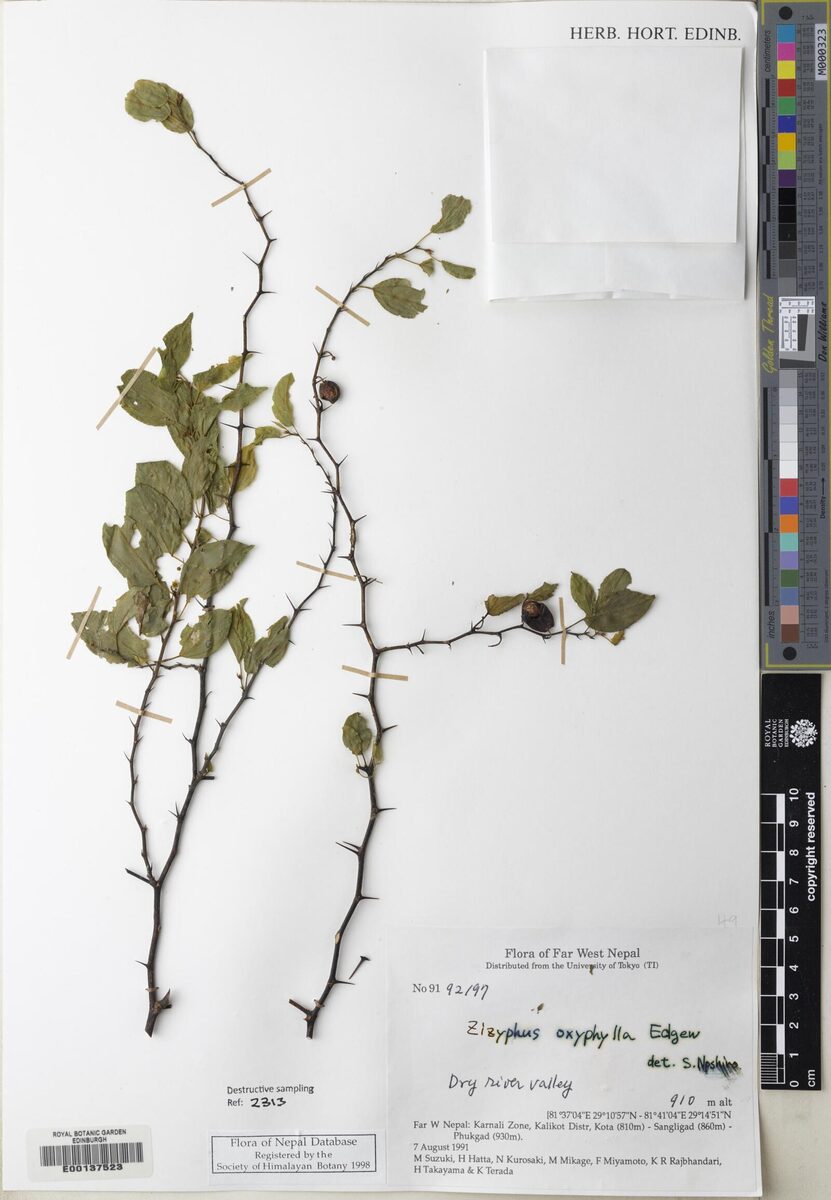
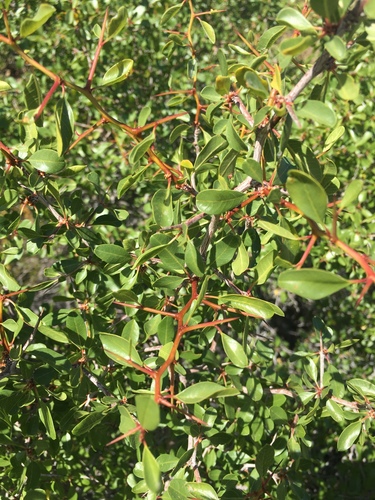
Ziziphus xylopyrus
(Retz.) Willd.
iNaturalist· cc-by-nc
(c) Rujuta Vinod, some rights reserved (CC BY-NC), uploaded by Rujuta Vinod
iNaturalist· cc-by-nc
(c) SONU KUMAR, some rights reserved (CC BY-NC)
iNaturalist· cc-by-nc
(c) shivshankarchapule, some rights reserved (CC BY-NC)
Description
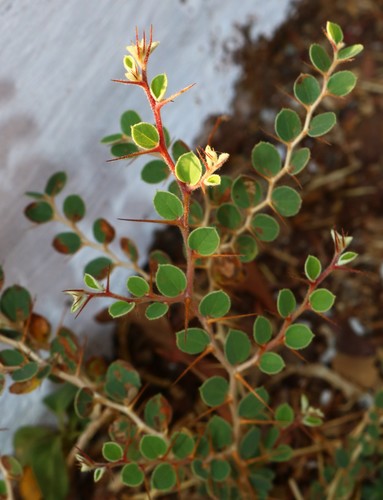
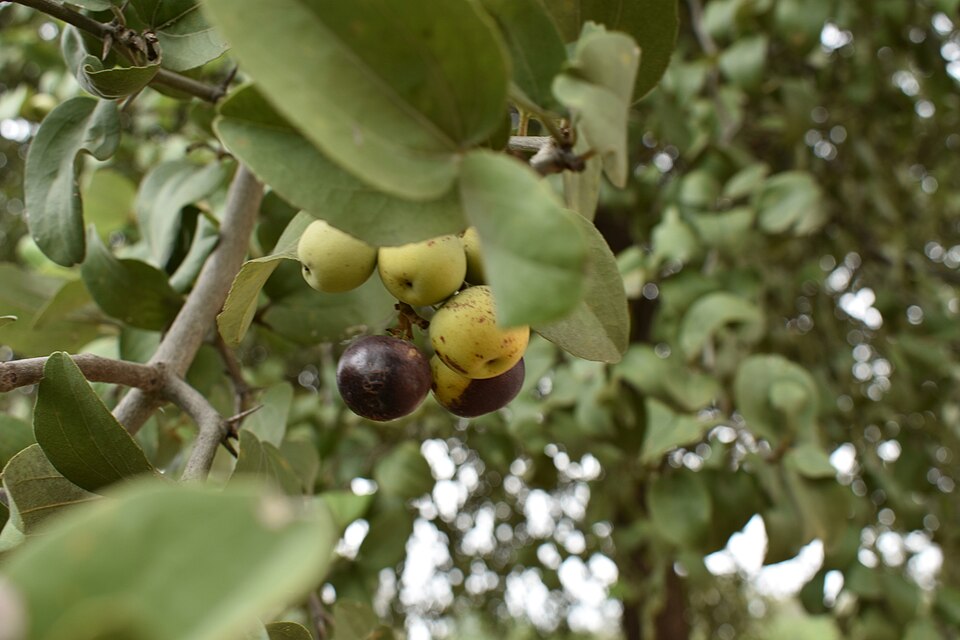
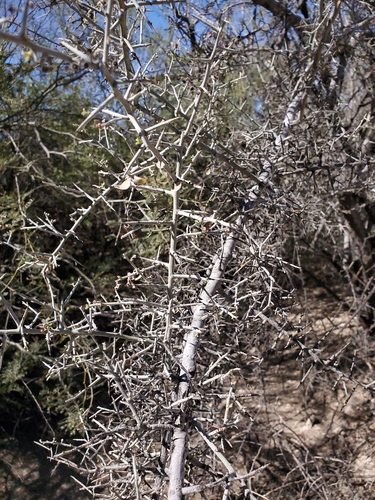
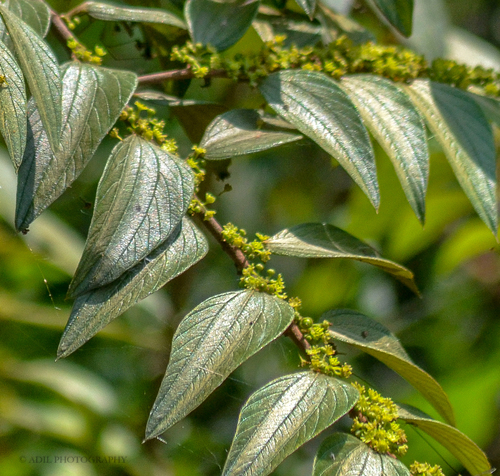
A tree. It grows 12 m tall. It loses its leaves during the year. The leaves are broadly oval and with teeth along the edge. The flowers are yellowish-green and occur in hairy groups in the axils of leaves. The fruit is round and fleshy with a stone inside. It is 2 cm across. There are 2 or 3 seeds.
Edible Uses
The ripe fruit are eaten raw, though they are sour and lack much flavor. The seeds are dried and then eaten. Fruit are sold in local markets.
Traditional Uses
The ripe fruit is eaten raw. It is sour but lacks taste. The seeds are dried and then eaten.
This uses section is brief — help expand it
Medicinal Uses
The powdered fresh stem bark powder is soaked in water for twelve hours and filtered; the filtrate is taken orally in empty stomach as a treatment for stomachache. The powder is made into a paste and taken in the form of pills as a treatment for cholera. The root bark powder, combined with that of Anogeissus latifolia and Acacia catechu, together with the whole plant of Viscum articulatum, is taken orally with water as a treatment for bleeding piles and also bleeding from the nose and mouth. The bark is boiled with water to make a wash for treating skin rashes The powdered fruit is taken orally as a treatment for diabetes. Combined with ginger, it is used to treat stomach aches. The fresh fruit is used to treat urinary spasms. The crushed fruit powder is soaked in water and kept overnight, the extract is taken by the women early in the morning for 7 days to check oogenesis. The fruit and bark contain tannins and are astringent. They are used in the treatment of diarrohea. The leaves are chewed as a remedy for urinary problems. A decoction of the leavs, combined with Muraya koenigii stem bark and Terminalia bellerica leaves are taken internally as a treatment for snake bites. A leaf paste is applied topically as a treatment for pimples. The powdered leaves, combined with the latex of Ipomea carnea, are applied topically on boils. A paste of the leaves, combined with the flowers of Datura innoxia, is applied on patches of leucoderma at night to bring relief. The crushed roots, combined with the stem barks of Calotropis gigantea, Erythroxylum monogynum, Pterocarpus marsupium, and 10 - 12 dry chili peppers is used in the treatment of asthma. The roasted seed powder paste is applied over the chest for relieving the pain after cough and colds The seeds are dried and ground to a fine powder. One table spoon full of powder, mixed with 50ml of water, is taken orally in the treatment of diarrhoea. An alcoholic extract of the bark possesses anti-nociceptive, anti-convulsant and anti-inflammatory properties. The plant contains alkaloids, amphibine H and nummularine K. Both the alkaloids showed significant antimicrobial activity.
Distribution
It is a temperate to subtropical plant. In the Himalayas in India it grows up to 800 m above sea level.
Where It Grows
Asia, Assam, Bangladesh, Himalayas, India, Nepal, Northeastern India, Sri Lanka,
Cultivation
In India the tree is important as a host for the lac insect..
Other Uses
A tannin obtained from the seeds is used as a black dye. The wood is used for fuel.
Other Information
Fruit are sold in local markets.
Synonyms
Also Known As
Bhorgotti, Bon boroi, Bor, Challe, Dagadi bor, Ghatbor, Ghont, Ghot, Ghunt, Gora, Got, Gote, Goti, Gotoboro, Gotte, Hadkibor, Jhangli boroi, Kakor, Kantabohul, Kantegoti, Karkat, Kathber, Kat-ber, Khat-beri, Kotta, Kottei, Kottaielanti, Mullukare, Mullukottai, Suti
References (28)
- Ajesh, T. P., et al, 2012, Ethnobotanical Documentation of Wild Edible Fruits used by Muthuvan Tribes of Idukki, Kerala-India. International Journal of Pharma and Bio Sciences 3(3): 479-487
- Ambasta, S.P. (Ed.), 2000, The Useful Plants of India. CSIR India. p 704
- Arinathan, V., et al, 2007, Wild edibles used by Palliyars of the western Ghats, Tamil Nadu. Indian Journal of Traditional Knowledge. 6(1) pp 163-168
- Bajpai, O., et al, 2015, Tree species of the Himalayan Terai region of Uttar Pradesh, India: a checklist. Check List 11(4): 1718
- Balkrishna, A., et al, 2022, Indigenous Uses of Plants among Forest-dependent Communities of Seijosa, Arunachal Pradesh. International Journal of Economic Plants 2022, 9(1):064-080
Show all 28 references Hide references
- Bohra, N., et al, 2017, Ethnobotany of wild edible plants traditionally used by the local people in the Ramnagar regions from Nainital District, Uttarakhand, India. Biolife 5(1): 12-19
- Burkill, I. H., 1966, Vol 2
- Chaudhary, L. B., et al, 2014, Tree Resources of Katerniaghat Wildlife Sanctuary, Uttar Pradesh, India with especial emphasis on Conservation Status, Phenology and Economic Values. International Journal of Environment. 3(1)
- Chauhan, S. H., et al, 2018, Consumption patterns of wild edibles by the Vasavas: a case study from Gujarat, India. Journal of Ethnobiology and Ethnomedicine (2018) 14:5
- Datar, M. N. & Upadhye, A. S., 2016, Forest foods of northern region of Western Ghats. MACS - Agharkar Research Institute, Pune. Pp 1-160. ISBN: 978-93-85735-10-3 p 103
- Dey, A. & Mukhererjee, A., 2015, Living and Survival Amidst Hunger: Wild Edible Botanicals as a Prime Forest Productivity in the Rural Purulia District, West Bengal, India from Colonial to Present. Research Journal of Forestry 9(3): 71-86
- Dobriyal, M. J. R. & Dobriyal, R., 2014, Non Wood Forest Produce an Option for Ethnic Food and Nutritional Security in India. Int. J. of Usuf. Mngt. 15(1):17-37
- Harisha, R. P. & Padmavathy, S., 2013, Knowledge and Use of Wild Edible Plants in Two Communities in Malai Madeshwara Hills, Southern India. International Journal of Botany 9(2): 64-72.
- Hedrick, U.P., 1919, (Ed.), Sturtevant's edible plants of the world. p 707
- Jadhav, R., et al, 2015, Forest Foods of Northern Western Ghats: Mode of Consumption, Nutrition and Availability. Asian Agri-History Vol. 19, No. 4: 293-317
- Jose, D. T. & Sasidharan, N., 2016, Checklist of wild edible plants of Aralam Wildlife sanctuary, Kerala, India. South Indian Journal Of Biological Sciences 2016; 2(1); 141‐144
- Kiran, K. C., et al, 2019, Diversity and Seasonal Availability of Potential Wild Edible Plants from Vidarbha Region of Maharashtra State, India. Int.J.Curr.Microbiol.App.Sci (2019) 8(2): 1434-1446 (As Ziziphus glaberrima)
- Majumdar, K and Datta, N., 2009, Traditional wild edible fruits for the forest dwellers of Tripura, India. Pleione 3(2) 167-178
- Menninger, E.A., 1977, Edible Nuts of the World. Horticultural Books. Florida p 123
- Pasha, M. K. & Uddin, S. B., 2019, Minor Edible Fruits of Bangladesh. Bangladesh J. Plant Taxon. 26(2): 299–313
- Prachi, K., et al, 2012, Underutilized wild fruits of North Maharashtra. Journal of Research in Plant Sciences. (2012) 1:071-076
- Pradhan, R., et al, 2020, Potential Wild Edible Plants and its Significance in Livelihood of Indigenous People of Male Mahadeshwara Hills, Karnataka. Economic Affairs Vol. 64, No. 4 pp. 01-14
- Singh, H.B., Arora R.K.,1978, Wild edible Plants of India. Indian Council of Agricultural Research, New Delhi. p 85
- Sp. pl. 1(2):1104. 1798
- Sivakumar, A. & Murugesan, M., 2005, Ethnobotanical Studies of the wild edible plants used by the tribals of the Anaimalai Hills, the Western Ghats. Ancient Science of Life. XXV(2) Oct-Dec.
- Toppo, P. et al, 2016, Wild edible plants of Dhamtari district of Chhattisgarh, India. Van Sangyan Vol. 3, No. 4
- Upreti, K., et al, 2010, Diversity and Distribution of Wild Edible Fruit Plants of Uttarakhand. Bioversity Potentials of the Himalaya. p 194 (As Ziziphus glabrerrima)
- World Checklist of Useful Plant Species 2020. Royal Botanic Gardens, Kew