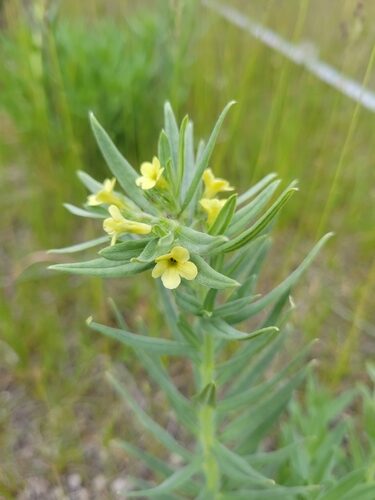
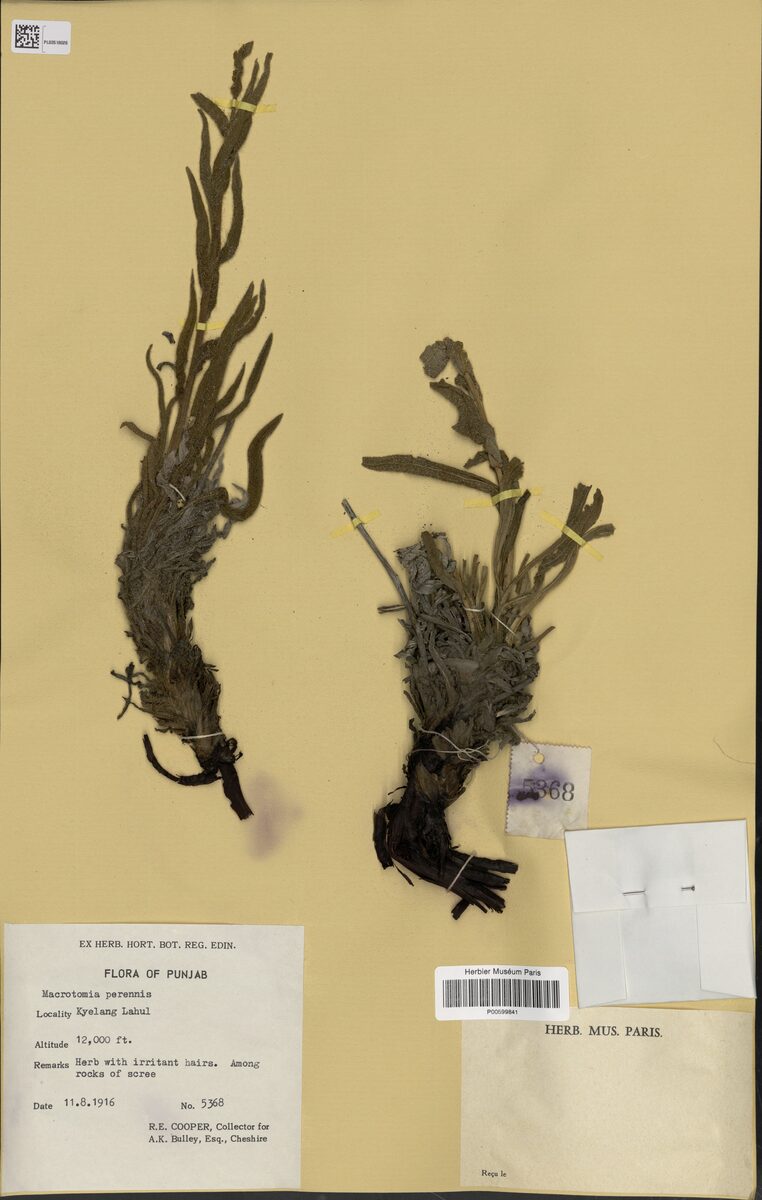
Lithospermum erythrorhizon
Siebold & Zucc.
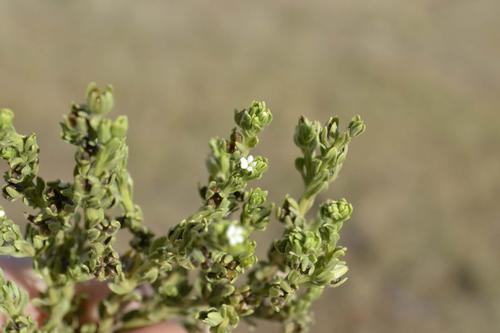
iNaturalist· cc-by
(c) Repina Tatyana, some rights reserved (CC BY), uploaded by Repina Tatyana
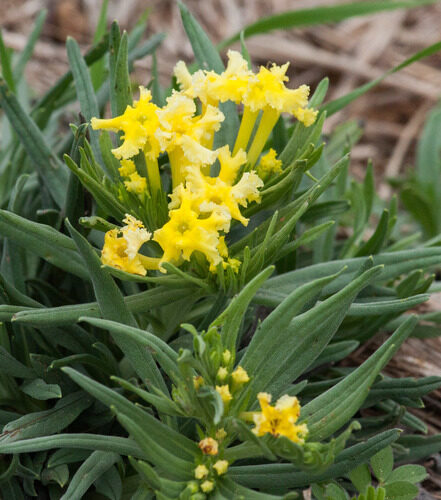
iNaturalist· cc-by-nc
(c) V.S. Volkotrub, some rights reserved (CC BY-NC), uploaded by V.S. Volkotrub
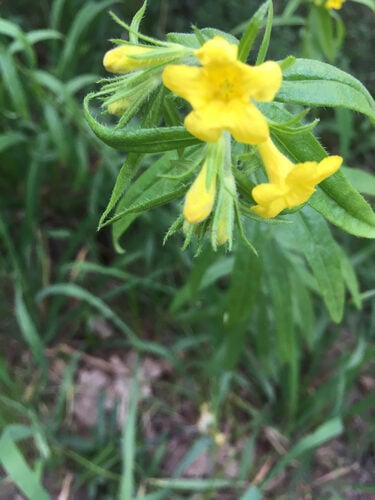
iNaturalist· cc-by-nc
(c) Сергей Григорьевич Казановский, some rights reserved (CC BY-NC)
Summary
Source: WikipediaLithospermum erythrorhizon, commonly called purple gromwell, red stoneroot, red gromwell, red-root gromwell and redroot lithospermum, is a plant species in the family Boraginaceae. It is called zǐcǎo (紫草) in Chinese, jichi (지치) in Korean, and murasaki (ムラサキ; 茈, 紫) in Japanese. The dried root of Lithospermum erythrorhizon (lithospermum root or Lithospermi Radix) is a Chinese herbal medicine with various antiviral and biological activities, including inhibition of human immunodeficiency virus type 1 (HIV-1). The genome of Lithospermum erythrorhizon has been sequenced and has facilitated the discovery of a putative retrotransposition-derived duplication event that produced a 4-hydroxybenzoate geranyltransferase gene involved in alkannin biosynthesis.
Description
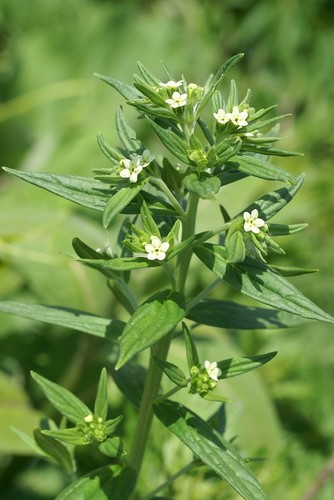
A herb. It keeps growing from year to year. The roots are dark red with a purple dye. There are usually 1-3 erect stems. They are 40-90 cm tall. The leaves do not have stalks. They are broadly sword shaped and 3-8 cm long by 1-2 cm wide. The flowers are at the top of the plant. They are white.
Edible Uses
None known.
Traditional Uses
The root is used in brewing. It is used for an edible red colouring. The young leaves are pan fried.
This uses section is brief — help expand it
Medicinal Uses
All parts of the plant are antitumor, cardiotonic, contraceptive, depurative, and febrifuge. Internally it is used to treat irritant skin conditions, measles, chicken pox, boils, carbuncles, hepatitis, and skin cancer. Externally it is applied to treat nappy rash, burns, cuts, wounds, abscesses, eczema, and haemorrhoids. The plant is an ingredient in commercial skin care creams. Above-ground parts are harvested when in flower; roots are harvested in autumn. Both are dried for later use.
Distribution
It is a temperate plant. It grows in meadows on slopes.
Where It Grows
Asia, China, Japan, Korea, Russia,
Cultivation
Requires a warm sunny position in a moderately fertile well-drained soil. Prefers a neutral to alkaline soil and also succeeds in partial shade. Plants are hardy to at least -15°c. This species is cultivated in Japan (as a dye plant?).
Propagation
Sow seed in spring or autumn in a cold frame. Prick seedlings into individual pots when large enough and grow on under glass for their first winter. Plant out in late spring or early summer after the last expected frosts. Cuttings. Division in autumn.
Other Uses
A purple dye is obtained from the root, harvested in spring. The colour is well regarded but is fugitive and production costs are high.
Notes
The roots are used in medicine.
Also Known As
Jichi
References (4)
- Hui, Y. H., Handbook of Food Science, Technology, and Engineering. Volume 2. Table 98:6
- Kim, H. & Song, M., 2013, Ethnobotanical analysis for traditional knowledge of wild edible plants in North Jeolla Province (Korea). Genetic. Resour. Crop Evol. (2013) 60:1571-1585
- Luo, B., et al, 2019, Wild edible plants collected by Hani from terraced rice paddy agroecosystem in Honghe Prefecture, Yunnan, China. Journal of Ethnobiology and Ethnomedicine 15:56
- Song, M., et al, 2013, Traditional knowledge of wild edible plants in Jeju Island, Korea. Indian Journal of Traditional Knowledge. 12(2) pp 177-194