Chonemorpha fragrans
(Moon) Alston
Frangipani vine
iNaturalist· cc-by-sa
(c) Vinayaraj, some rights reserved (CC BY-SA)
iNaturalist· cc-by-sa
(c) Dinesh Valke, some rights reserved (CC BY-SA)
Summary
Source: WikipediaChonemorpha fragrans, the frangipani vine or climbing frangipani, is a plant species in the genus Chonemorpha. It is a vigorous, generally evergreen, climbing shrub producing stems 30 m (98 ft) or more long that can climb to the tops of the tallest trees in the forests of Southeast Asia. It has scented, white flowers and large shiny leaves. It is native to China, India (the Himalayas), Indonesia, Malaysia, Myanmar, Sri Lanka and Thailand. It is very commonly used in Ayurveda (an Indian traditional medicine) and it is also cultivated mostly worldwide in frost-free places.
Description
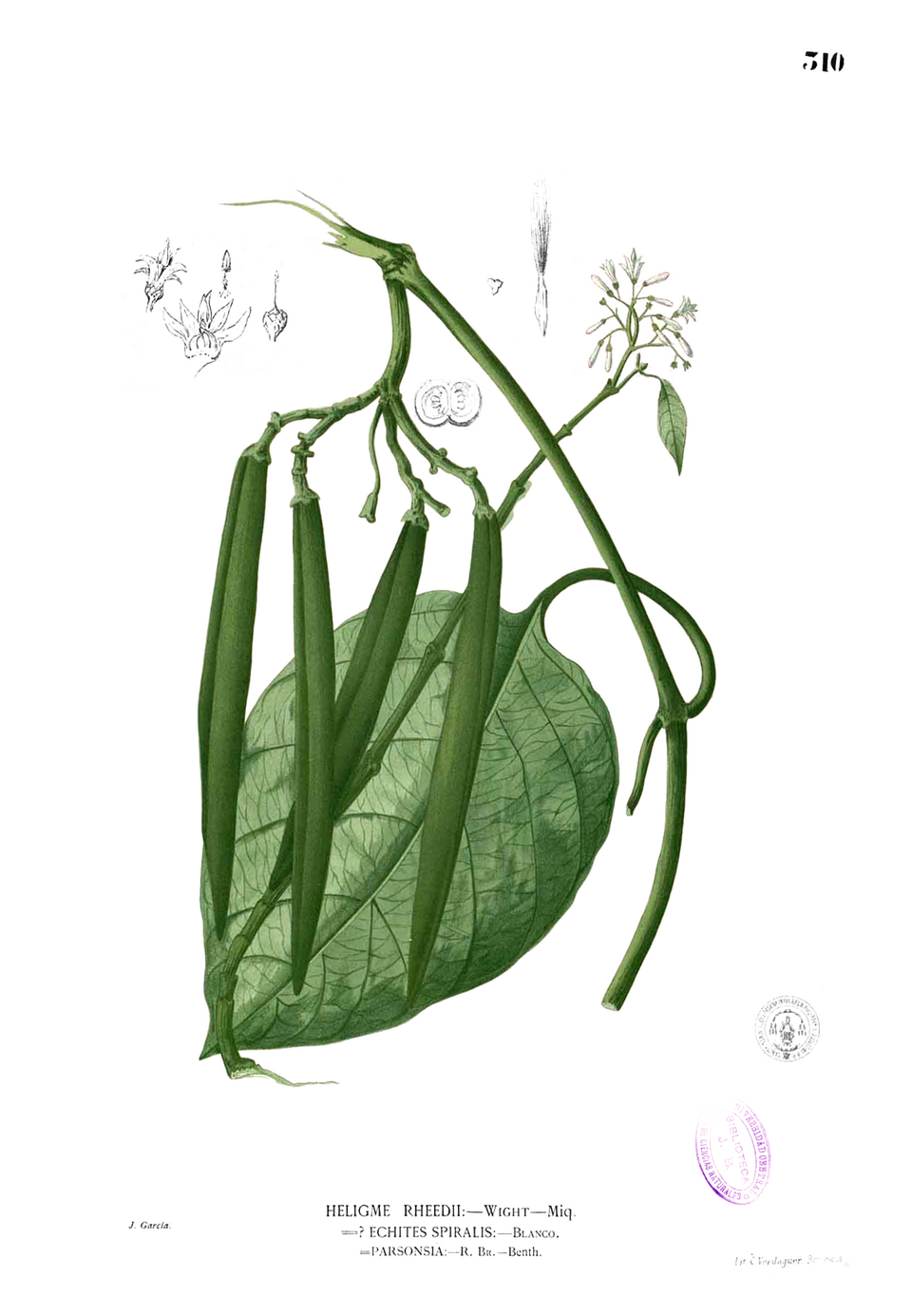
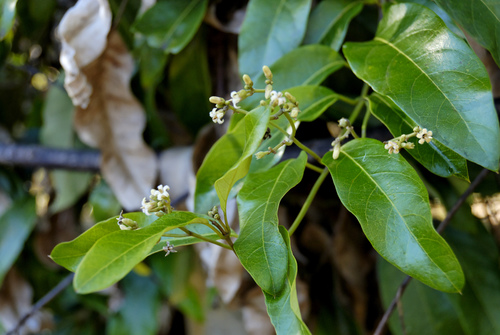
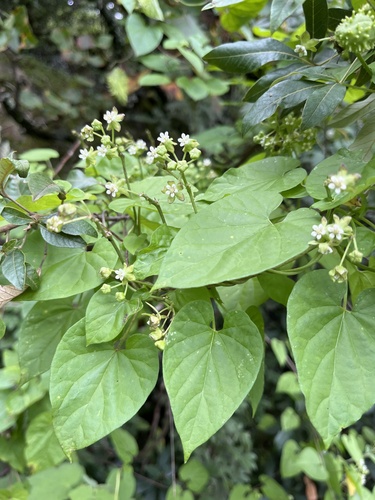
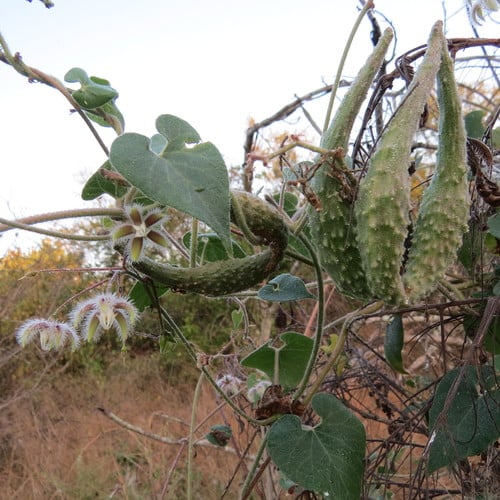
A climber. It can be 30 m long. The leaves are broadly oval and 15-45 cm long by 13-45 cm wide. The base is heart shaped. The flowers are tube shaped. The fruit are long follicles 30 cm long by 2 cm wide. The seeds are oblong.
Edible Uses
The leaves are eaten as a vegetable and are sold in local markets.
Traditional Uses
The leaves are eaten as a vegetable.
This uses section is brief — help expand it
Medicinal Uses
It has been used in folk medicine to help treat various disorders. It is used (roots, leaves, bark-stem,) in Ayurveda (an Indian traditional medicine), to treat various things such as skin diseases, leprosy, scabies, syphilis, gynecological disorders, inflammation, constipation, worm infestations (ascaris), hyperacidity, diabetes, jaundice, coughs, bronchitis, stomach disorders, intermittent fevers, anaemia, typhoid, polyuria, boils, eye diseases, poisoning, and bronchitis. It is also used as a laxative. The crushed roots of the plant, which are sweet and bitter, are used to make a decoction drink to help remove a retained placenta, or to treat amebic dysentery. The stem of the plant is used to treat fractures and rheumatalgia. The leaves of the plant are used a churna or extract used in combination with the other plant materials. As the plant has diverse biological activities including muscle relaxant and antiparasitic properties. The plant is sometimes cultivated for the fibre that is obtained from its stem, which is used to make fishing nets, especially in East Java.
Distribution
It is a subtropical plant. It grows in dense mountain forests often clinging to trees. It occurs in the Western Ghats in India.
Where It Grows
Africa, Asia, China, Côte d'Ivoire, Guinea-Bissau, Himalayas, India, Indochina, Indonesia, Ivory Coast, Malaysia, Myanmar, Nepal, Nigeria, Northeastern India, SE Asia, Sri Lanka, Thailand, West Africa,
Cultivation
Plants can be grown from seeds.
Other Uses
A fibre obtained from the bark is resistant to fresh and salt water. It is used to make nets. A latex is obtained from the stems.
Other Information
Leaves are sold in local markets.
Synonyms
Also Known As
Ankhapui, Ankhapi, Johnr khithong, Kamboja merambat, Perunlurumpa, Yabua, Yuhaba, Yuruan
References (3)
- Medhi, P. & Borthakur, S. K., 2012, Phytoresources from North Cachur Hills of Assam -3: Edible plants sold at Hflong market. Indian Journal or Natural Products and Resources. 3(1) pp 84-109 (As Chonemorpha macrophylla) Medhi, P. & Borthakur, S. K., 2013, Wild edible plants sold by the Zeme Nagas at the makeshift market of Mahur, Dima Hasao district of Assam. Pleione 7(1): 84 - 93. 2013. (As Chonemorpha macrophylla)
- Medhi, P., Sarma, A and Borthakur, S. K., 2014, Wild edible plants from the Dima Hasao district of Assam, India. Pleione 8(1): 133-148 (As Chonemorpha macrophylla)
- Sukarya, D. G., (Ed.) 2013, 3,500 Plant Species of the Botanic Gardens of Indonesia. LIPI p 911