Piper pedicellatum
C. DC.
iNaturalist· cc-by-nc-sa
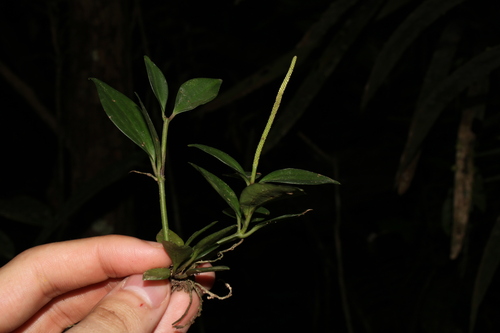
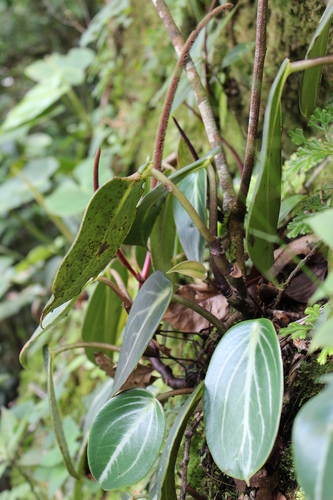
(c) Johannes Lundberg, some rights reserved (CC BY-NC-SA)
iNaturalist· cc-by
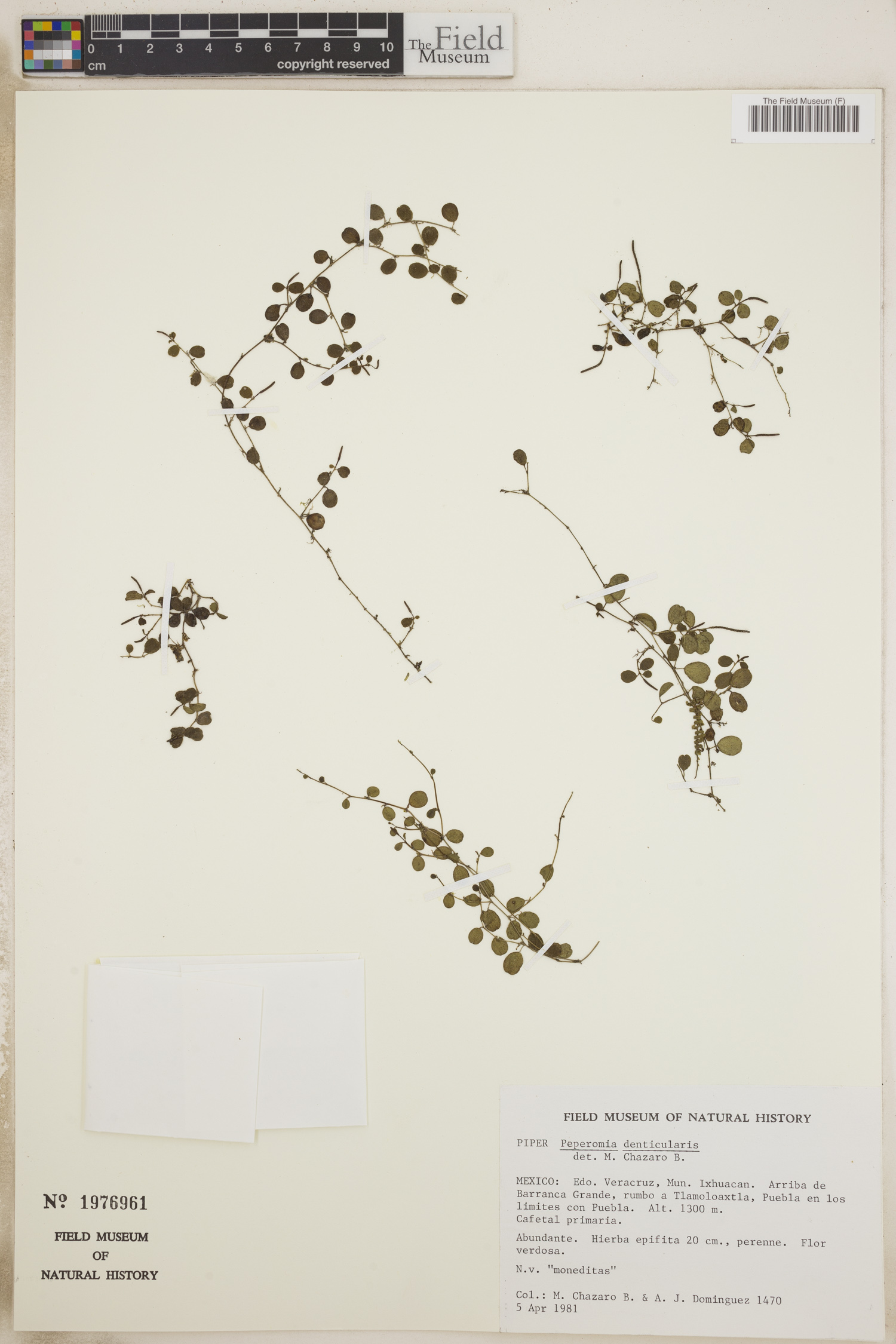
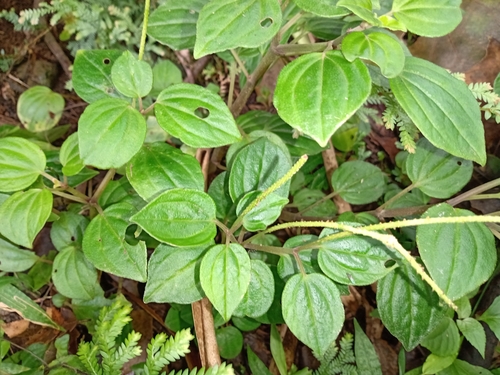
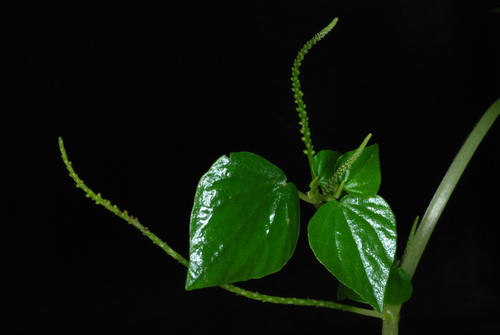
(c) Kristof & Yulia, some rights reserved (CC BY), uploaded by Kristof & Yulia
iNaturalist· cc-by
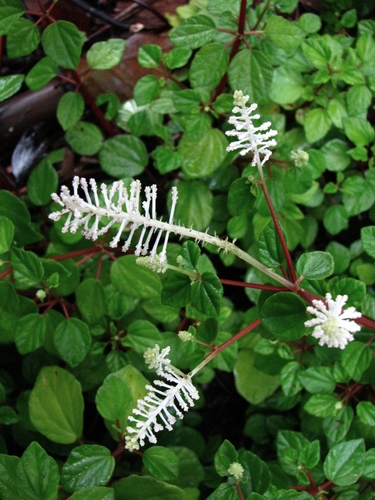
(c) Kristof & Yulia, some rights reserved (CC BY), uploaded by Kristof & Yulia
Description
A climber. The leaf blade is oval and 7-14 cm long by 4-8 cm wide. The base is unequal. The flower spikes are opposite the leaves. Male spikes are 15-25 cm long by 2-3 mm wide. The female spikes are 9-14 cm long by 3-5 mm thick. The fruit are fleshy and 4 angled.
Edible Uses
The leaves are cooked, sometimes with meat, and chewed with betel nut. The fruit is also eaten.
Traditional Uses
The leaves are cooked and sometimes with meat. They are also chewed with betel nut.
This uses section is brief — help expand it
Distribution
It is a subtropical plant. It grows in forests in trees. In southern China it grows between 1,000-1,900 m above sea level. In Yunnan.
Where It Grows
Asia, Bangladesh, Bhutan, China, Himalayas, India, Northeastern India, SE Asia, Sikkim, Vietnam,
Synonyms
Also Known As
Bhalay chabo, Namar, Pi-pi-ling, Rori, Teravu, Tharei sapou
References (6)
- Angami, A., et al, 2006, Status and potential of wild edible plants of Arunachal Pradesh. Indian Journal of Traditional Knowledge 5(4) October 2006, pp 541-550
- Ghosh, C. & Das A. P., 2011, Some useful and poisonous tea garden weeds from the Darjiling District of West Bengal, India. Pleione 5(1): 91 - 114
- Konsam, S., et al, 2016, Assessment of wild leafy vegetables traditionally consumed by the ethnic communities of Manipur, northeast India. Journal of Ethnobiology and Ethnomedicine, 12:9
- Salvi, J. et al, 2016, A review: Underutilized wild edible plants as a potential source of alternative nutrition. International Journal of Botany Studies. Volume 1; Issue 4; May 2016; Page No. 32-36
- Taram, M., et al, 2018, Wild Food Plant Resources of Komkar Adi Tribe of Upper Siang District in Arunachal Pradesh, India. Bulletin of Arunachal Forest Research, Vol. 33(2), 27-35
Show all 6 references Hide references
- Yeshi, K. et al, 2017, Taxonomical Identification of Himalayan Edible Medicinal Plants in Bhutan and the Phenolic Contents and Antioxidant Activity of Selected Plants. TBAP 7 (2) 2017 pp 89 - 106