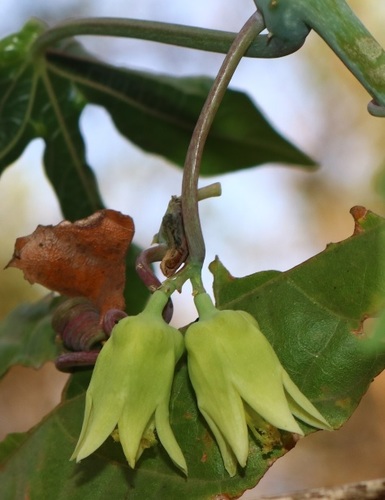
Passiflora popenovii
Killip
Softleaf passionfruit
iNaturalist· cc-by-sa
(c) Johnocampo, some rights reserved (CC BY-SA)
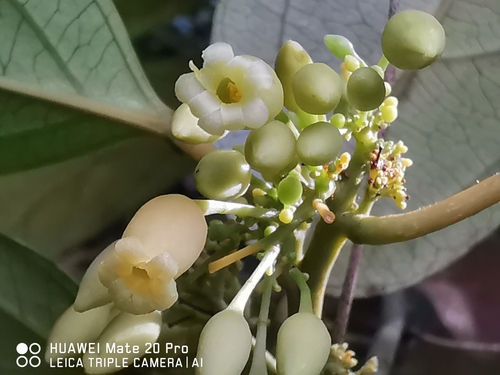
iNaturalist· cc-by-nc
(c) John Ocampo, some rights reserved (CC BY-NC)
iNaturalist· cc-by-nc-sa
(c) Smithsonian Institution, National Museum of Natural History, Department of Botany, some rights reserved (CC BY-NC-SA)
Summary
Passiflora popenovii is a fast-growing evergreen climber reaching 8 meters tall with a spread of 0.5 meters. Hardy to UK zone 10, it grows well in medium loamy or heavy clay soils that are well-drained and moist. It tolerates mildly acid to neutral pH and can thrive in semi-shade or full sun.
Description
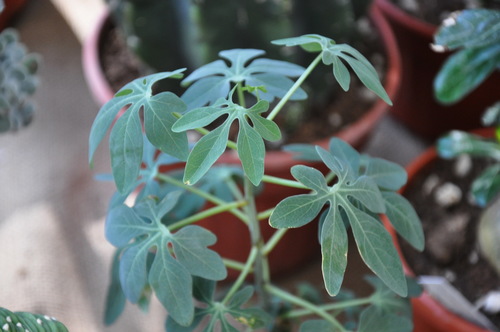
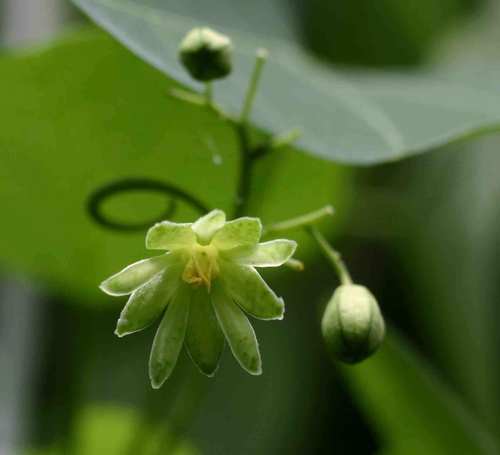
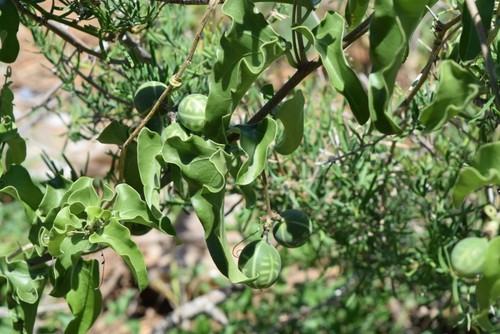
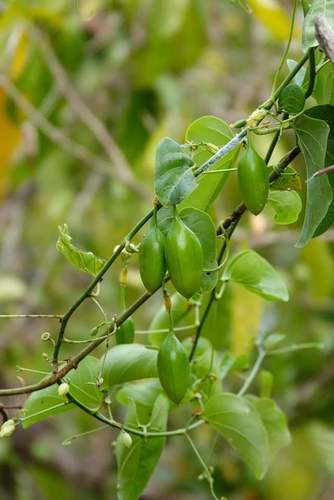
An evergreen climbing shrub. The stems climbing over vegetation attaching by coiled tendrils. The fruit are yellow and the flesh allows light through.
Edible Uses
The juicy fruit can be eaten raw or made into drinks. Its pulp is sweet with a rich, penetrating aroma and an exquisite flavour, and the species is considered one of the best in the genus for eating out of hand.
Traditional Uses
The fruit are eaten raw. They are also used for drinks.
This uses section is brief — help expand it
Medicinal Uses
None known.
Distribution
A tropical plant. It needs a temperature near 16°C when flowering. In the Andes it grows between 800-1,300 m above sea level. It suits USDA hardiness zone 9-11.
Where It Grows
Andes, Colombia, Ecuador*, Peru, South America,
Cultivation
Plants require a temperature no lower than around 16c when they are flowering in order to ensure fruit set. Requires a humus-rich, moist but well-drained soil and a position in dappled shade where it can grow up towards the sun. Prefers a circumneutral soil, disliking very acid or very alkaline conditions. Passiflora species tend to flower and fruit more freely when grown in soils of only moderate fertility. Plants are very tolerant of pruning and can be cut back to ground level if required to rejuvenate the plant. Plants in this genus are notably resistant to honey fungus.
Propagation
Seed is best sown as soon as it is ripe, together with the pulp, which helps break down the seed coat and speeds germination. Stored seed should be soaked for 24 hours in warm water; germination can be further accelerated by mixing the seed with the juice of a fresh passion fruit of any species. Even so, stored seed can take up to 12 months to germinate. Place the seed tray in a shady position at around 19–24°C. Prick seedlings out into individual containers as soon as they are large enough to handle and plant out when sufficiently established. Take cuttings of young shoots at the nodes — these root best in a neutral to slightly acid compost, though 100% sharp sand also gives good results. Cuttings of fully mature wood taken at a node can take about 3 months but generally achieve a high success rate. Layering is very easy; air layering is also suitable.
Other Uses
None known.
Other Information
The fruit are sold in local markets. It is occasionally cultivated. It is an attractive fruit.
Notes
There are about 400 Passiflora species.
Synonyms
Also Known As
Curubejo, Chisiqui, Granadilla de Quijos
References (14)
- Castillo, R. O., 1995, Plant Genetic Resources in the Andes: Impact, Conservation, and Management. Crop Science 35:355-360
- Coppens d'Eeckenbrugge, G., S.D. Segura and E. Hodson de Jaramillo, 1997, Les fruits de la passion. Pp. 291-312 In L'amélioration des plantes tropicales. (A. Charrier and M. Jacquot ,eds.). CIRAD
- Facciola, S., 1998, Cornucopia 2: a Source Book of Edible Plants. Kampong Publications, p 167
- Fern, K., 2012, Tropical Species Database http://theferns.info/tropical/
- Fouqué, A., 1972, Espèces fruitières d'Amérique tropicale. Institut français de recherches fruitierès outre-mer
Show all 14 references Hide references
- Hermandez Bermejo, J.E., and Leon, J. (Eds.), 1994, Neglected Crops. 1492 from a different perspective. FAO Plant Production and Protection Series No 26. FAO, Rome. p16
- Kermath, B. M., et al, 2014, Food Plants in the Americas: A survey of the domesticated, cultivated and wild plants used for Human food in North, Central and South America and the Caribbean. On line draft. p 618
- Lopez-Diago, D. & Garcia, N., 2021, Wild edible fruits of Colombia. Biota ColomBiana 22 (2) p 47
- National Research Council, 1989, Lost crops of the Incas: little-known plants of the Andes with promise for worldwide cultivation. National Academy Press, Washington DC, U.S.A.
- Popenoe,
- Roa, J. A. G. & Boada, D. S. G., 2018, Fundación para el Fortalecimiento de la Fruticultura y Plantas Alimenticias no Convencionales en Colombia.
- Torre, de la, L., et al, 2008, Enciclopedia de las Plantas Útiles del Ecuador. Herbario QCA. Pontificia Universidad Católica del Ecuador. p 487
- Ulmer, T., & MacDougal, J.M., 2004, Passiflora Passionflowers of the World. Timber Press. p 69
- Van den Eynden, V., et al, 2003, Wild Foods from South Ecuador. Economic Botany 57(4): 576-603