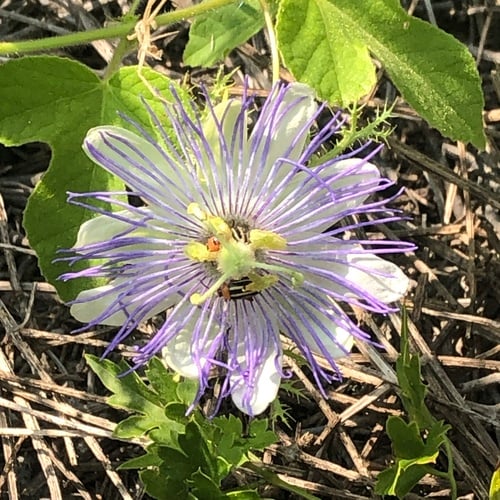
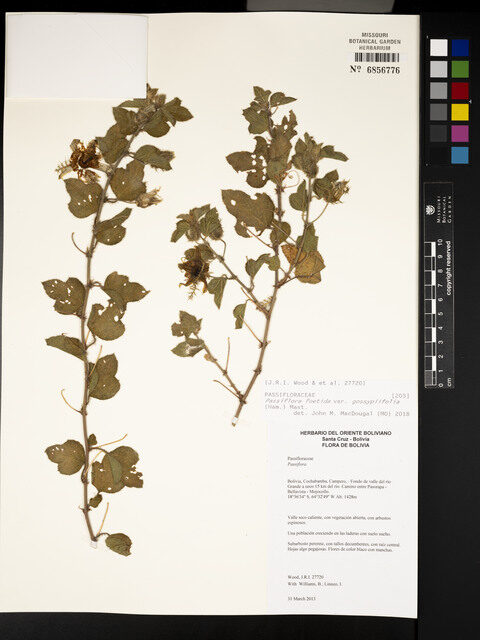
Passiflora pinnatistipula
Cav.
Galupa
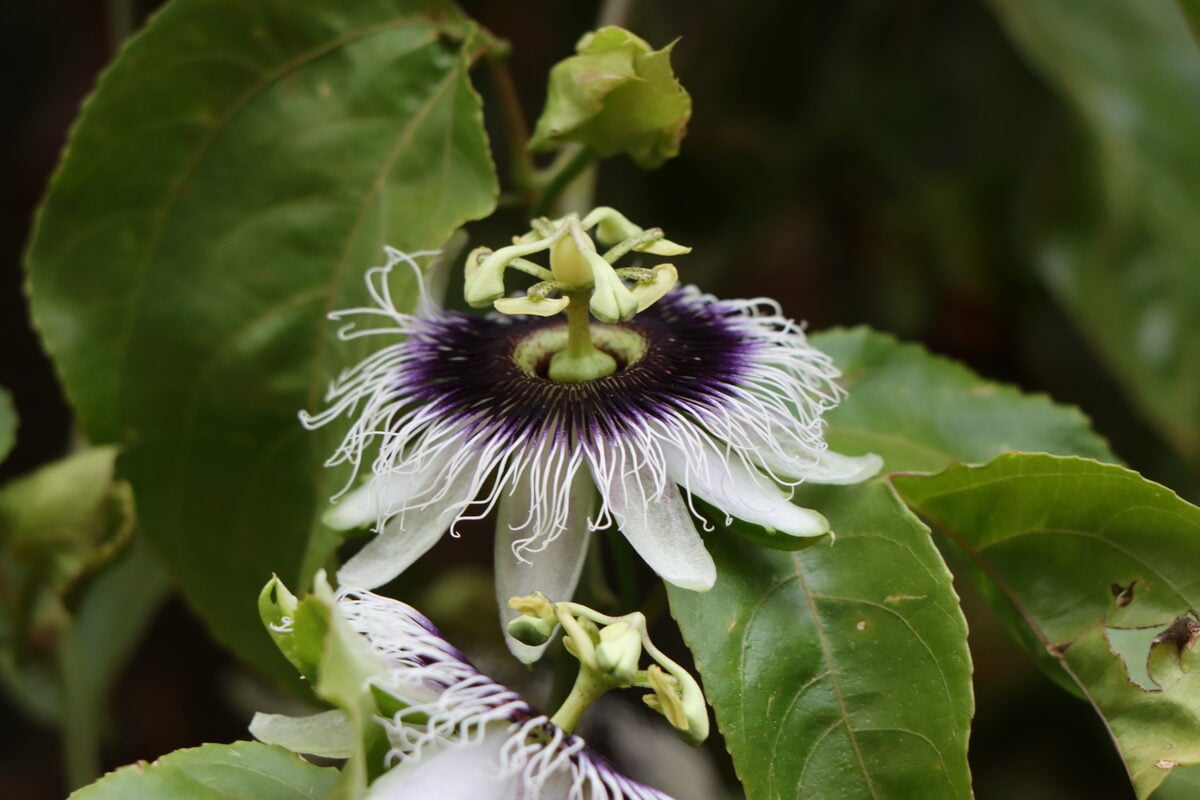
iNaturalist· cc-by
(c) Murray NZ, some rights reserved (CC BY), uploaded by Murray NZ
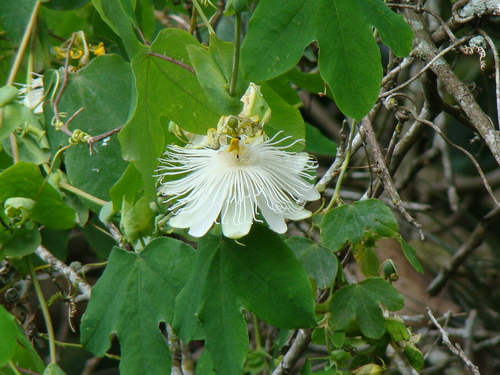
iNaturalist· cc-by
(c) Murray NZ, some rights reserved (CC BY), uploaded by Murray NZ
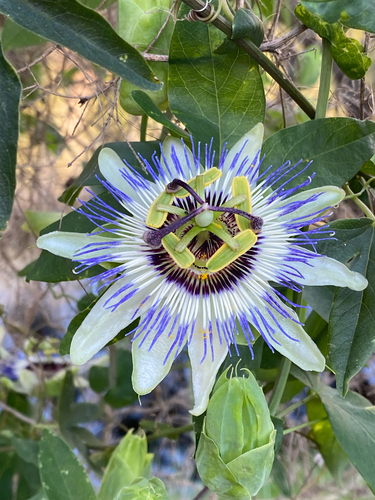
iNaturalist· cc-by-nc
(c) reinderw, some rights reserved (CC BY-NC), uploaded by reinderw
Summary
Source: WikipediaPassiflora pinnatistipula, commonly known as poro poro or gulupa (Colombia), is a climbing perennial that grows in the Cajamarca region of Peru. The departments of Cundinamarca and Boyaca in Colombia produce the purple variety; the yellow, "Hawaiiana" variety is mainly grown in the Valley of Cauca. It has also been cultivated in Australia, India, U.S. (Hawaii & Florida), Kenya, Java, Sumatra, Malaysia, Fiji, Papua New Guinea and Taiwan. The species is listed on the Ark of Taste with other San Marcos Andean Fruits that are in danger of extinction. It produces impressive flowers and yellow fruit with an oblong shape containing many small seeds. The flesh is reminiscent of an orange and is used for beverages, jams, sorbets and salad dressing.
Description
A vine. It grows 4 m long. The flowers are red. The fruit have purple skin. The pulp is yellow. It has a fragrance.
This description is brief — help expand it
Edible Uses
Ripe fruits are eaten raw or used for making drinks, ice-cream or marmalades. The pulp is sweet, but rather insipid. The fragrant, yellow pulp has an agreeable, sweet-acid flavour. Somewhat insipid. The yellow-green, subglobose fruit is about 5cm in diameter.
Traditional Uses
The fruit are eaten raw. They are also used for drinks.
This uses section is brief — help expand it
Medicinal Uses
The fruits are used in the treatment of coughs and lung problems. The leaves and roots of some, if not all, members of this genus contain a substance called 'passiflorina' which has similaritiesr to morphine and is an effective tranquilizer. We have no specific information for this species but many species are used in herbal infusions to calm the nerves and help bring about a restful sleep. The leaves of many species are also considered to be anthelmintic, antihysteric and diaphoretic. They are used in Brazil to combat intermittent fevers, cutaneous inflammations, and erysipelas.
Known Hazards
Cannot tolerate frost.
Distribution
A tropical plant. In Chile it grows from sea level to 2,000 m altitude. It grows in humid areas with constant rain. It can tolerate some dry periods. It can grow in light shade. It suits hardiness zones 10 & 11. It cannot tolerate frost.
Where It Grows
Andes, Bolivia, Chile, Colombia, Ecuador, Mexico, North America, Peru, South America,
Cultivation
A plant of higher elevations in the tropics and lower elevations in the subtropics, usually found above 2,500 metres in tropical countries. It grows in areas where there can be rain all year round, as well as in areas with a distinct dry season of 3 - 5 months. Prefers a position in dappled shade. Passiflora species generally succeed in a wide range of soils, so long as they are well-drained. They tend to flower and fruit more freely when grown in soils of only moderate fertility.
Propagation
Seed - best sown as soon as it is ripe along with the pulp which will help break down the seed coat and speed up germination. Stored seed should be soaked for 24 hours in warm water and germination time can be reduced if the seed is then mixed with the juice of a fresh passion fruit (of any species). Even so, it can take 12 months for stored seed to germinate. Place the seed tray in a shady position, maintaining a temperature around 19 - 24°c. Prick the seedlings out into individual containers as soon as they are large enough to handle and plant out when large enough. Cuttings of young shoots, taken at the nodes. The cuttings root best in a neutral to slightly acid compost, but 100% sharp sand also produces good results. Cuttings of fully mature wood taken at a node. They can take 3 months. Layering. Very easy. Air layering.
Other Information
It is cultivated.
Synonyms
Also Known As
Flor de la pasion, Granadilla de friot, Granadilla de monte, Gulupa, Taksu
References (18)
- Castillo, R. O., 1995, Plant Genetic Resources in the Andes: Impact, Conservation, and Management. Crop Science 35:355-360
- Coppens d'Eeckenbrugge, G., S.D. Segura and E. Hodson de Jaramillo, 1997, Les fruits de la passion. Pp. 291-312 In L'amélioration des plantes tropicales. (A. Charrier and M. Jacquot , eds.). CIRAD
- Facciola, S., 1998, Cornucopia 2: a Source Book of Edible Plants. Kampong Publications, p 167
- Fouqué, A., 1972, Espèces fruitières d'Amérique tropicale. Institut français de recherches fruitierès outre-mer
- Hensen, I., 1992, La Flora de la Comunidad Chorojo, Su uso, taxonomía científica y vernacular. Agroecología Universidad Cochabamba p 23
Show all 18 references Hide references
- Kermath, B. M., et al, 2014, Food Plants in the Americas: A survey of the domesticated, cultivated and wild plants used for Human food in North, Central and South America and the Caribbean. On line draft. p 618
- Killip, 1941, Flora of Peru. Field Museum of Natural History - Botany, Vol. X111 p 117
- Leon-Lobos, P., et al, 2022, Patterns of Traditional and Modern Uses of Wild Edible Native Plants of Chile: Challenges and Future Perspectives. Plants (Basel) v 11 (6) Table S1
- Lopez-Diago, D. & Garcia, N., 2021, Wild edible fruits of Colombia. Biota ColomBiana 22 (2) p 47
- Montiel, V.N. y A.Q. Huamán, 2000, Catálogo de recursos genéticos de frutales nativos de la sierra del Perú. Instituto Nacional de Investigación Agraria (INIA)- PRONARGEB. Lima-Perú.
- National Research Council, 1989, Lost crops of the Incas: little-known plants of the Andes with promise for worldwide cultivation. National Academy Press, Washington DC, U.S.A.
- Icon. 5:16, t. 428. 1799
- Roa, J. A. G. & Boada, D. S. G., 2018, Fundación para el Fortalecimiento de la Fruticultura y Plantas Alimenticias no Convencionales en Colombia.
- Segura, S., et al, 2018, The edible fruit species in Mexico. Genet Resour Crop Evol (2018) 65:1767–1793
- Torre, de la, L., et al, 2008, Enciclopedia de las Plantas Útiles del Ecuador. Herbario QCA. Pontificia Universidad Católica del Ecuador. p 487
- Ulmer, T., & MacDougal, J.M., 2004, Passiflora Passionflowers of the World. Timber Press. p 68
- World Checklist of Useful Plant Species 2020. Royal Botanic Gardens, Kew
- www.chileflora.com (As pinnatistipula)