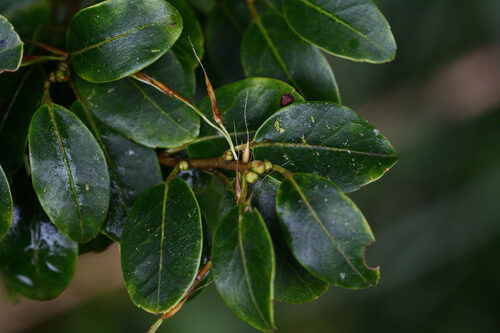
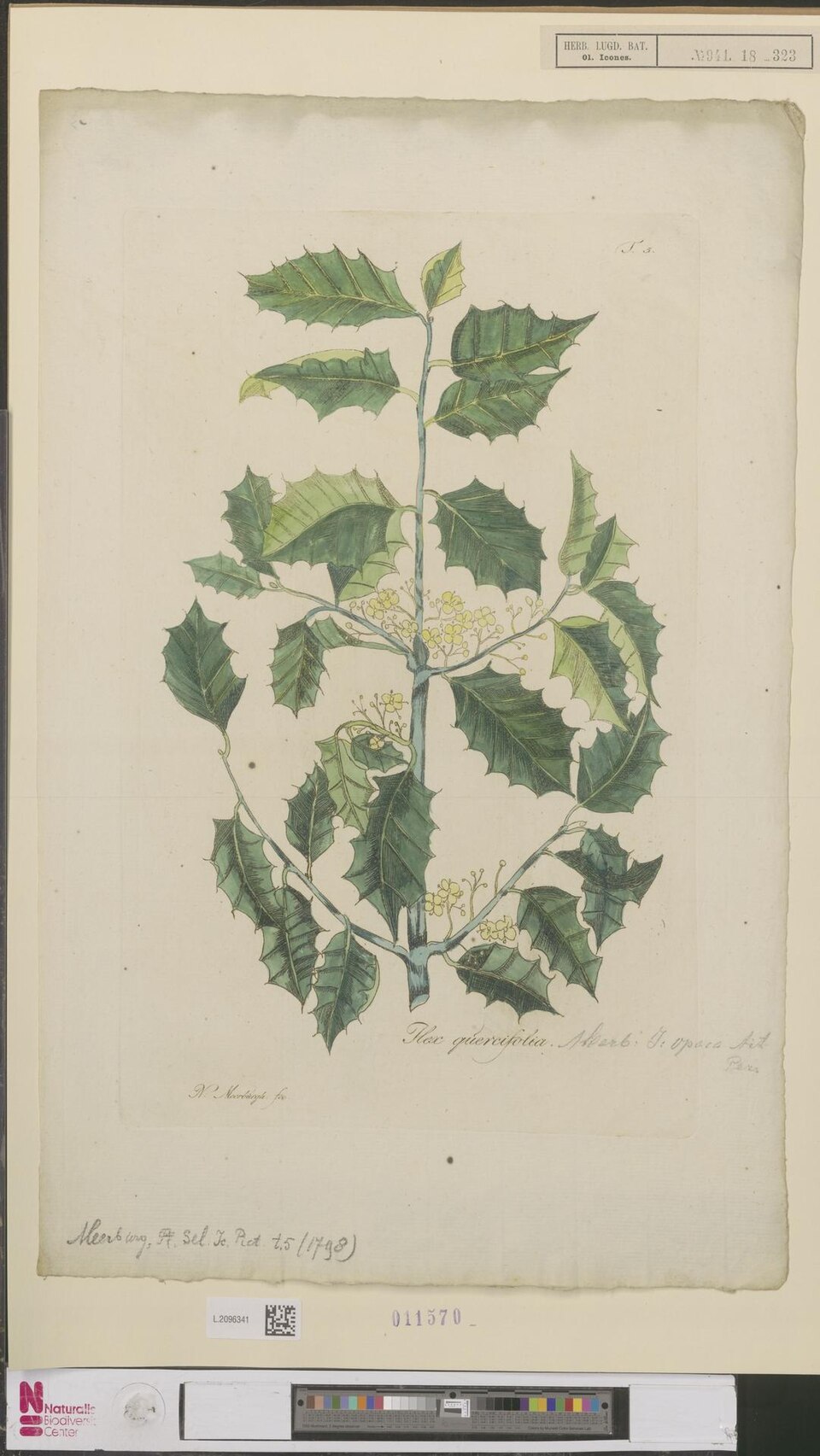
Ilex asprella
(Hooker & Arnott) Champion ex Bentham
iNaturalist· cc0
no rights reserved, uploaded by 葉子
iNaturalist· cc-by-nc
(c) Hua Wan, some rights reserved (CC BY-NC), uploaded by Hua Wan
iNaturalist· cc0
no rights reserved, uploaded by 葉子
Summary
Source: WikipediaIlex asprella, also known as rough-leaved holly and plum-leaved holly, is a deciduous shrub native in South East Asia. Ilex asprella is one of the few deciduous species in the family Aquifoliaceae.
Description
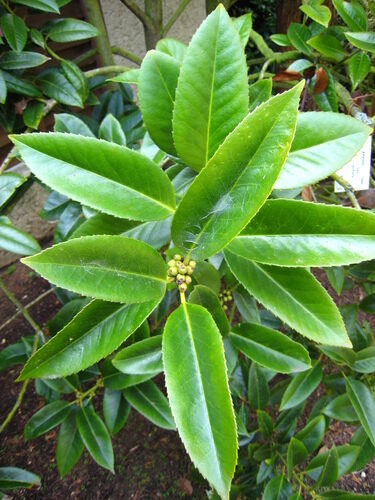
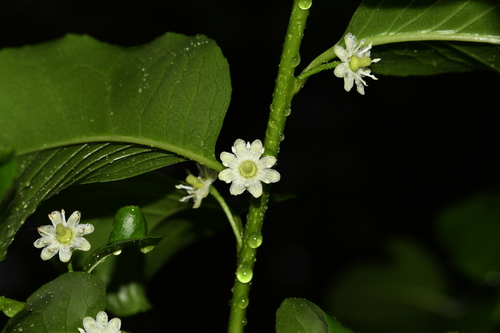
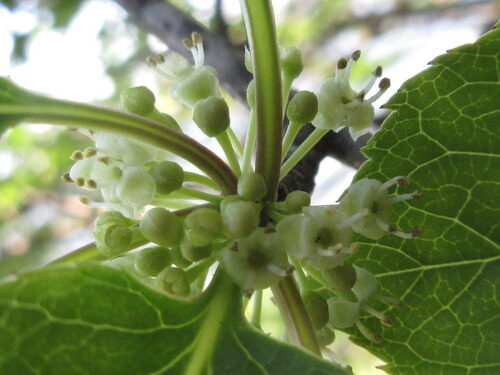
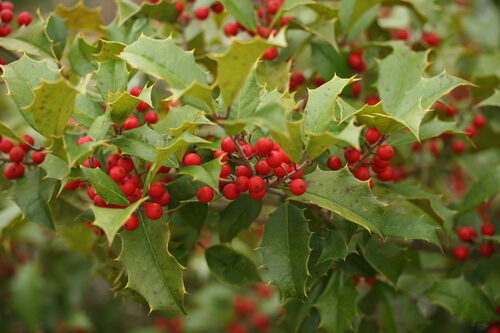
A shrub. It loses its leaves during the year. It grows 3 m tall. The branches are slender and reddish-brown. The leaves are oval and 4-6 cm long by 2-4 cm wide. There are teeth along the edge. Male and female flowers are separate. The fruit are ivak and black. They are 5-7 mm across.
Edible Uses
None known
Medicinal Uses
The root is antiphlogistic, depurative, febrifuge and sialagogue. A decoction is used to treat high fever in colds, laryngitis, acute tonsillitis and traumatic injuries, and is also applied externally to boils and abscesses. The leaf is used in the treatment of gonorrhoea and snakebite.
Distribution
It is a subtropical plant. In southern China it grows in sparse forests between 400-1,000 m above sea level.
Where It Grows
Asia, China, Philippines, SE Asia, Taiwan,
Propagation
Seed is best sown as soon as ripe in autumn in a cold frame, where it can take 18 months to germinate. Stored seed typically requires two winters and a summer before germinating and should be sown as soon as possible in a cold frame. Scarification followed by warm stratification and then cold stratification may speed germination. Seedlings are slow-growing; pot them up individually when large enough to handle and grow on in light shade in a cold frame for the first year. They can be planted into a nursery bed in late spring of the following year but should not remain there more than two years, as they dislike transplanting. Alternatively, grow on in pots for a second season before planting into permanent positions in late spring or early summer, with a good mulch and some winter protection for the first year outdoors. Cuttings of almost ripe wood with a heel taken in August can be rooted in a shaded cold frame; leave for 12 months before potting up. Layering in October takes 2 years.
Other Uses
None known.
References (1)
- Reis, S. V. and Lipp, F. L., 1982, New Plant Sources for Drugs and Foods from the New York Botanical Garden herbarium. Harvard. p 165