Ilex brevicuspis
Reissek
Short cusp holly
iNaturalist· cc-by-nc
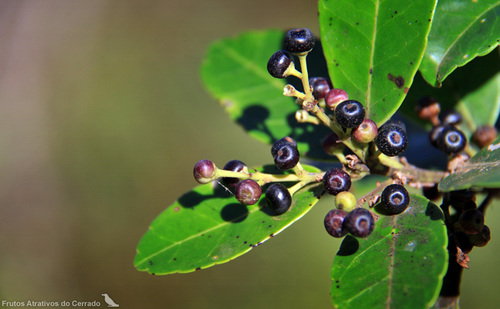
(c) Luís A. Funez, some rights reserved (CC BY-NC), uploaded by Luís A. Funez
iNaturalist· cc-by-nc
(c) Luís A. Funez, some rights reserved (CC BY-NC), uploaded by Luís A. Funez
Description
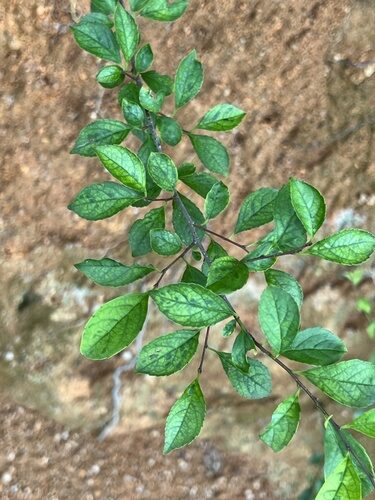
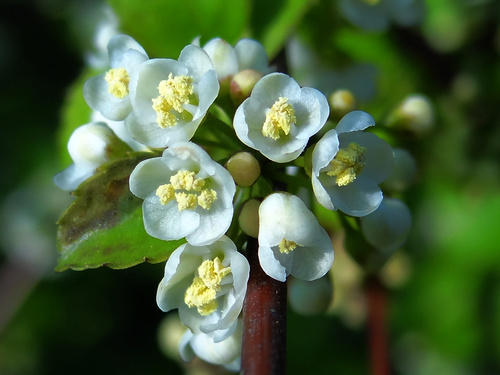
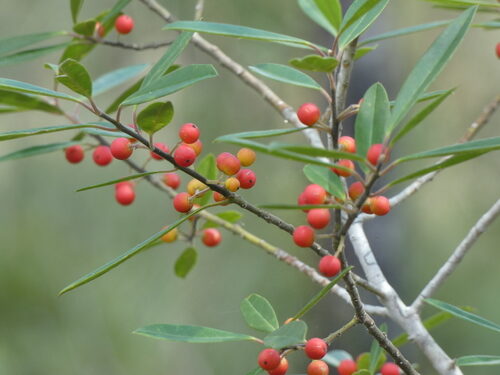
A tree. It grows 10-20 m high. The trunk is 30-60 cm across. The bark is smooth. The crown is tall and pyramid shaped. The leaves are papery. They are 2.5-6 cm long by 1.2-1.9 cm wide. The flowers are small and in groups in the axils of leaves. The fruit is a berry with 2-4 seeds and a thin pulp.
Edible Uses
The leaves are sometimes used in a blend to make maté tea, but it is not generally pleasing to the consumer. The leaves are frequently used as an adulteration of maté.
Traditional Uses
The leaves are used as a blend for erva-mate tea but it is not popular.
This uses section is brief — help expand it
Medicinal Uses
The leaves are sometimes used to make maté tea. They have been shown to have a range of beneficial actions upon the body including removing free radicals, increasing the flow of bile and thus improving fat metabolism, improving the removal of waste products from the digestive tract. They do not have a stimulant effect upon the central nervous system.
Known Hazards
Although no specific reports of toxicity have been seen for this species, Ilex species in general contain several potentially toxic compounds, particularly saponins, glycosides and triterpenoids. These compounds also often have a range of potential health benefits. The berries are usually the part of the plant most likely to be toxic, though the degree of toxicity is usually low. Their bitter flavour usually prevents a person eating more than one or two, but even a small handful of the fruit eaten by a healthy adult is unlikely to cause more than feelings of nausea that can lead on to vomiting and diarrhoea. The compounds in the leaves are particularly interesting. The leaves of many Ilex species around the world are commonly used to make health-promoting teas that, when drunk on a regular basis, help to regulate bodily functions and can reduce the risk of heart disease, lower blood-cholesterol levels etc (See Ilex paraguariensis or Ilex kaushue for examples). Even these teas, however, if taken in very concentrated doses, can act as a laxative or cause vomiting. Indeed, several species are used by traditional peoples to induce vomiting as a means of purifying the body (see Ilex guayusa or Ilex vomitoria for examples)
Distribution
It is a tropical plant. It grows in forests in the Amazon in Brazil. In Argentina it grows from sea level to 1,200 m above sea level.
Where It Grows
Argentina, Bolivia, Brazil, Paraguay, South America, Venezuela,
Cultivation
Plants can be grown from seed. The ripe fruit are harvested and the seeds squeezed out under running water. The seeds need to be buried in cold damp soil for 6 months and fresh seed may take one year to germinate. Seedlings can be transplanted in to the field after 10 months.
Propagation
Seed - it has a hard seedcoat and may benefit from scarification before sowing to speed up germination. This can usually be done by pouring a small amount of nearly boiling water on the seeds (being careful not to cook them!) and then soaking them for 12 - 24 hours in warm water. By this time they should have imbibed moisture and swollen - if they have not, then carefully make a nick in the seedcoat (being careful not to damage the embryo) and soak for a further 12 hours before sowing. Sow the seed in a partially shaded position in a nursery seedbed. Germination can be expected within 30 - 50 days. When the seedlings have 4 - 6 leaves, pot them up into individual containers and they should be ready to plant out about 10 months later. The seed has a viability in storage of more than 1 year.
Other Uses
The heartwood and sapwood are not clearly differentiated and oxidise rapidly after cutting. The wood is thick-textured, straight-grained, moderately heavy, soft, with moderate mechanical properties and very low durability. An easy to work timber, but only used locally for making boxes and boards in general. With its attractive appearance and ease of working with, it has the potential for making wood laminates. The wood is used for fuel and to make charcoal.
Production
Plants grow slowly.
Synonyms
Also Known As
Cauna, Cauna-da-serra, Congonha, Orelha-de-mico, Voadeira
References (5)
- Grandtner, M. M. & Chevrette, J., 2013, Dictionary of Trees, Volume 2: South America: Nomenclature, Taxonomy and Ecology. Academic Press p 314
- Lorenzi, H., 2002, Brazilian Trees. A Guide to the Identification and Cultivation of Brazilian Native Trees. Vol. 02 Nova Odessa, SP, Instituto Plantarum p 48
- C. F. P. Martius, Fl. bras. 11(1):56. 1861
- Useful Tropical Plants.
- World Checklist of Useful Plant Species 2020. Royal Botanic Gardens, Kew