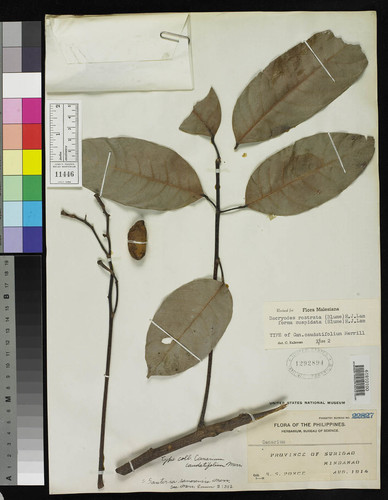
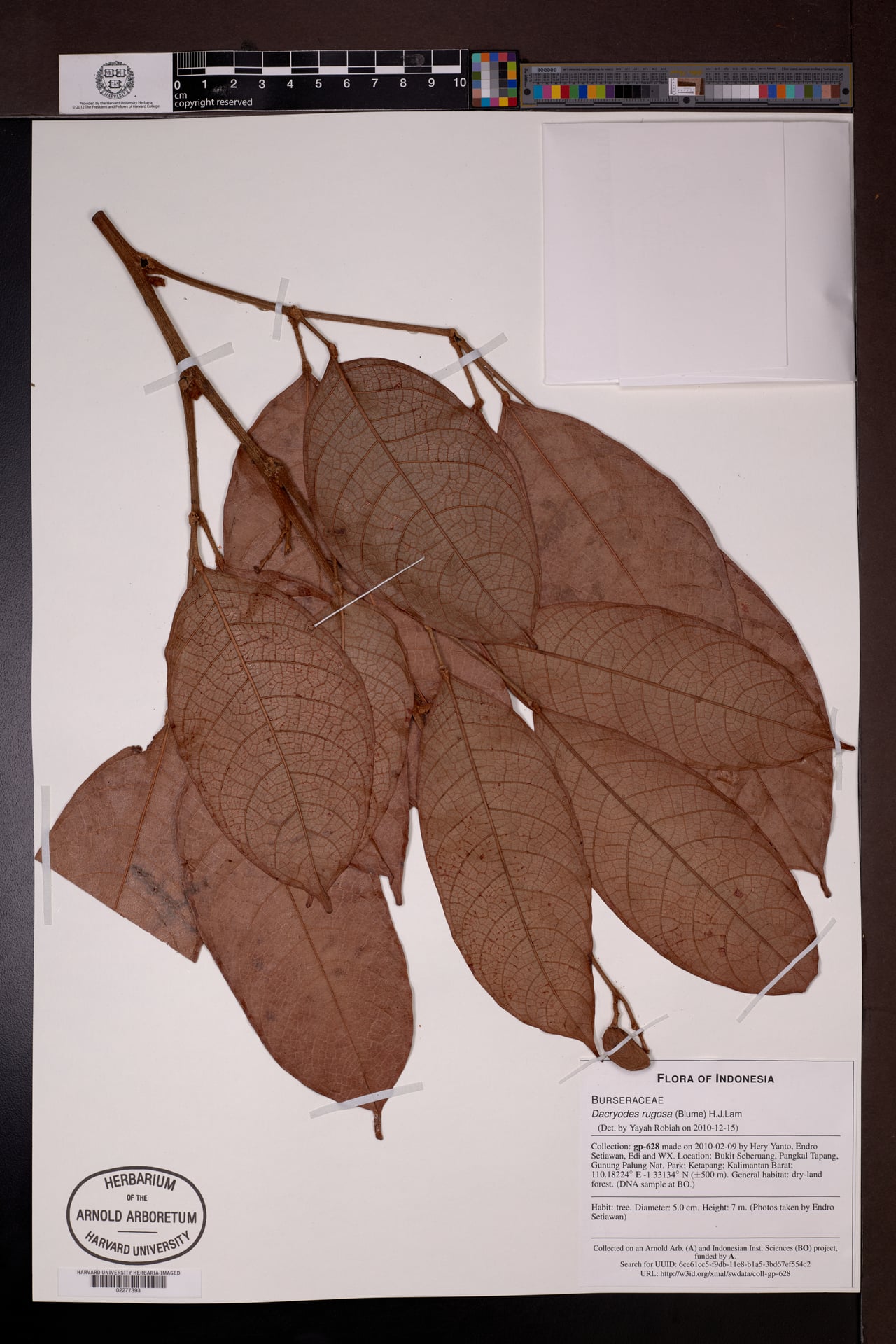
Canarium asperum
Benth.
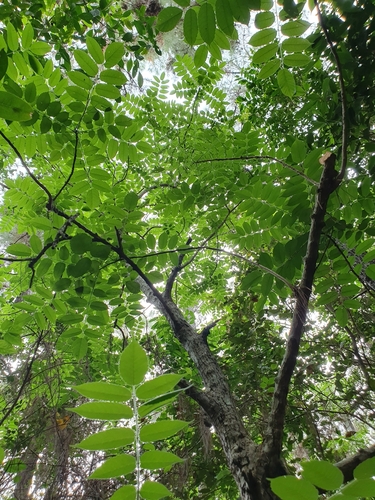
Canarium keddongdong tree
wikimedia· cc-by-sa
Wikimedia Commons - R.Rahasia
wikimedia· cc0
No machine-readable author provided. Noles1984~commonswiki assumed (based on copyright claims). (via Wikimedia Commons)
wikimedia· cc-by-sa
R.Rahasia (via Wikimedia Commons)
Summary
Source: WikipediaCanarium asperum is a species of plant in the family Burseraceae. It is found in Brunei, Indonesia (Java), Malaysia, Papua New Guinea, the Philippines, and the Solomon Islands.
Description
A tree. It grows 37 m tall. The trunk can be 80 cm across. The leaves are alternate and compound. The flowers are in spikes or clusters in the axils of leaves. They are 6 mm across and yellowish. The fruit are 1.2 cm long and greenish black.
Edible Uses
The fruits are eaten fresh, and the seeds are processed to make a coffee substitute.
Distribution
It is a tropical plant. It grows in primary and secondary forests up to 600 m above sea level. It can be near the coast and on rocky and sandy soils.
Where It Grows
Asia, Indonesia, Laos, Malaysia, Pacific, Papua New Guinea, PNG, Philippines, SE Asia, Solomon Islands,
Cultivation
Plants can be grown by seeds.
Propagation
Seed - we have no specific information for this species but seeds of this genus generally have a hard seed coat and germinate erratically. Filing away some of the seed coat to allow moisture to enter more readily, without damaging the seed, will encourage a faster and more even germination.
Other Uses
A latex obtained from the tree is used to make candles and torches. It is a resin. It can also be used as a caulking material. The wood is somewhat variable - usually moderately hard, it is sometimes very hard or can be rather soft. It is not very durable. It is suitable as a general utility timber for planking, cladding, plywood, flooring, furniture, packing cases, pallets and general carpentry work. The wood is used for fuel. The wood is an important source of kedondong timber, used in house construction. Kedondong timber is obtained from several Canarium species. Its general characteristics are as follows:- The heartwood is generally a light brown; it is not sharply demarcated from the 3 - 5cm wide band of lighter-coloured sapwood. The texture is moderately fine and even; the grain is interlocked to wavy; the surface is lustrous. The wood is light in weight; moderately hard; not very durable, being susceptible to fungi, dry wood borers and termites. It seasons somewhat slowly with only a slight risk of checking and distortion; once dry it is moderately stable to stable in service. The wood has a fairly high blunting effect, stellite-tipped and tungsten carbide tools are recommended; it is moderately easy to slightly difficult to plane; finishes smooth to rough; can be easy to very difficult to bore; slightly difficult to difficult to turn; nailing and screwing properties are good; gluing is correct. The wood is suitable for internal use as a general utility timber for planking, cladding, plywood, flooring, furniture, packing cases, pallets and general carpentry work.
Synonyms
Also Known As
Mak bai, Pohon kenari kedongdong
References (6)
- Luczaj, L., et al, 2021, Wild food plants and fungi sold in the markets of Luang Prabang, Lao PDR. Journal of Ethnobiology and Ethnomedicine (2021) 17:6
- Reis, S. V. and Lipp, F. L., 1982, New Plant Sources for Drugs and Foods from the New York Botanical Garden herbarium. Harvard. p 146 (As Canarium asperum var. asperum)
- Soepadmo, E. & Wong, K. M., (Eds.), 1995, Tree Flora of Sabah and Sarawak. Volume One. ITTO, Govt. Malaysia. p 51
- Sukarya, D. G., (Ed.) 2013, 3,500 Plant Species of the Botanic Gardens of Indonesia. LIPI p 176
- Trimanto, & Hapsari L., 2016, Botanical survey in thirteen montane forests of Bawean Island Nature Reserve, East Java Indonesia: Conservation status, bioprospecting and potential tourism. Biodiversitas 17: 832-846.
Show all 6 references Hide references
- World Checklist of Useful Plant Species 2020. Royal Botanic Gardens, Kew