Cotoneaster integerrimus
Medik.
Dunjarica
iNaturalist· cc-by-nc-sa
(c) Bogdan V. Kryzhatyuk, some rights reserved (CC BY-NC-SA), uploaded by Bogdan V. Kryzhatyuk
iNaturalist· cc-by-nc
(c) Julia V. Shner, some rights reserved (CC BY-NC)
iNaturalist· cc-by-nc
(c) Julia V. Shner, some rights reserved (CC BY-NC)
Summary
Source: WikipediaCotoneaster integerrimus, the common cotoneaster, is a species of Cotoneaster native to central and eastern Europe and southwest Asia, from southern Belgium and eastern France south to Italy, and east through Germany to the Balkans, northern Turkey, the Crimea, the Caucasus and northern Iran; plants in Spain may also belong in this species. In the past, it was treated in a wider sense, including plants from Wales now split off as Cotoneaster cambricus and plants from Scandinavia now treated as Cotoneaster scandinavicus, but differs from these in genetic profile and detail of foliage and fruit. It is a deciduous shrub growing to 2 metres (6 ft 7 in) tall. The leaves are oval to oval-acute, 1–4 centimetres (0.39–1.57 in) long, green and thinly pubescent above at first, later glabrous, and densely pubescent below and on the leaf margin, with pale grey hairs. The flowers are produced in corymbs of one to four (occasionally up to seven) together in mid spring, each flower 3 millimetres (0.12 in) diameter, with five white to pale pink petals. The fruit is a dark red pome 6–8 millimetres (0.24–0.31 in) diameter, containing two or three seeds, averaging 2.8. Fruits average 85.3% water. It occurs on limestone soils, at altitudes of up to 2,800 metres (9,200 ft) altitude.
Description
A shrub that loses its leaves. It grows 2 m high and spreads 2 m wide. The stem is twisted. The branches are low and spreading. The leaves are round or oval and have short leaf stalks. They are green. The flowers are small and pink. They hang in clusters of 2 or 3. The fruit are small, round red berries.
Edible Uses
The small red berries are eaten raw or made into jams.
Traditional Uses
The fruit are eaten raw and also used for jams.
This uses section is brief — help expand it
Medicinal Uses
Traditionally used in northern China as a food source.
Distribution
It is a temperate plant. It is best in well-drained gravelly soil. It needs an open sunny position. It is resistant to frost and drought. In northern China it grows on rocky slopes below 2,500 m above sea level.
Where It Grows
Asia, Australia, Balkans, Bosnia, China, Europe*, Georgia, Korea, Luxembourg, Russia, Slovenia, Turkey, Türkiye,
Cultivation
Plants can be grown by seed or cuttings.
Also Known As
Garagat, Navadna panešplja
References (6)
- Bodkin, F., 1991, Encyclopedia Botanica. Cornstalk publishing, p 290
- Cakir, E. A., 2017, Traditional knowledge of wild edible plants of Iğdır Province (East Anatolia, Turkey). Acta Soc Bot Pol. 2017;86(4):3568.
- Ertug, F, Yenen Bitkiler. Resimli Türkiye Florası -I- Flora of Turkey - Ethnobotany supplement
- Flora of China. www.eFloras.org Volume 9
- Postman, J. D., et al, 2012, Recent NPGS Coordinated Expeditions in the Trans-Caucasus Region to Collect Wild Relatives of Temperate Fruit and Nut Crops. In Acta Horticulturae Number 948 p 191-198
Show all 6 references Hide references
- Redzic, S. J., 2006, Wild Edible Plants and their Traditional Use in the Human Nutrition in Bosnia-Herzegovina. Ecology of Food and Nutrition, 45:189-232
More from Rosaceae
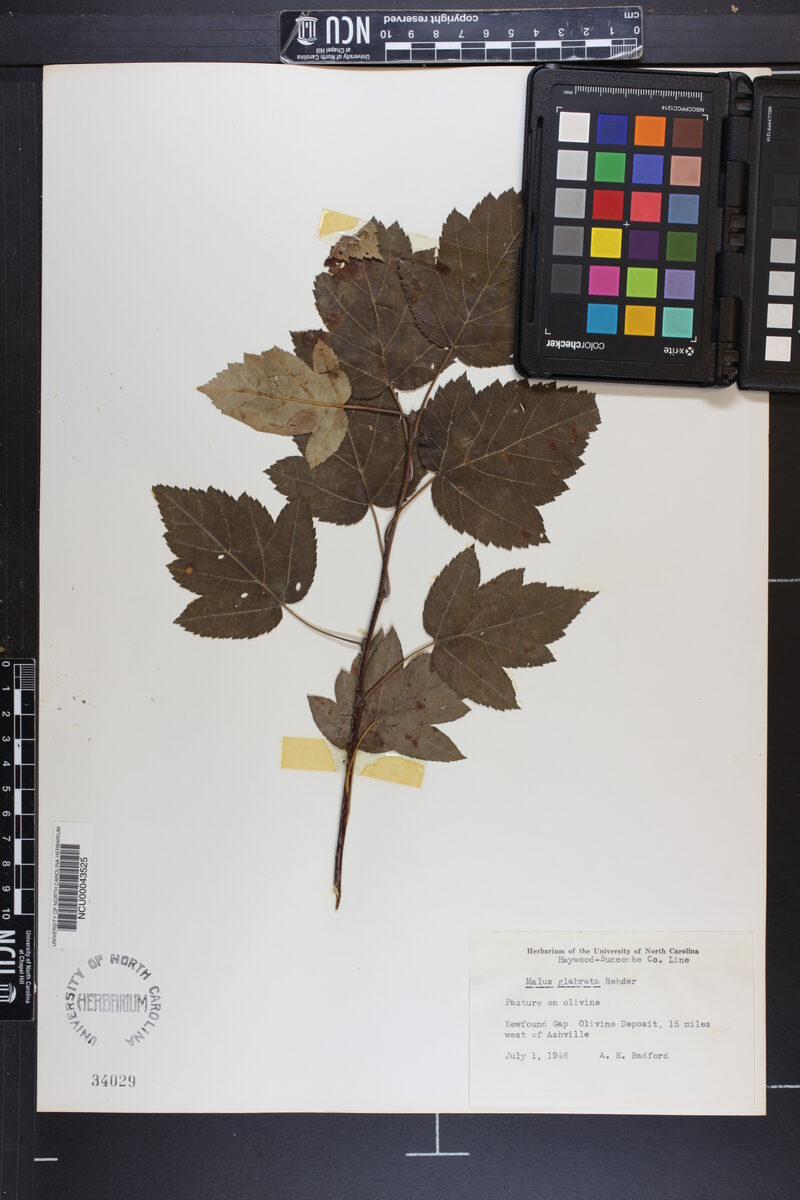
Malus glabrata
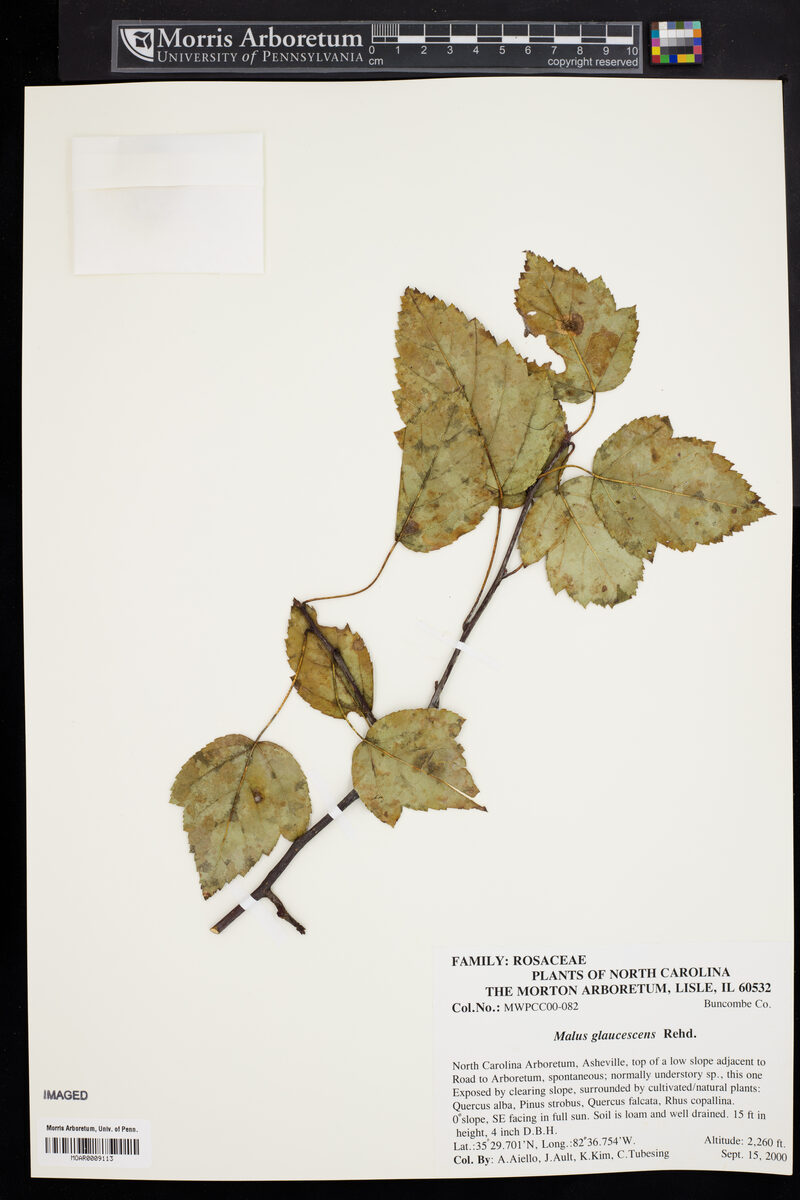
Malus glaucescens
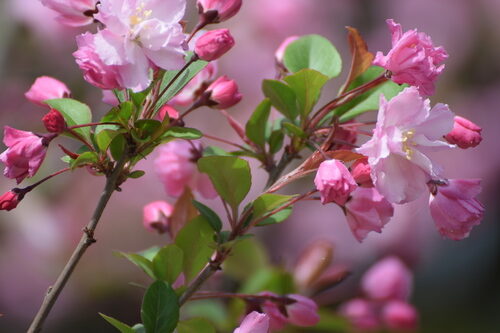
Malus halliana
Hall crab apple
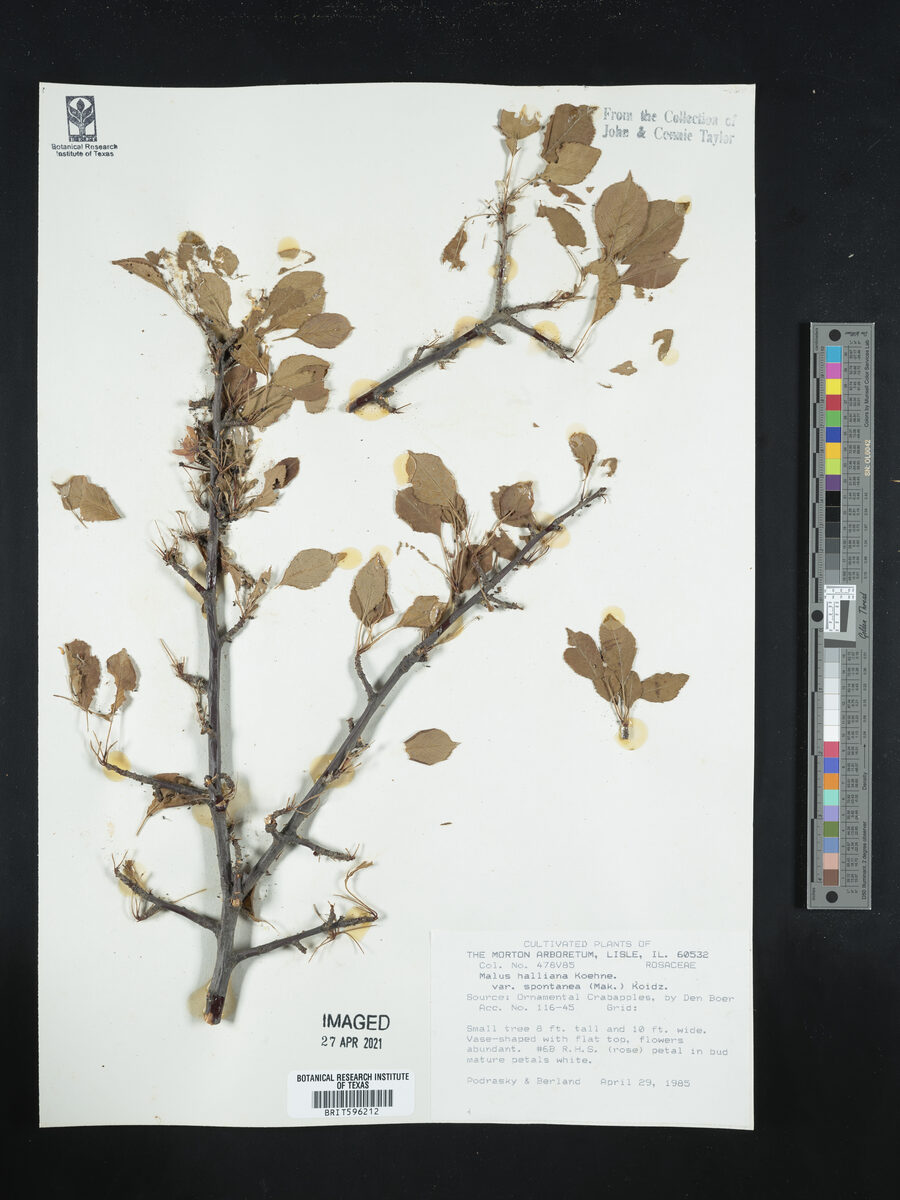
Malus halliana spontanea - (Max.)Koidz.
Malus hupehensis - (Pamp.)Rehder.
Chinese Crab, Chinese crab apple, Tea Crabapple, Flowering Tea Crabapple
Malus ioensis - (A.W.Wood.)Britton.
Prairie Crab, Prairie crab apple, Texas crab apple, Prairie Crabapple